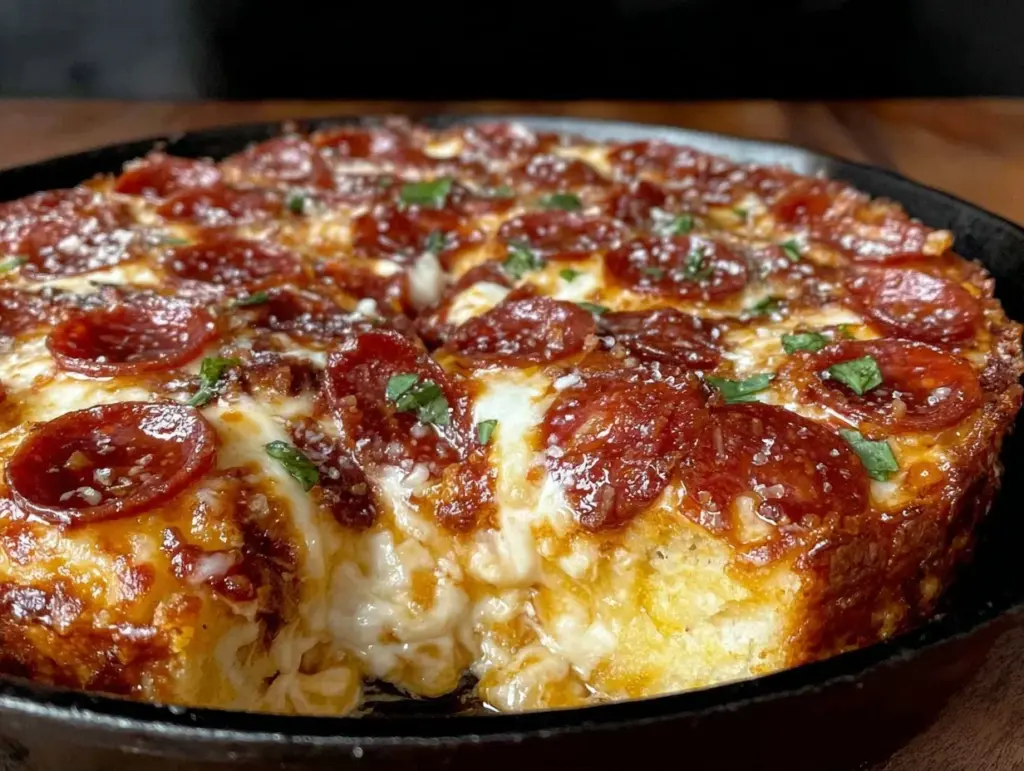
I have a confession to make. For years, I pretended to love deep dish pizza. I’d order it, stare at the towering slice of dough, cheese, and sauce, and try to act like I wasn’t intimidated by the sheer caloric density of it. I’d cut it into tiny, manageable squares and eat it with a fork and knife, feeling slightly ridiculous but totally satisfied.
But here’s the thing: I was never actually making it at home. Why? Because I thought it was hard. I thought it required hours of dough rising, specialized pans I didn’t own, and a level of culinary precision that made me want to order Domino’s instead.
Then, about two years ago, I bought a cheap, battered cast iron skillet at a garage sale. It had a chip in the rim and looked like it had seen better days. I decided to test a theory: Could I make actual, legit deep dish pizza in something that isn’t a specialized pizza pan? Could I make it with yeast dough I actually kneaded myself, without a stand mixer, in a pan I already had?
I burned the first one. I over-sauced the second one. The third one? It was good. But the fourth one—after I tweaked the dough hydration and learned how to layer the cheese properly—was the best pizza I had ever made. Period. Better than the fancy places in Chicago. Better than takeout. Better than anything I’ve ever ordered.
This cast iron skillet deep dish pizza with pepperoni you’ll make on repeat isn’t just a recipe. It’s a confidence builder. It’s proof that you don’t need fancy equipment or a degree in food science to make restaurant-quality food. You just need a skillet, some simple ingredients, and the willingness to let the cheese do its thing.
Once you’ve made this pizza, you won’t go back to thin crust. Not because thin crust is bad, but because this? This is comfort food in its purest form. It’s crispy on the bottom, chewy in the middle, and oozing with gooey, salty goodness. And the best part? The cast iron skillet keeps it warm at the table, so you’re not playing rush-hour with your dinner.
I’ve made this at least a dozen times since that first successful attempt. I’ve served it to picky eaters, pizza snobs, and people who swear they “don’t like pizza.” Everyone comes back for seconds. Everyone asks for the recipe. And yes, I’m including the pepperoni. Because if you’re making deep dish, you’re going all the way.
Why You’ll Love This Cast Iron Skillet Deep Dish Pizza with Pepperoni
There are about ten reasons I keep making this pizza, but here are the big ones that convinced me to stick with it.
The Dough is Forgiving — Seriously, if you can mix flour and water, you can make this dough. I’ve walked my teenage nephew through it over the phone while he was eating cereal. It doesn’t need to be perfect. It doesn’t need to pass a gluten test. It just needs to be mixed until it comes together. If it’s a little sticky? That’s fine. If it’s a little dry? Add a splash of water. You really can’t mess this up.
The Skillet Does the Heavy Lifting — You don’t need a pizza stone. You don’t need a peel. You just need a cast iron skillet. And because it’s cast iron, it gets hot and stays hot. That means a crispy, golden-brown crust that holds up to all that cheese and sauce without getting soggy. It’s the secret weapon of deep dish pizza.
It’s a Crowd-Pleaser — I’ve served this to my vegetarian sister, my gluten-free neighbor (with gluten-free flour), and my dad who only eats “real food.” Everyone loved it. The layers of cheese, sauce, and pepperoni create this incredible flavor profile that’s rich but not overwhelming. It’s the kind of meal that brings people together.
Makes Amazing Leftovers — Actually tastes better the next day. The flavors meld overnight, and the dough gets even chewier. I deliberately make extra for lunch throughout the week. Just reheat it in the skillet or a toaster oven. Microwave it, and it’s okay, but skillet-reheated? It’s better than fresh.
Budget-Smart — Feeds 4-6 people for under $20. That’s less than one meal at a pizza place, and it tastes way better. You control the quality of the cheese, the freshness of the sauce, and the type of pepperoni. It’s cheap, it’s easy, and it’s delicious.
This is my go-to when I want to feel like a pro cook without actually trying hard. No complicated techniques, no weird ingredients, just reliable, delicious food that makes everyone happy. If you can only make one pizza recipe in your life, make this one.
Ingredients You’ll Need for Cast Iron Skillet Deep Dish Pizza with Pepperoni
Here’s the best part: you probably have most of this already. This isn’t a recipe that requires a trip to three different specialty stores. It’s simple, straightforward, and uses ingredients you can find at any grocery store.
For the Dough
All-purpose flour (3 cups / 375g) — Don’t use bread flour unless you want a chewier, denser crust. All-purpose gives you that perfect balance of tender and chewy. I use King Arthur Flour because it’s consistent, but any brand works.
Instant yeast (1 packet / 2.25 teaspoons) — Quick and easy. No proofing needed. Just mix it in with the flour. Active dry yeast works too, but you’ll need to dissolve it in warm water first. I always keep instant yeast on hand because it’s foolproof.
Warm water (1 cup / 240ml) — Not hot, not cold. Think bathwater temperature. If you can’t stick your finger in it for 3 seconds, it’s too hot. Too hot kills the yeast. Too cold makes it rise slowly. Just right makes it rise perfectly.
Olive oil (2 tablespoons / 30ml) — Adds flavor and helps the dough stay soft. Use extra virgin if you have it, but regular olive oil works fine. Don’t skip this—it helps with browning.
Sugar (1 teaspoon / 5g) — Just a pinch. It feeds the yeast and helps with browning. You won’t taste sweetness, just depth.
Salt (1 teaspoon / 6g) — Essential for flavor. Don’t skimp. Dough without salt tastes flat.
For the Filling
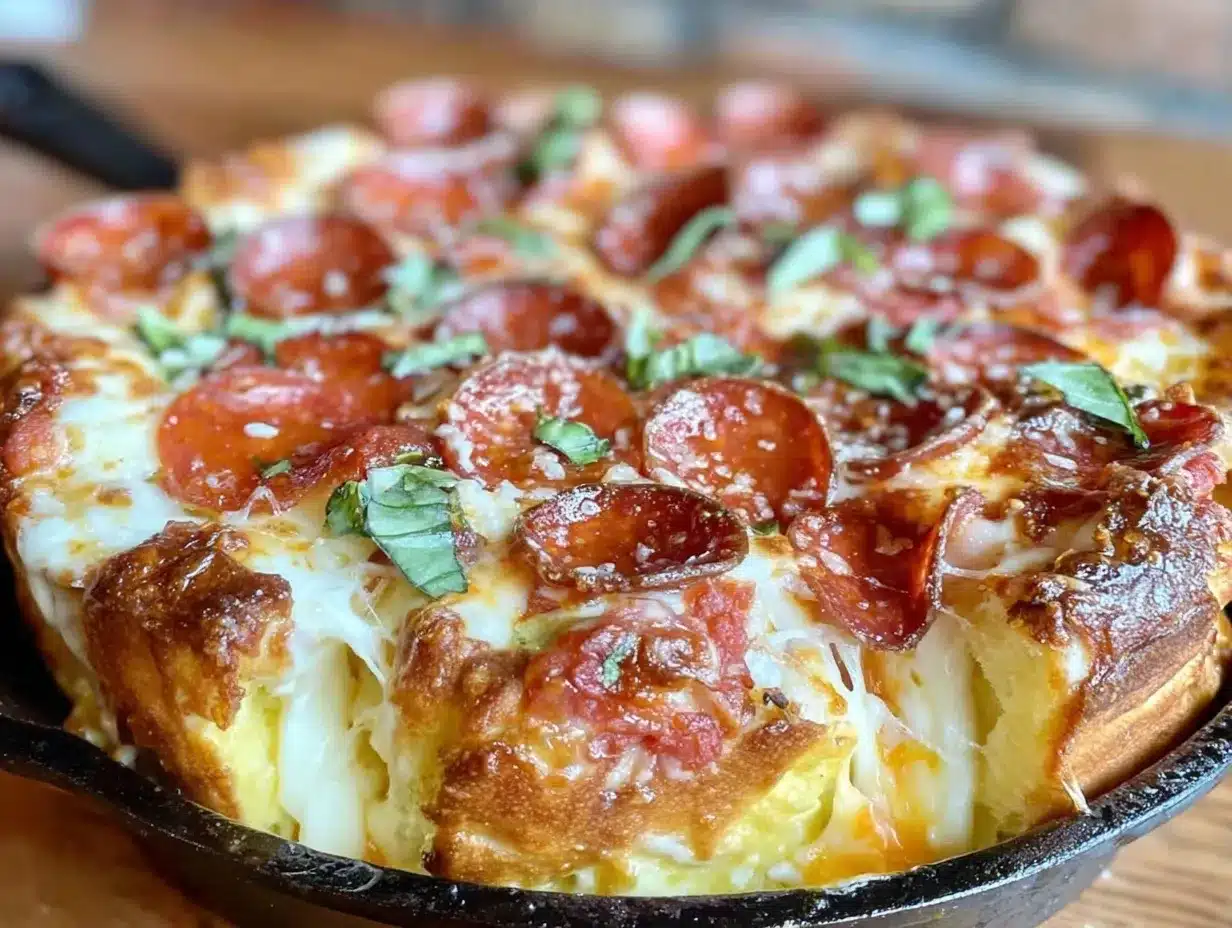
Mozzarella cheese (3 cups / 300g, shredded) — The star of the show. Use low-moisture mozzarella, not the fresh balls. Fresh mozzarella has too much water and will make your pizza soggy. Shred your own from a block if you can—pre-shredded cheese has anti-caking agents that prevent it from melting smoothly.
Cheddar cheese (1 cup / 100g, shredded) — Adds sharpness and depth. I use medium cheddar, but sharp works too. It balances the mildness of the mozzarella.
Pepperoni (1 cup / 100g, sliced) — The classic choice. Use the kind that curls up and gets crispy at the edges. I prefer the thicker-cut pepperoni because it holds up better in deep dish. If you can’t find thick-cut, just double up the slices.
Pizza sauce (1 cup / 240g) — Don’t use spaghetti sauce! It’s too sweet and too thin. Use a good-quality pizza sauce, or make your own by mixing canned tomato sauce with Italian seasoning, garlic powder, and a pinch of sugar. I usually just grab a jar of Rao’s because it’s simple and tastes great.
Parmesan cheese (½ cup / 50g, grated) — For the top. Adds a salty, nutty finish. Freshly grated is best, but pre-grated works in a pinch.
Optional: Red pepper flakes — For a little kick. I sprinkle them on after baking. If you like heat, don’t be shy.
Equipment Needed
You don’t need fancy equipment for this. Here’s what I actually use.
12-inch Cast Iron Skillet — This is non-negotiable. The size matters because deep dish needs height. A 10-inch skillet will overflow. I use a Lodge skillet because it’s affordable and durable. If you don’t have cast iron, use a heavy-bottomed oven-safe skillet, but cast iron is best for heat retention.
Mixing Bowl — Large enough to hold the dough. Any bowl works. I use a big ceramic bowl because it’s easy to clean.
Rolling Pin — To stretch the dough. If you don’t have one, use a clean wine bottle. Just make sure it’s smooth and clean.
Pastry Brush — For brushing the dough with olive oil. A silicone brush works well. If you don’t have one, just use your fingers.
Measuring Cups and Spoons — Pretty standard stuff. Dollar store versions work fine. Precision helps, but you don’t need to be exact.
Sharp Knife — For slicing the pepperoni and cutting the pizza. A serrated knife works best for pizza.
Pizza Cutter — Or a sharp knife. A pizza cutter makes clean cuts, but a knife works too. Just be careful.
How to Make It: Step-by-Step
Alright, let’s make this! I’m walking you through exactly how I do it, including the little tricks I’ve picked up. This is foolproof, so don’t stress.
Step 1: Make the Dough (10 minutes)
In a large mixing bowl, combine the flour, instant yeast, sugar, and salt. Whisk them together to distribute the yeast evenly. Make a well in the center and pour in the warm water and olive oil. Mix with a wooden spoon or your hands until the dough comes together. It will be shaggy at first—don’t worry. Knead it on a lightly floured surface for 5-7 minutes until it’s smooth and elastic. If it’s too sticky, add a little more flour. If it’s too dry, add a splash of water. The dough should be soft but not sticky. Place it in a greased bowl, cover with a towel, and let it rise for 1 hour, or until doubled in size.
Step 2: Prepare the Skillet (5 minutes)
Preheat your oven to 425°F (220°C). Generously grease your 12-inch cast iron skillet with olive oil or butter. This is crucial for preventing sticking and ensuring a crispy crust. Sprinkle a thin layer of flour into the skillet and shake it around to coat the bottom and sides. Tap out the excess. This creates a non-stick surface and adds flavor.
Step 3: Shape the Dough (5 minutes)
Punch down the risen dough to release air bubbles. Roll it out on a floured surface into a circle slightly larger than your skillet. Carefully lift the dough and press it into the skillet, starting from the center and working outward. Press the dough up the sides of the skillet to create a “wall.” This is what makes it deep dish. Don’t worry if it’s not perfect—just make sure there are no holes.
Step 4: Layer the Cheese (5 minutes)
This is the most important step. Sprinkle half of the mozzarella and all of the cheddar cheese onto the bottom of the dough. The cheese goes on first so it melts directly onto the dough, creating a barrier between the sauce and the crust. This prevents the bottom from getting soggy. Sprinkle half of the pepperoni over the cheese.
Step 5: Add the Sauce (5 minutes)
Spoon the pizza sauce over the cheese and pepperoni. Spread it evenly, but don’t go all the way to the edges. Leave a 1-inch border. The sauce should be thick enough to stay on top of the cheese. If it’s too thin, simmer it on the stove first to reduce.
Step 6: Top and Bake (25-30 minutes)
Sprinkle the remaining mozzarella and the parmesan cheese over the sauce. Add the rest of the pepperoni. Place the skillet in the preheated oven and bake for 25-30 minutes, or until the crust is golden brown and the cheese is bubbling and slightly browned. If the top is browning too quickly, cover it loosely with foil.
Step 7: Rest and Serve (10 minutes)
Remove the skillet from the oven and let the pizza rest for 10 minutes. This is crucial—it allows the cheese to set so the pizza holds its shape when sliced. Sprinkle with red pepper flakes if you like heat. Slice with a sharp knife or pizza cutter and serve immediately.
Expert Tips & Tricks
Here’s everything I’ve learned from making this dozens of times. These tips will save you from my mistakes.
Use Low-Moisture Mozzarella — This is the #1 tip. Fresh mozzarella has too much water and will make your pizza soggy. Low-moisture mozzarella melts beautifully without releasing excess liquid. I learned this the hard way with a watery, disappointing pizza. Now I always use low-moisture.
Don’t Skip the Flour Coating — Flouring the skillet after greasing it creates a non-stick surface that’s better than any non-stick spray. It also adds a subtle crunch to the crust. I learned this from a professional pizzaiolo, and it’s a game-changer.
Let It Rest — I know it’s tempting to slice it immediately, but wait. The cheese needs time to set. If you slice it too soon, everything will slide out. Ten minutes is all it takes, and it makes a huge difference in presentation and texture.
Brush the Edges — Brush the exposed dough edges with olive oil before baking. This helps them brown evenly and gives them a nice, crispy finish. It’s a small step that makes a big difference.
Adjust the Oven Temp — If your oven runs hot, lower the temperature to 400°F. If it runs cool, go up to 450°F. Every oven is different, so keep an eye on the pizza during the last 5 minutes of baking.
Common Mistakes — Sauce is too watery: Simmer it first to reduce. Crust is soggy: You didn’t use low-moisture cheese or you didn’t let it rest. Pepperoni is burnt: You baked it too long or the oven was too hot. Adjust accordingly.
Variations & Substitutions
Once you’ve nailed the basic version, here’s how you can mix it up. I’ve tried all of these.
Veggie Lover’s — Add sliced mushrooms, bell peppers, onions, and olives under the cheese. Sauté the veggies first to remove excess moisture. This is how I get my kids to eat vegetables.
White Pizza — Skip the tomato sauce. Use ricotta cheese dolloped on top, then add mozzarella, garlic, and herbs. Drizzle with olive oil after baking. It’s rich and creamy.
Breakfast Pizza — Replace the sauce with scrambled eggs. Add cooked bacon, cheddar cheese, and chives. Bake until the eggs are set. This is amazing for brunch.
Spicy Italian — Add sliced hot Italian sausage under the cheese. Use spicy pepperoni. Add red pepper flakes. It’s fiery and flavorful.
Dietary Modifications — Gluten-Free: Use gluten-free pizza dough. Everything else is naturally gluten-free. Dairy-Free: Use dairy-free cheese and skip the parmesan. It’s not the same, but it works. Vegan: Use vegan cheese and tomato sauce. Add nutritional yeast for flavor.
Serving & Storage
How to Serve — I usually serve this straight from the skillet at the dinner table—it looks rustic and stays warm. But here are other ways I’ve enjoyed it:
Side Dishes — A simple green salad with balsamic vinaigrette cuts through the richness. Garlic bread is optional but recommended. Roasted broccoli or green beans add a healthy crunch.
Toppings Bar — When I have guests, I put out: extra Parmesan, red pepper flakes, fresh basil, and hot honey. Everyone customizes their slice.
Storage Instructions — Store in an airtight container for up to 4 days. The sauce will thicken in the fridge—totally normal.
Reheating — Best method: Add to a skillet with a splash of water over low heat. Cover and heat until warm. The water creates steam and keeps the crust soft. Microwave method: Heat in 30-second intervals, stirring between. It gets chewy but still tastes good.
Freezing — This doesn’t freeze well because of the dairy. The sauce separates when thawed. Make it fresh or store in the fridge for up to 4 days.
Nutrition Information
I’m not a nutritionist, but here’s the breakdown if you’re tracking. This is comfort food, so don’t expect it to be light.
Per Serving (based on 8 servings):
- Calories: 450
- Protein: 20g
- Carbs: 40g
- Fiber: 2g
- Sugar: 4g
- Fat: 22g
- Saturated Fat: 10g
- Cholesterol: 45mg
- Sodium: 650mg
What’s Good: Decent protein from cheese. Calcium from the cheese. Can add vegetables to boost nutrition.
What to Know: Higher in calories from cheese and pepperoni. Contains dairy and gluten. Moderate sodium. Use low-sodium pepperoni to reduce sodium.
My Take: Look, this is deep dish pizza. It’s rich, it’s hearty, and it’s delicious. It’s not a diet recipe. But it’s way better than takeout, costs less, and I know exactly what’s in it. When I want to make it lighter, I use less cheese and add more vegetables. But usually? I just eat a reasonable portion and enjoy it.
Final Thoughts
So that’s my cast iron skillet deep dish pizza with pepperoni! I’ve probably talked your ear off at this point, but when you make a recipe this often, you have a lot to say about it.
This has saved weeknight dinners more times than I can count. It’s my answer to “what’s for dinner” when I want something special but don’t want to order out. My kids are happy, my husband’s happy, and I’m happy because I’m not stressed about cooking.
Make it yours! Try different add-ins, swap in your favorite vegetables, adjust the cheese. The best recipes are the ones you adapt to your family’s tastes. If you make this, drop a comment and let me know what you think! I love hearing how recipes turn out in your kitchen. And if something doesn’t work, tell me that too—I’m here to help troubleshoot.
Happy cooking! And I hope your kitchen smells half as good as mine does right now.
Frequently Asked Questions
Can I use fresh mozzarella?
You can, but the pizza will be very watery. Fresh mozzarella has a high moisture content, which releases liquid during baking and makes the crust soggy. If you must use it, slice it thin and pat it dry with paper towels before adding. But low-moisture mozzarella is highly recommended for deep dish.
Why did my crust stick to the skillet?
Usually means you didn’t grease the skillet enough or didn’t flour it. Make sure to use a generous amount of olive oil or butter, and then shake in the flour to coat the bottom and sides. This creates a barrier between the dough and the metal. If you’re using a well-seasoned cast iron skillet, it should be less sticky, but the flour helps.
Can I make the dough ahead?
Absolutely! Make the dough, let it rise once, then punch it down and store it in the fridge for up to 2 days. Let it come to room temperature for 30 minutes before shaping. This is great for meal prep. I do this all the time when I want pizza for dinner but don’t want to wait for the dough to rise.
Why is my pizza soggy?
Usually means the sauce was too watery or you used fresh mozzarella. Simmer the sauce first to reduce it. Use low-moisture mozzarella. Also, make sure you’re not adding too much sauce. A thin layer is better than a thick one. And don’t forget to let the pizza rest before slicing—it helps the cheese set.
Can I freeze leftovers?
Honestly, this doesn’t freeze well because of the dairy. The sauce separates when thawed, and the cheese becomes grainy. Make it fresh or store in the fridge for up to 4 days. If you must freeze it, freeze the dough separately, not the assembled pizza. Thaw the dough, assemble, and bake fresh.
Can I use a different type of cheese?
Yes! Provolone adds a sharper flavor. Gouda adds a smoky taste. Fontina is creamy and mild. Experiment with different blends to find your favorite. Just make sure they melt well. Avoid cheeses that don’t melt, like feta or goat cheese, unless you’re using them as a topping.
How do I know when the pizza is done?
The crust should be golden brown on the edges and bottom. The cheese should be bubbling and slightly browned. If you’re unsure, insert a knife into the center—if it comes out clean, the dough is cooked. You can also check the bottom by lifting the edge slightly with a spatula. It should be crispy and brown.
Pin This Recipe!
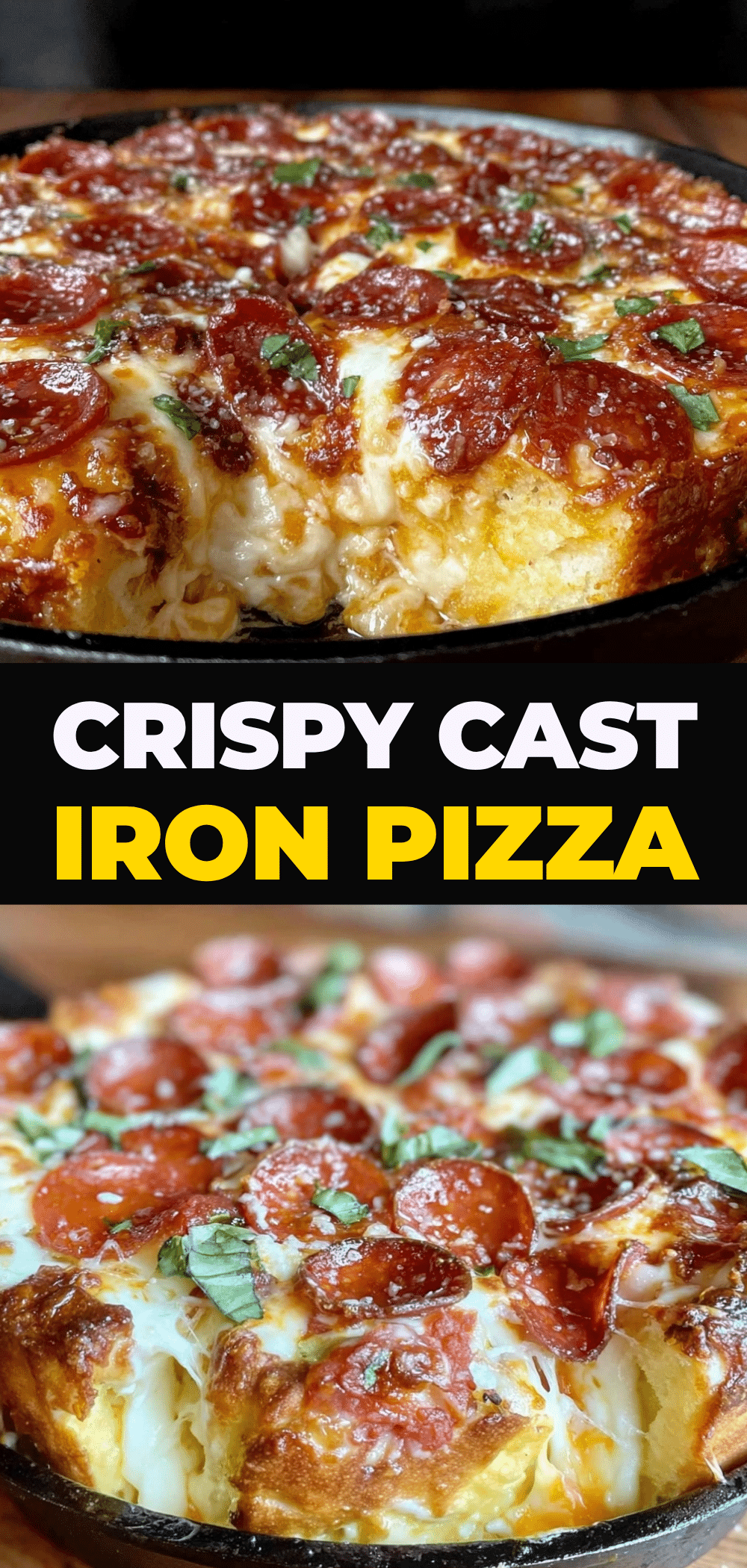

Cast Iron Skillet Deep Dish Pizza with Pepperoni: 3-Step Foolproof Recipe
- Total Time: 55 minutes
- Yield: 8 servings 1x
Description
A foolproof recipe for restaurant-quality deep dish pizza made in a cast iron skillet. Features a forgiving yeast dough, layers of mozzarella and cheddar cheese, pepperoni, and pizza sauce, resulting in a crispy, chewy, and comforting meal.
Ingredients
- 3 cups (375g) all-purpose flour
- 1 packet (2.25 teaspoons) instant yeast
- 1 cup (240ml) warm water
- 2 tablespoons (30ml) olive oil
- 1 teaspoon (5g) sugar
- 1 teaspoon (6g) salt
- 3 cups (300g) low-moisture mozzarella cheese, shredded
- 1 cup (100g) cheddar cheese, shredded
- 1 cup (100g) sliced pepperoni
- 1 cup (240g) pizza sauce
- 1/2 cup (50g) parmesan cheese, grated
- Red pepper flakes (optional)
Instructions
- In a large mixing bowl, combine flour, instant yeast, sugar, and salt. Whisk to distribute yeast evenly.
- Make a well in the center and pour in warm water and olive oil. Mix until dough comes together.
- Knead on a lightly floured surface for 5-7 minutes until smooth and elastic. Place in a greased bowl, cover, and let rise for 1 hour until doubled.
- Preheat oven to 425°F (220°C). Generously grease a 12-inch cast iron skillet with olive oil or butter.
- Sprinkle a thin layer of flour into the skillet and shake to coat the bottom and sides. Tap out excess.
- Punch down the risen dough and roll it out into a circle slightly larger than the skillet.
- Press the dough into the skillet, starting from the center and working outward, pressing up the sides to create a wall.
- Sprinkle half of the mozzarella and all of the cheddar cheese onto the bottom of the dough. Sprinkle half of the pepperoni over the cheese.
- Spoon pizza sauce over the cheese and pepperoni, spreading evenly but leaving a 1-inch border.
- Sprinkle remaining mozzarella and parmesan cheese over the sauce. Add the rest of the pepperoni.
- Bake for 25-30 minutes until crust is golden brown and cheese is bubbling. Cover loosely with foil if top browns too quickly.
- Remove from oven and let rest for 10 minutes to allow cheese to set.
- Sprinkle with red pepper flakes if desired, slice, and serve immediately.
Notes
Use low-moisture mozzarella to prevent a soggy crust. Let the pizza rest for 10 minutes before slicing to ensure it holds its shape. If the sauce is too watery, simmer it first to reduce. Brush exposed dough edges with olive oil for better browning.
- Prep Time: 25 minutes
- Cook Time: 30 minutes
- Category: Main Course
- Cuisine: American
Nutrition
- Serving Size: 1 slice
- Calories: 450
- Sugar: 4
- Sodium: 650
- Fat: 22
- Saturated Fat: 10
- Carbohydrates: 40
- Fiber: 2
- Protein: 20
Keywords: deep dish pizza, cast iron skillet pizza, pepperoni pizza, homemade pizza, easy pizza recipe, comfort food