I used to think making lunch from scratch was just another chore. You know the one: the 12:30 PM panic where you’re staring at the fridge, half-hoping there’s leftover pizza, but knowing that’s not exactly a balanced meal. I tried those fancy meal prep containers, the ones with the dividers and the glass lids that always fog up. They looked great in photos, but honestly? They felt like homework. I wanted something that felt like a treat, not a task.
Then I realized I was overcomplicating it. I didn’t need a complex recipe. I didn’t need seven different sauces or a trip to three different grocery stores. I just needed good ingredients and a way to eat them that didn’t involve standing over a stove for an hour.
That’s when I started making these rainbow veggie wraps with hummus. I’ll be honest with you—I thought it would be boring. Just leaves and stuff, right? But it’s not. It’s colorful, it’s crunchy, and it actually tastes like something I *want* to eat. The secret isn’t in the vegetables; it’s in the hummus. Specifically, a simple, creamy, no-fail hummus that ties everything together.
I’ve made this exact combination probably fifty times in the last year. Sometimes I’m in a rush. Sometimes I’m meal-prepping for the week. Sometimes I just want something light but filling. And every single time, it works. It’s forgiving. If you chop the veggies unevenly, who cares? If you use a different type of bean in the hummus, it’s still delicious. It’s the kind of recipe that makes you feel like a good cook without actually requiring much skill.
If you’re looking for a way to get more veggies into your diet without it feeling like a punishment, this is it. It’s fresh, it’s vibrant, and it’s so easy that you’ll forget to be stressed about lunch. Let’s get into it.
Why You’ll Love This Recipe
There are a few reasons this has replaced my old sandwich routine, and it’s not just because it’s healthy. It’s because it’s genuinely good food.
- Stupid Simple — Seriously. If you can spread hummus and put lettuce on bread, you can make this. There’s no chopping that requires a culinary degree. There’s no cooking required. It’s assembly line fun, but the good kind.
- Lightning Fast — 10 minutes from start to finish. Maybe 15 if you’re making the hummus from scratch (which I highly recommend, but store-bought works fine too). It’s faster than ordering takeout and waiting for the driver.
- Zero Stress — This is beginner-proof. You can’t burn it. You can’t overcook it. You can’t mess it up. It’s just fresh ingredients. If you like veggies, you’ll like this.
- Visually Satisfying — I know this sounds weird, but eating something that looks beautiful actually makes it taste better. The colors pop. It feels like a treat. Plus, it’s great for photos if you’re into that (though I mostly just eat it quickly).
- Flexible — Used up half a bell pepper? Throw it in. Ran out of spinach? Use arugula. This recipe bends to whatever you have. It’s not rigid.
- Light but Filling — You won’t feel heavy and sluggish after eating this. It’s packed with fiber and protein from the hummus, so you stay full without the 3 PM crash.
This is my go-to when I want to eat well but don’t want to think about it. It’s reliable. It’s fresh. And it’s honestly just fun to make.
Ingredients You’ll Need
Here’s the best part: this looks like a rainbow, but it’s actually very simple. You don’t need fancy ingredients. You just need good, fresh basics. I’m particular about two things here: the quality of the hummus and the freshness of the greens. Everything else is just whatever veggies you like.
For the Wraps
Large flour tortillas or whole wheat wraps (4 large) — I use the big 10-inch ones. If you try to use small ones, you’ll end up with too much filling and a mess. Whole wheat is great if you want extra fiber, but standard flour is softer and easier to roll. Don’t use the tiny taco-sized ones unless you want multiple wraps.
Hummus (1 cup / 240g) — This is the star. I make my own (recipe below), but store-bought is totally fine. Look for a smooth, creamy variety. Avoid the dry or chunky styles; you want something spreadable that acts as glue for your veggies. Garlic or plain works best. Avoid the roasted red pepper if you want the veggies to shine.
Mixed Greens (2 large handfuls) — I use a mix of spinach and arugula. Spinach is mild and soft. Arugula adds a nice peppery bite. You can use just lettuce, but I find leafy greens hold up better in the wrap than iceberg. It adds flavor and texture.
The Rainbow Veggies
Cucumber (1 medium, sliced into thin strips) — I peel it first if the skin is thick. Thin slices are key. If the strips are too thick, the wrap gets bulky and hard to roll. Think matchstick size.
Red Bell Pepper (1 medium, thinly sliced) — Sweet and crunchy. This adds the red color. Remove the seeds and white membrane. Slice it thinly so it integrates well with the other veggies.
Shredded Carrots (1 cup / 100g) — You can buy pre-shredded, but I usually just shred one medium carrot myself. It’s faster than you think and tastes fresher. Adds sweetness and crunch.
Red Onion (¼ medium, thinly sliced) — This is optional if you’re sensitive to raw onion, but I think it’s necessary for the flavor kick. Soak the slices in cold water for 5 minutes if you want them milder. It adds the purple color.
Cherry Tomatoes (½ cup, halved) — I use these sparingly because they can make the wrap soggy if you use too many. Halving them helps. They add a juicy burst. You can skip them if you prefer a drier wrap.
Feta Cheese (¼ cup, crumbled) — Optional, but I highly recommend it. The saltiness of the feta contrasts perfectly with the sweet veggies and creamy hummus. If you’re dairy-free, just skip it or use a vegan crumble.
Black Olives (¼ cup, sliced) — For that briny, Mediterranean flavor. Sliced kalamata olives are best. It adds the dark color and a nice chew.
For the No-Fail Hummus
Chickpeas (1 can / 15oz, drained and rinsed) — The base. Rinse them well. This removes the funky canning liquid.
Tahini (3 tablespoons / 45ml) — Sesame seed paste. This gives it that nutty, rich flavor. Don’t skip it. If you can’t find tahini, sunflower seed butter works in a pinch, but tahini is best.
Lemon Juice (2 tablespoons / 30ml) — Freshly squeezed. Bottled juice tastes bitter. Squeeze your own lemon. It’s worth the 30 seconds.
Garlic (1 clove, minced) — Fresh garlic only. Jarred garlic tastes metallic in raw applications like this.
Ice Water (1-2 tablespoons) — This is the secret weapon. Adding ice water while blending makes the hummus incredibly fluffy and light. Trust me on this.
Salt (½ teaspoon) — Adjust to taste. Chickpeas need salt to taste good.
Equipment Needed
You don’t need fancy equipment for this. Here’s what I actually use.
- Food Processor or Blender — For the hummus. A food processor is better because it handles the thick tahini and chickpeas more evenly. A blender works, but you might need to stop and scrape down the sides more often.
- Sharp Knife — For slicing veggies. A dull knife makes thin slicing a nightmare. I use my chef’s knife for everything here.
- Peeling Board or Mandoline — For the cucumber and carrots. A mandoline is faster but dangerous if you’re not careful. A peeling board is safer and gives nice thin strips.
- Large Bowl — To hold the mixed greens. Or just lay them out on the tortilla directly.
- Spreading Knife or Spoon — To spread the hummus. A butter knife works fine.
- Plastic Wrap or Parchment Paper — Optional, but helpful if you’re prepping ahead. Keeps the wraps from drying out.
Tool Tip: Don’t have a food processor? You can mash the chickpeas with a fork, but it’ll be chunky. If you want smooth hummus, a processor is really the only way to go. I keep a cheap one just for this.
How to Make It: Step-by-Step
Alright, let’s make this! I’m walking you through exactly how I do it. It’s basically just two parts: making the hummus and assembling the wraps. I’m including the little tricks I’ve picked up to make sure it turns out perfect.
Step 1: Make the Hummus (5 minutes)
Start with the hummus because it needs a moment to blend out. Add the drained chickpeas, tahini, lemon juice, minced garlic, salt, and 1 tablespoon of ice water to your food processor. Pulse a few times to break up the chickpeas. Then, blend on high for about 1-2 minutes. Stop and scrape down the sides. If it’s too thick, add the second tablespoon of ice water. Keep blending until it’s completely smooth and creamy. Taste it. Does it need more salt? More lemon? Adjust now. This is your base, so get it right.
Step 2: Prep Your Veggies (5-8 minutes)
While the hummus blends, prep your veggies. Wash and dry your greens thoroughly. Wet greens make soggy wraps. Slice the cucumber into thin matchsticks. Slice the bell pepper into thin strips. Thinly slice the red onion. Shred the carrots. Halve the cherry tomatoes. Slice the olives. Try to keep everything roughly the same thickness so each bite has a good mix of textures. It’s not a science, just aim for uniformity.
Step 3: Assemble the Wrap
Take a large tortilla and lay it flat on a clean surface. Spoon about ¼ cup of hummus onto the center, leaving a 2-inch border at the edges. Spread it out evenly, like you’re buttering toast. The hummus acts as the glue, so make sure it covers the area where you’ll roll.
Layer your greens on top of the hummus. Don’t overstuff! You want a manageable pile, not a mountain. Then, add the veggies in rows or a scattered pile. I like to add the carrots, peppers, and cucumber first, then the tomatoes and olives on top. Sprinkle the feta cheese over everything.
Step 4: Roll It Up
This is the part people get nervous about. Here’s how to do it without it falling apart. Fold the bottom edge of the tortilla up over the filling, tucking it in tightly. Fold in the left and right sides. Then, roll it up tightly from the bottom, keeping tension on the roll as you go. It should be snug but not bursting. If it’s too loose, the veggies will fall out. If it’s too tight, the tortilla might tear.
Step 5: Slice and Serve
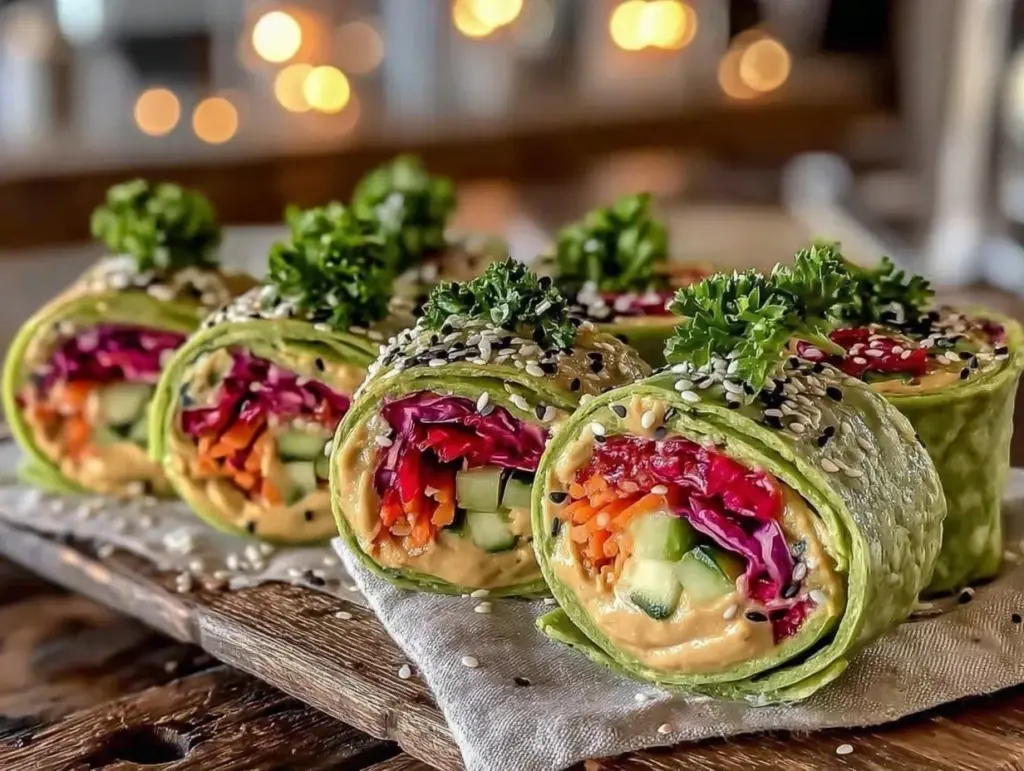
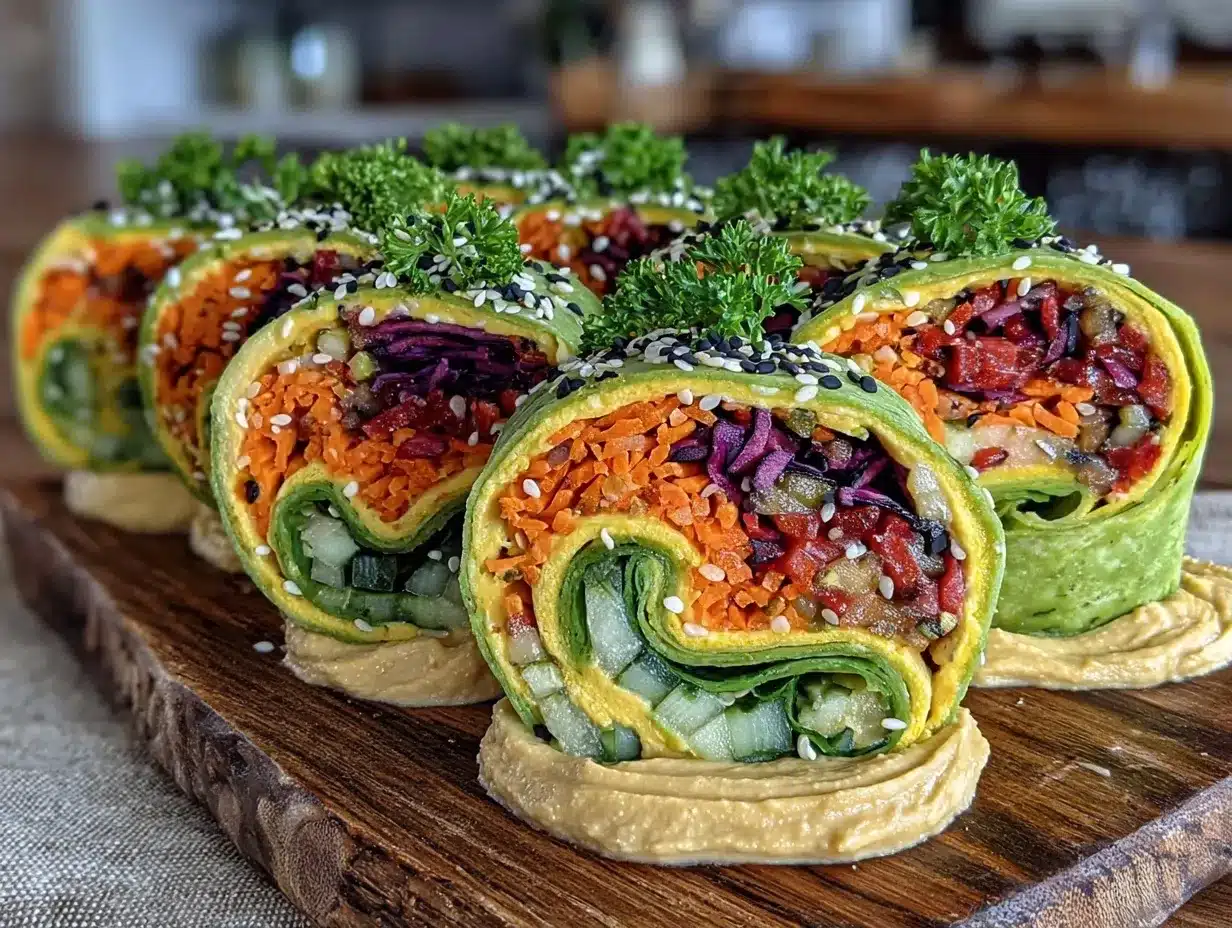
Once rolled, slice it in half diagonally. This reveals the beautiful rainbow layers inside. Serve immediately. The wrap is best fresh. If you let it sit too long, the tortilla will get soggy from the veggies. But honestly, it’s so good that you probably won’t have leftovers.
Total Time: About 15 minutes (5 minutes active blending, 10 minutes assembly)
Built-in Troubleshooting
- Hummus is too thick: Add ice water, one tablespoon at a time, while blending.
- Wrap is falling apart: You didn’t spread enough hummus, or you didn’t roll it tight enough. Use more hummus as glue and roll with tension.
- Wrap is too big: Use smaller tortillas or cut them in half for mini wraps.
- Garlic is too strong: Use less garlic in the hummus, or soak the raw onion slices in cold water to mellow the bite.
Expert Tips & Tricks
Here’s everything I’ve learned from making these wraps dozens of times. These tips will save you from my mistakes.
Don’t Skimp on the Hummus
I see people putting a tiny smear of hummus and then wondering why it tastes dry. The hummus is the flavor carrier. It needs to be a generous layer. Don’t be shy. It’s not that many calories, and it makes all the difference.
Keep Veggies Dry
This is crucial. If your spinach or cucumber is wet, your wrap will be soggy within minutes. Wash your greens, dry them thoroughly in a salad spinner or with paper towels, and wait until they’re dry before assembling. Same with tomatoes. Pat them dry if they’re juicy.
Use the Right Tortilla
Thin flour tortillas are best for rolling. Whole wheat can be brittle and crack if you roll it too tightly. If you use whole wheat, warm it up for 10 seconds in the microwave to make it pliable. Don’t use thick burrito-sized tortillas unless you want a giant wrap. Stick to the 8-10 inch size.
Prep Ahead Smartly
You can prep all the veggies the night before. Store them in separate airtight containers in the fridge. This makes assembly lightning fast in the morning. But don’t assemble the wraps until you’re ready to eat them. Assembled wraps get soggy fast.
The Ice Water Trick
I mentioned this for the hummus, but it’s worth repeating. Adding ice water while blending aerates the hummus, making it lighter and fluffier. It’s a restaurant trick that’s easy to do at home.
Don’t Overstuff
It’s tempting to pile on every vegetable you have. Resist. A moderate amount of filling rolls better and tastes better because you get a bit of everything in each bite. If you overstuff, you’ll end up with a messy half-eaten wrap.
Variations & Substitutions
Once you’ve nailed the basic version, here’s how you can mix it up. I’ve tried all of these.
Protein-Packed
Add grilled chicken strips. I love this with easy honey chipotle grilled chicken skewers—the smoky flavor pairs amazing with the fresh veggies. You can also add canned tuna, chickpeas (extra!), or sliced turkey.
Mediterranean Style
Add kalamata olives, sun-dried tomatoes, and artichoke hearts. Use pita bread instead of tortillas for a different texture. It’s like a wrap version of a Greek salad.
Spicy Kick
Add sliced jalapeños or a drizzle of hot sauce inside the wrap. Use spicy hummus if you can find it, or stir sriracha into your plain hummus.
Green Machine
Double the greens. Add avocado slices instead of feta for a creamier, dairy-free option. Add spinach, kale, and basil. It’s super fresh and vibrant.
Dietary Modifications
- Gluten-Free: Use gluten-free tortillas or lettuce leaves (like butter lettuce) as the wrap. The gluten-free tortillas can be brittle, so warm them slightly before rolling.
- Vegan: Skip the feta cheese. The hummus and veggies are already vegan. Just make sure your tortillas don’t contain dairy (most don’t, but check the label).
- Dairy-Free: Skip the feta. Use the same gluten-free or standard tortilla.
- Lower Carb: Use large lettuce leaves or low-carb wraps. Reduce the tortilla size.
Serving & Storage
How to serve these wraps and what to do with leftovers.
How to Serve
I usually serve these straight from the cutting board. They look beautiful sliced in half, showing off the rainbow layers. They’re great for lunch boxes, picnics, or a light dinner. Pair them with a side of fruit or a simple green salad if you’re hungry.
They also go well with a glass of iced tea or a fresh raspberry peach iced tea—the fruity, refreshing drink matches the light, fresh vibe of the wrap perfectly.
Storage Instructions
Refrigerator: These are best eaten fresh. If you must store them, wrap each one tightly in plastic wrap or parchment paper. They’ll last in the fridge for up to 24 hours. After that, the tortilla will get soggy and the veggies will wilt. It’s still safe to eat, but the texture won’t be great.
Reheating: Do not reheat these. They are a cold/room temperature dish. Heating them will make the tortilla tough and the veggies mushy.
Freezing: Do not freeze these. The raw vegetables will turn to mush when thawed, and the hummus will separate. It’s not worth it.
Meal Prep Strategy: Prep all the veggies in advance. Store them in separate containers. Make the hummus and store it in a jar. Assemble the wraps right before you eat them. This is the only way to keep them fresh and tasty.
Nutrition Information
I’m not a nutritionist, but here’s the breakdown if you’re tracking. This is per wrap, based on 4 servings.
Per Serving (1 Wrap):
- Calories: 350
- Protein: 10g
- Carbs: 45g
- Fiber: 6g
- Sugar: 6g
- Fat: 14g
- Saturated Fat: 2g
- Cholesterol: 5mg
- Sodium: 520mg
What’s Good: High in fiber from the veggies and chickpeas. Good source of plant-based protein. Low in saturated fat. Packed with vitamins from the colorful vegetables.
What to Know: Higher in carbs from the tortilla. Sodium can vary based on the hummus and olives used. It’s a balanced, nutrient-dense meal.
My Take: This is a healthy, satisfying lunch. It’s not a diet food, but it’s light enough to keep you energized. When I want to make it lighter, I use whole wheat wraps and skip the feta. But usually? I just enjoy it as a fresh, tasty meal.
Final Thoughts
So that’s my go-to rainbow veggie wraps with hummus! I’ve probably talked your ear off at this point, but when you make a recipe this often, you have a lot to say about it. This has saved me from boring lunches more times than I can count. It’s my answer to “what’s for lunch” when I want something fresh, healthy, and actually delicious.
It’s also a great way to use up those veggies that are starting to wilt in the crisper drawer. Toss them in a wrap, and they taste fresh again. It’s forgiving, it’s easy, and it’s honestly just fun to eat. Make it yours! Try different veggies, swap the hummus for tzatziki or pesto, or add some grilled protein. The best recipes are the ones you adapt to your tastes.
If you make this, drop a comment and let me know what you think! I love hearing how recipes turn out in your kitchen. And if something doesn’t work, tell me that too—I’m here to help troubleshoot.
Happy cooking! And I hope your kitchen smells half as good as mine does right now (fresh veggies and lemon, obviously).
Frequently Asked Questions
Can I make the hummus ahead of time?
Yes! In fact, it often tastes better the next day because the flavors have had time to meld. Store it in an airtight container in the fridge for up to 5 days. Give it a stir before using, as the tahini might separate slightly.
Why did my wrap fall apart?
Usually, this means two things: either you didn’t spread enough hummus to act as glue, or you didn’t roll it tightly enough. Make sure the hummus covers the entire area where you’re rolling. Also, don’t overstuff it. Less filling is easier to roll. And if your tortillas are old or dry, they might crack. Use fresh tortillas.
Can I use lettuce leaves instead of tortillas?
Absolutely. Large butter lettuce or romaine leaves work great for a low-carb, gluten-free option. Just be careful—they’re more fragile than tortillas. Use less filling and roll gently. It’s like making a taco shell out of lettuce.
What kind of hummus is best for wraps?
Smooth, creamy hummus is best. Avoid chunky or roasted varieties if you want the veggies to shine. Plain or garlic hummus is classic. If you’re making your own, the ice water trick makes it extra creamy and spreadable.
How do I keep the wrap from getting soggy?
The key is dry veggies. Make sure your spinach, cucumber, and tomatoes are thoroughly dried after washing. Also, assemble the wrap right before eating. If you have to pack it for lunch, wrap it tightly in parchment paper and keep it cool. It’ll hold up for a few hours, but it’s best fresh.
Can I add cheese to this?
Feta is my go-to because it’s salty and crumbly. But you can also add shredded cheddar, mozzarella, or goat cheese. Just keep it moderate so it doesn’t overpower the fresh veggies. If you’re dairy-free, skip it or use a vegan cheese alternative.
Can I use canned hummus?
Yes, store-bought hummus works perfectly fine. Look for a brand you like that has a smooth texture. I prefer the plain or garlic flavors. If you’re in a rush, this is a great shortcut. But homemade is so easy that I usually just make it.
Pin This Recipe!
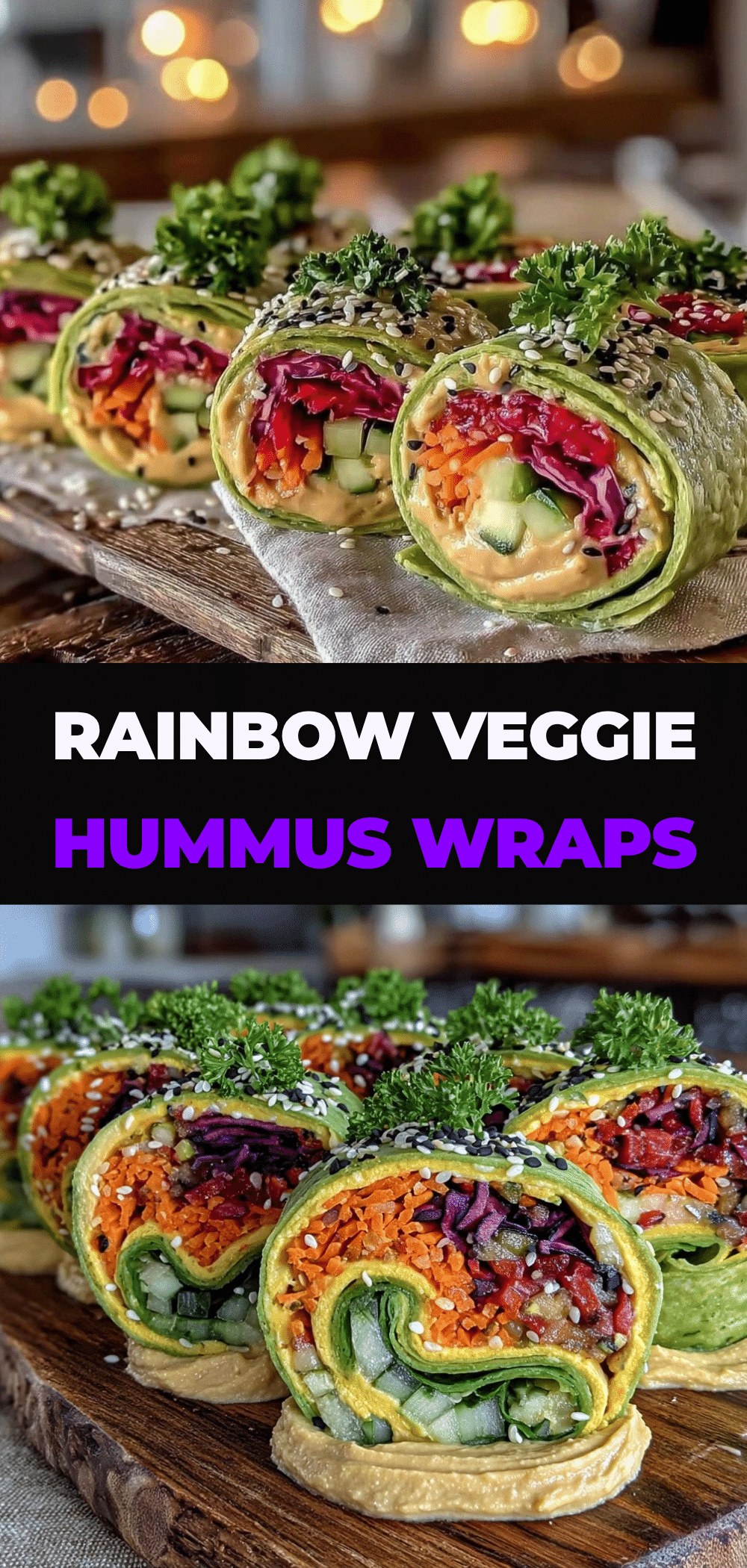

Rainbow Veggie Wraps: Best 4-Ingredient Hummus Recipe
- Total Time: 15 minutes
- Yield: 4 servings 1x
Description
A fresh, vibrant, and easy-to-make lunch featuring large tortillas filled with creamy homemade hummus and a colorful assortment of crisp vegetables. This recipe is ready in 15 minutes, requires no cooking, and is perfect for meal prep or a quick, healthy lunch.
Ingredients
- 4 large flour tortillas or whole wheat wraps (10-inch)
- 1 cup (240g) hummus (homemade or store-bought smooth variety)
- 2 large handfuls mixed greens (spinach and arugula)
- 1 medium cucumber, peeled and sliced into thin strips
- 1 medium red bell pepper, thinly sliced
- 1 cup (100g) shredded carrots
- 1/4 medium red onion, thinly sliced
- 1/2 cup cherry tomatoes, halved
- 1/4 cup feta cheese, crumbled (optional)
- 1/4 cup black olives, sliced
- 1 can (15oz) chickpeas, drained and rinsed (for hummus)
- 3 tablespoons tahini (for hummus)
- 2 tablespoons fresh lemon juice (for hummus)
- 1 clove garlic, minced (for hummus)
- 1–2 tablespoons ice water (for hummus)
- 1/2 teaspoon salt (for hummus)
Instructions
- Make the hummus: In a food processor, combine chickpeas, tahini, lemon juice, minced garlic, salt, and 1 tablespoon of ice water. Pulse to break up chickpeas, then blend on high for 1-2 minutes until smooth. Scrape down sides and add remaining ice water if needed for a fluffy consistency.
- Prep the vegetables: Wash and thoroughly dry the mixed greens. Slice cucumber into matchsticks, bell pepper into thin strips, and red onion into thin slices. Shred carrots and halve cherry tomatoes. Slice olives.
- Assemble the wrap: Lay a tortilla flat. Spread about 1/4 cup of hummus evenly over the center, leaving a 2-inch border.
- Layer the fillings: Place mixed greens on the hummus, followed by rows of cucumber, peppers, and carrots. Top with tomatoes, olives, and feta cheese.
- Roll the wrap: Fold the bottom edge up over the filling, tuck in the sides, and roll tightly from the bottom to the top.
- Slice and serve: Cut the wrap in half diagonally to reveal the layers. Serve immediately.
- Troubleshooting: If hummus is too thick, add more ice water. If the wrap falls apart, ensure you used enough hummus as glue and rolled with tension.
Notes
Ensure all vegetables are thoroughly dried after washing to prevent soggy wraps. The hummus acts as the ‘glue’ for the wrap, so spread it generously. For best texture, assemble wraps immediately before eating. Hummus can be made ahead and stored in the fridge for up to 5 days. Do not freeze assembled wraps.
- Prep Time: 10 minutes
- Cook Time: 0 minutes
- Category: Lunch
- Cuisine: Mediterranean
Nutrition
- Serving Size: 1 wrap
- Calories: 350
- Sugar: 6
- Sodium: 520
- Fat: 14
- Saturated Fat: 2
- Carbohydrates: 45
- Fiber: 6
- Protein: 10
Keywords: rainbow veggie wraps, hummus recipe, healthy lunch, meal prep, vegetarian wraps, quick lunch, gluten-free options, no-cook recipe