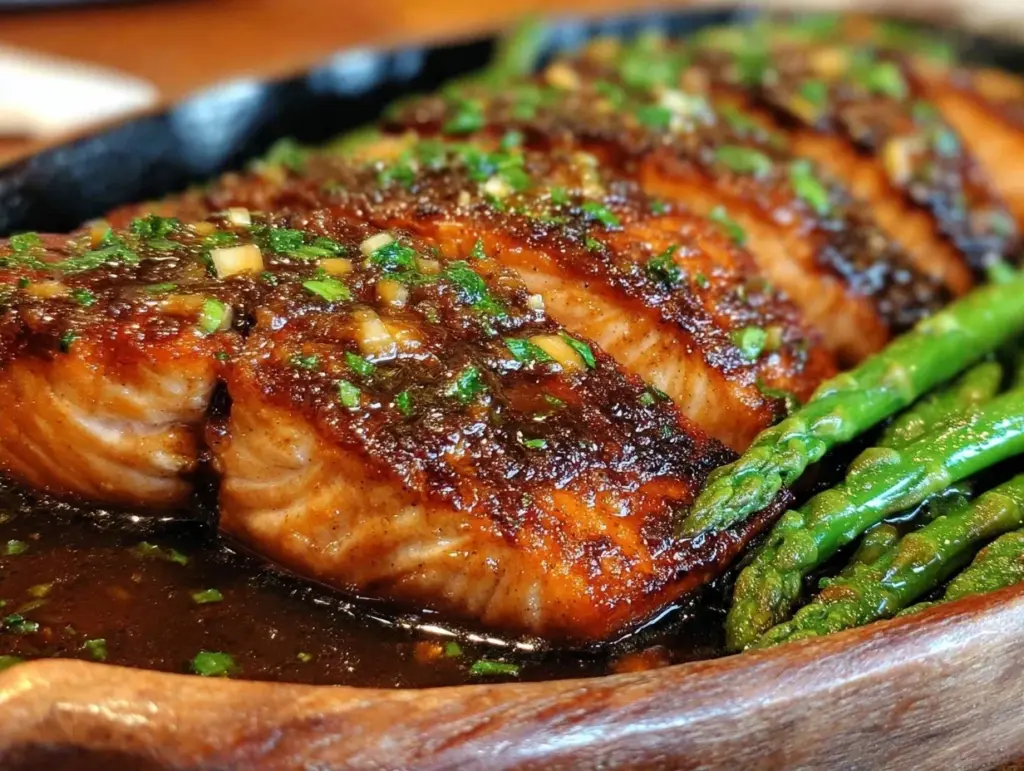
Let’s be real for a second. I used to think cooking salmon was a high-stakes gamble. You know the kind—where you stare at the fish like it’s going to explode if you look at it wrong, and you spend half the meal worrying if it’s raw in the middle or dried out like shoe leather. I’ve had bad experiences. I’ve had that sad, dry, rubbery salmon that makes you question your life choices at the dinner table.
Then I discovered the one-pan honey garlic salmon method, and honestly? It changed everything. It’s not just easier; it’s actually forgiving. If you can chop an asparagus spear and whisk two ingredients together, you can make this. There is no complex temperature monitoring, no flipping nightmares, and definitely no sad, overcooked fish. Just sweet, savory, sticky salmon and perfectly roasted veggies sitting together in one pan.
I’ve made this one-pan honey garlic salmon probably thirty times in the last year. Some nights it’s a quick solo meal, other times it’s the centerpiece for a casual dinner with friends. The beauty of it isn’t just in the flavor—though that sweet, garlicky glaze is seriously addictive—it’s in the simplicity. You dump everything in a pan, you roast it, and you’re done. No standing over the stove stirring. No dirty pots. Just one pan to wash later.
This recipe is the definition of “less is more.” You don’t need a pantry full of exotic spices or a shopping trip to a specialty store. You need salmon, asparagus, honey, garlic, and a few pantry staples. It’s the kind of meal that makes you feel like a gourmet chef without the stress. And trust me, once you try this, you’re never going back to ordering takeout salmon again. It’s faster, cheaper, and tastes infinitely better.
Why You’ll Love This Recipe
There are a million reasons to add this to your rotation, but I’m going to stick to the ones that actually matter when you’re hungry and tired. This isn’t just another fish recipe; it’s a weeknight lifesaver that delivers restaurant-quality results without the restaurant price tag.
- Zero Cleanup Drama — Seriously. One sheet pan. One bowl for the sauce. That’s it. I hate doing dishes almost as much as I hate cooking, so this is my favorite kind of meal. I threw together a one-pan Greek lemon chicken recently that was similarly easy, but this salmon version is even quicker.
- The Glaze is Addictive — The combination of honey and garlic creates this sticky, caramelized coating that clings to the fish. It’s sweet, savory, and a little salty. It’s the kind of flavor profile that makes your family ask for seconds before they’ve even finished their first bite.
- Beginner-Proof — I say this with confidence: you really can’t mess this up. The oven does the work. You don’t need to flip the fish. You don’t need to baste it. You just set a timer and wait. If you can set a timer, you can cook this.
- Healthy Without Being Boring — Salmon is packed with omega-3s, and asparagus is a nutritional powerhouse. But this doesn’t taste like “diet food.” It tastes indulgent. The honey glaze makes it feel like a treat, not a chore. It’s the perfect balance of nutritious and satisfying.
- Fast and Forgiving — It takes about 20 minutes from start to finish. But more importantly, it’s forgiving. If your salmon is a little thick or thin, the one-pan method handles it well. You’re not racing against a boiling pot or burning garlic in a hot pan. You just roast it.
This is my go-to when I want to impress without trying too hard. It’s elegant enough for a date night but simple enough for a Tuesday. I make this when I want to eat well, but I don’t want to spend an hour in the kitchen. And honestly? The leftovers are great too. I’ve even eaten cold salmon with this glaze the next day, and it was still delicious.
Ingredients You’ll Need
Here’s the best part: you probably have almost everything in your kitchen right now. This recipe relies on high-quality, simple ingredients. There’s no weird sauce packet or obscure spice blend. Just real food that tastes incredible when combined.
For the Salmon and Veggies
Salmon fillets (1.5 lbs / 680g) — I buy wild-caught sockeye or atlantic salmon. Look for fillets that are roughly the same thickness so they cook evenly. If they’re huge, cut them in half. Fresh is best, but frozen works if you thaw it completely first. I’ve used honey chipotle chicken before, and while that’s great, the honey here really shines with the fish.
Asparagus spears (1 bunch / about 1 lb / 450g) — Pick spears that are relatively uniform in thickness. The thick ones at the bottom are tender; the thin tips roast beautifully. Snap off the woody ends before you start. I usually just grab the spear and bend it—it snaps naturally where the tough part ends.
Avocado oil or olive oil (2 tablespoons) — I prefer avocado oil because it has a higher smoke point, which is good for roasting. Olive oil works fine too, just don’t burn it. You’re not frying, so either is great.
Salt and black pepper — Kosher salt is my go-to because it’s easy to control. Freshly cracked black pepper adds a nice bite. Don’t skip the seasoning; it brings out the natural flavor of the fish.
For the Honey Garlic Glaze
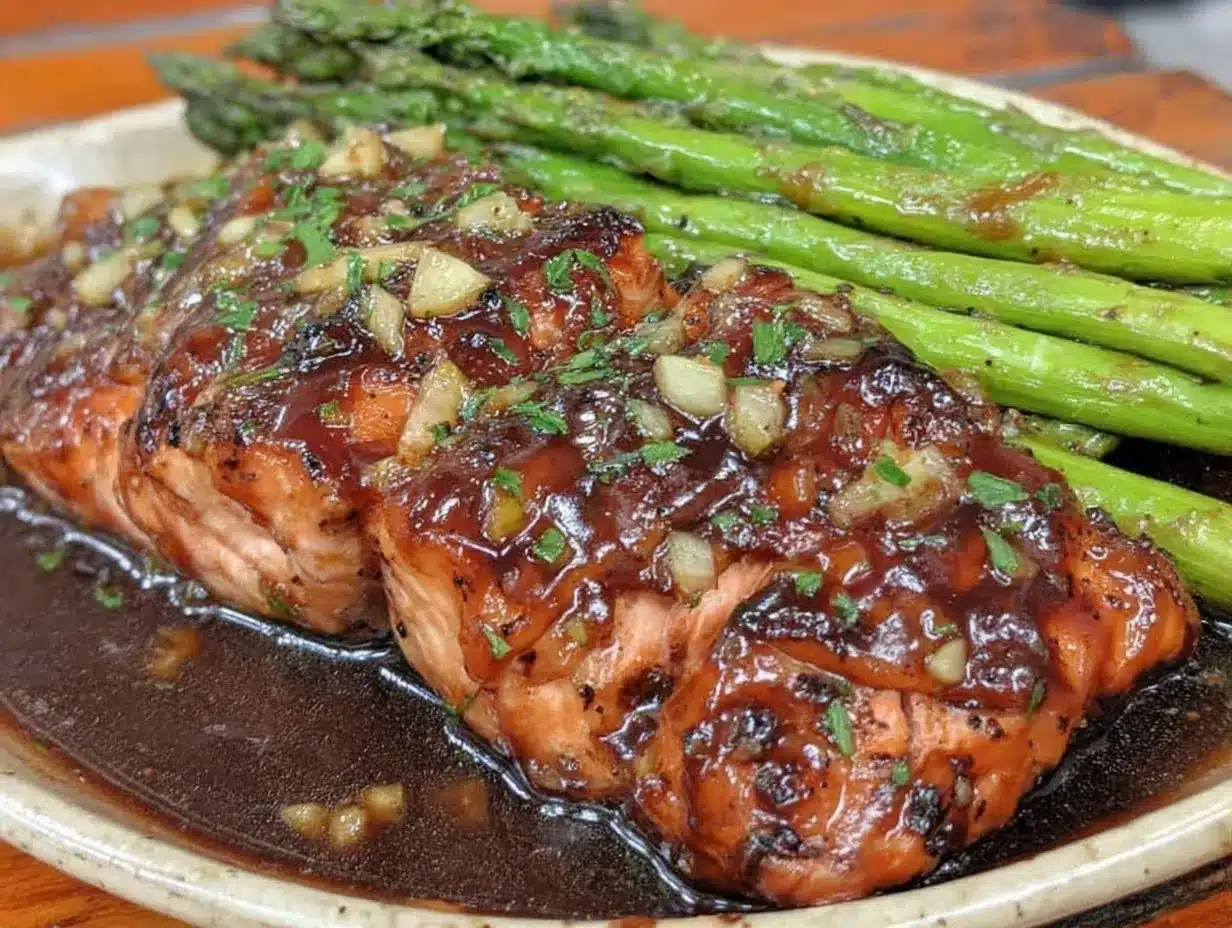
Honey (3 tablespoons) — Use good quality honey. I like clover or wildflower. It doesn’t have to be fancy, but cheap, runny honey might not thicken as nicely. This is where the sweetness comes from.
Garlic (4 cloves, minced / about 1 tablespoon) — Fresh garlic is non-negotiable here. Jarred garlic just doesn’t have the same punch in a glaze. Mince it finely so it distributes evenly. If you’re lazy, a garlic press works, but mince by hand for better texture.
Soy sauce (2 tablespoons) — This adds the salty, umami depth that balances the sweet honey. I use low-sodium soy sauce so I can control the salt level. Tamari works if you need gluten-free.
Rice vinegar (1 tablespoon) — This cuts through the richness of the salmon and honey. It adds a subtle tang that keeps the flavor from being cloying. White vinegar works in a pinch, but rice vinegar is milder and sweeter.
Red pepper flakes (½ teaspoon, optional) — Just a pinch. It adds a tiny warmth that you barely notice but makes the flavor profile more interesting. If you hate spice, skip it. If you like a kick, add more.
Lemon juice (1 tablespoon) — Freshly squeezed. It brightens everything up. I usually juice half a lemon. If you don’t have fresh lemons, bottled juice works, but fresh is better.
Equipment Needed
You don’t need fancy gear for this. Here’s what I actually use in my kitchen.
Large sheet pan — I use a standard 13×18 inch rimmed baking sheet. It needs to be big enough to hold the salmon and asparagus in a single layer. If your pan is too small, the veggies will steam instead of roast, and you won’t get that nice texture.
Parchment paper — I line my pan with parchment. It makes cleanup literally zero. Just toss the paper away. It also prevents the honey from sticking and burning on the pan.
Small mixing bowl — Just a ramekin or small bowl to whisk the glaze. It makes it easy to drizzle evenly.
Whisk — To mix the honey, garlic, soy sauce, and vinegar. A fork works too, but a whisk blends it smoother.
Pastry brush or spoon — To apply the glaze. I use a spoon to drizzle it over the salmon and veggies. It’s faster than brushing.
Knife and cutting board — For prepping the asparagus. A sharp knife makes snapping the ends easier.
How to Make It: Step-by-Step
Alright, let’s make this! It’s incredibly straightforward. I’m walking you through exactly how I do it, including the little tricks that ensure your salmon comes out perfect every time.
Step 1: Prep Your Pan and Oven
Preheat your oven to 400°F (200°C). Line your large sheet pan with parchment paper. This is crucial for easy cleanup and to prevent sticking. While the oven heats up, you’re ready for the next step.
Step 2: Prep the Asparagus
Wash the asparagus and pat it dry. Take one spear and bend it—it will snap naturally where the tough, woody end meets the tender part. Discard the tough ends. Trim the rest so they’re roughly even in length, about 6-8 inches. Place them on the prepared sheet pan in a single layer. Drizzle with 1 tablespoon of oil and sprinkle with a pinch of salt and pepper. Toss them with your hands to coat evenly.
Step 3: Prep the Salmon
Pat the salmon fillets dry with paper towels. This sounds boring, but drying the fish helps the glaze stick and prevents steaming. Place the salmon on the sheet pan, next to the asparagus. If your pan is tight, you can put the salmon on top of the asparagus, but side-by-side is better for even roasting. Drizzle the salmon with the remaining 1 tablespoon of oil. Season lightly with salt and pepper.
Step 4: Make the Glaze
In a small bowl, combine the honey, minced garlic, soy sauce, rice vinegar, red pepper flakes, and lemon juice. Whisk until smooth and well combined. The garlic will be suspended in the mixture, which is perfect. You want every bite to have a bit of that garlicky flavor.
Step 5: Glaze and Roast
Drizzle half of the glaze over the salmon fillets. Save the rest for later. Put the pan in the preheated oven. Roast for 10-12 minutes. You’re looking for the salmon to be opaque and flake easily with a fork, but still moist in the center. The asparagus should be tender-crisp and slightly charred at the tips.
Step 6: Final Glaze and Serve
Remove the pan from the oven. Drizzle the remaining glaze over the salmon and asparagus. The residual heat will warm the sauce and make it sticky. Let it sit for 2-3 minutes before serving. This allows the flavors to meld and the sauce to thicken slightly. Garnish with sesame seeds or chopped green onions if you have them. Serve immediately.
Total Time: About 20 minutes (5 minutes prep, 15 minutes cooking). It’s fast, but don’t rush the prep. Good prep makes the cooking effortless.
Expert Tips & Tricks
Here’s everything I’ve learned from making this dozens of times. These tips will save you from my early mistakes.
Don’t Overcook the Salmon — This is the biggest mistake people make. Salmon continues to cook slightly after you take it out of the oven. Pull it when it’s just barely opaque in the center. It will finish cooking on the plate. Overcooked salmon is dry and rubbery. Undercooked is safe if it’s flaky and moist.
Uniform Asparagus Spears — Try to pick asparagus that’s roughly the same thickness. If you have a mix of thick and thin spears, put the thick ones on the pan first and add the thin ones halfway through. Or just chop the thick ones in half. Even cooking is key.
Glaze Timing — I glaze halfway through, but you can also glaze at the end. I prefer halfway because the honey caramelizes a bit, giving you those sticky, delicious bits. But if you’re worried about burning, add it at the end. Both work.
Garlic Minced Fine — Make sure your garlic is finely minced. If you have big chunks, they’ll burn in the oven and taste bitter. Fine mince distributes the flavor evenly.
Parchment is Your Friend — I know some people swear by foil, but parchment is better for this. Foil can stick if the honey gets too hot. Parchment releases easily. And cleanup is instant.
Variations & Substitutions
Once you’ve nailed the basic version, here’s how you can mix it up. I’ve tried all of these.
Teriyaki Style — Swap the rice vinegar for mirin and add a teaspoon of ginger. It’s a classic Japanese flavor profile that works beautifully with salmon.
Spicy Sriracha — Add 1 tablespoon of sriracha to the glaze. It adds a nice heat that balances the sweet honey. I love this version with spicy sriracha chicken, and it works just as well with fish.
Ginger Lime — Add 1 teaspoon of grated ginger and swap the lemon juice for lime juice. It’s brighter and more tropical.
Gluten-Free — Use tamari instead of soy sauce. Everything else is naturally gluten-free.
Other Veggies — Broccoli florets, green beans, or bell peppers work great instead of asparagus. Just adjust cooking time as needed.
Serving & Storage
How to Serve: I serve this with steamed rice or quinoa to soak up the extra glaze. A simple side salad with a vinaigrette balances the richness. It’s also great with roasted potatoes if you want a heartier meal.
Storage: Store leftovers in an airtight container in the fridge for up to 3 days. The salmon will hold up well, though it’s best eaten warm.
Reheating: Reheat gently in the microwave or in a skillet over low heat. Add a splash of water or broth to keep it moist. Avoid high heat, which will dry out the fish.
Freezing: I don’t recommend freezing this. The texture of the salmon changes, and the asparagus gets mushy. It’s best made fresh.
Nutrition Information
I’m not a nutritionist, but here’s the breakdown if you’re tracking.
Per Serving (based on 4 servings):
- Calories: 320
- Protein: 25g
- Carbs: 22g
- Fiber: 3g
- Sugar: 16g
- Fat: 14g
- Sodium: 450mg
It’s high in protein and healthy fats, with a moderate amount of carbs from the honey and veggies. It’s a balanced, nutritious meal.
Final Thoughts
So that’s my go-to one-pan honey garlic salmon! I’ve probably talked your ear off at this point, but when you make a recipe this often, you have a lot to say about it. This has saved weeknight dinners more times than I can count. It’s my answer to “what’s for dinner” when I want something healthy, delicious, and easy. My family is happy, and I’m happy because I’m not stressed about cooking.
Make it yours! Try different veggies, adjust the spice, or add more garlic. The best recipes are the ones you adapt to your tastes. If you make this, drop a comment and let me know what you think! I love hearing how recipes turn out in your kitchen.
Happy cooking! And I hope your kitchen smells half as good as mine does right now.
Frequently Asked Questions
Can I use frozen salmon?
Yes, but you must thaw it completely first. Pat it very dry before seasoning. Frozen salmon releases more water, so drying it well is crucial to prevent steaming.
How do I know when the salmon is done?
It’s done when it flakes easily with a fork and is opaque throughout. The internal temperature should be 145°F (63°C), but I pull it at 140°F because it will carryover cook. If it’s still translucent in the center, give it 2 more minutes.
Can I use fresh ginger instead of garlic?
You can! I often use a mix of both. Fresh ginger adds a nice warmth. Use 1 teaspoon of grated ginger for every 2 cloves of garlic.
Why did my honey burn?
Honey burns easily at high temperatures. If your oven runs hot, check the salmon at 10 minutes. Lower the heat slightly if you see browning too fast. Or add the glaze at the end instead of halfway through.
Can I make this in an air fryer?
Yes! Cook at 375°F for 8-10 minutes. You’ll need to cook the asparagus and salmon separately or in batches, as they have different cooking times. The salmon goes in last.
What sides go well with this?
Steamed rice, quinoa, roasted potatoes, or a simple green salad. It’s versatile and pairs well with almost anything.
Pin This Recipe!
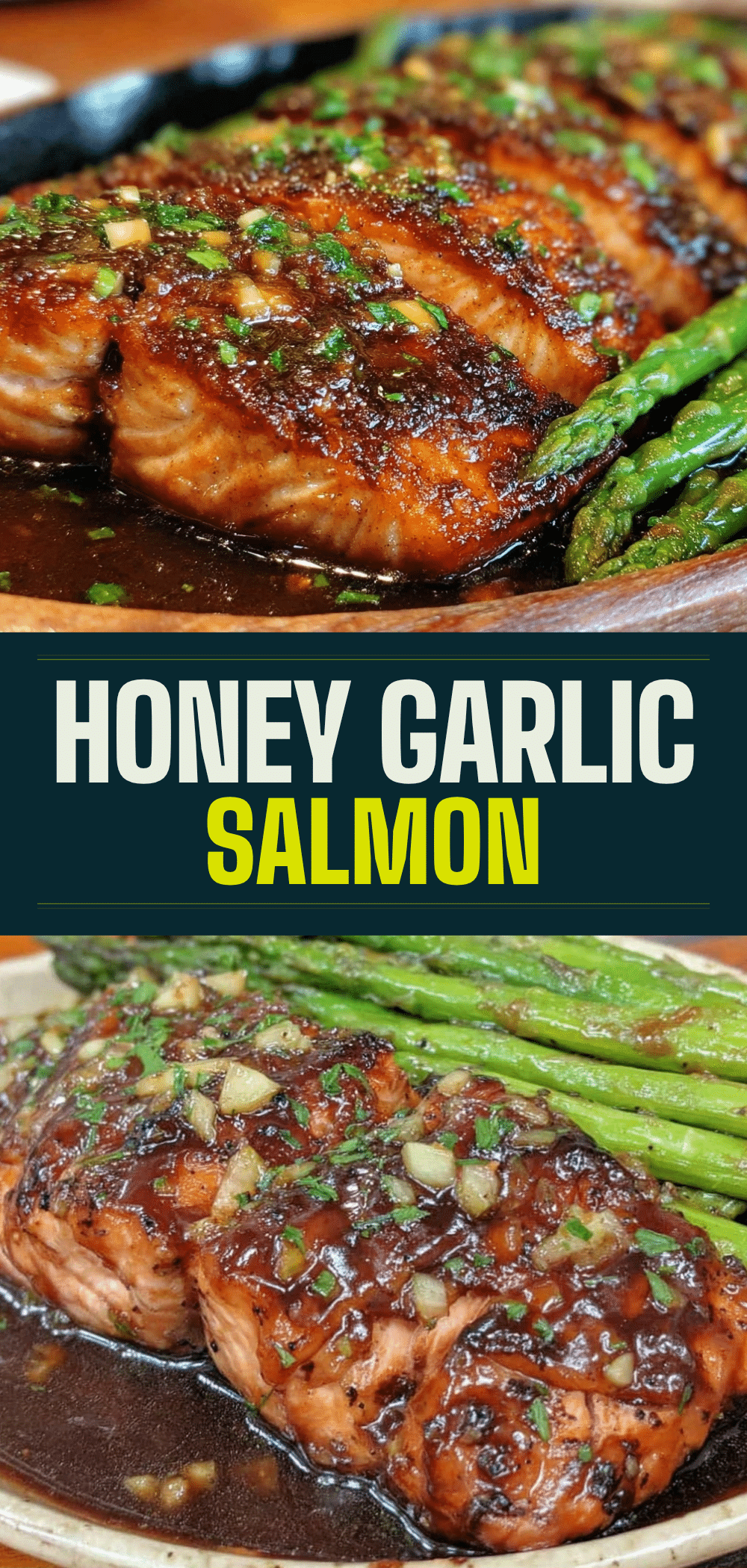
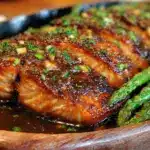
One-Pan Honey Garlic Salmon: Foolproof Dinner
- Total Time: 20 minutes
- Yield: 4 servings 1x
Description
A forgiving, beginner-proof weeknight dinner featuring salmon and asparagus roasted on a single sheet pan with a sweet, savory, and sticky honey garlic glaze.
Ingredients
- 1.5 lbs salmon fillets (wild-caught sockeye or atlantic)
- 1 bunch asparagus spears (about 1 lb / 450g)
- 2 tablespoons avocado oil or olive oil
- Salt and black pepper to taste
- 3 tablespoons honey
- 4 cloves garlic, minced
- 2 tablespoons soy sauce (or tamari for gluten-free)
- 1 tablespoon rice vinegar
- 1 tablespoon lemon juice
- 1/2 teaspoon red pepper flakes (optional)
Instructions
- Preheat oven to 400°F (200°C). Line a large 13×18 inch rimmed baking sheet with parchment paper.
- Wash and dry asparagus. Snap off woody ends and trim to even lengths. Place on the sheet pan in a single layer, drizzle with 1 tablespoon oil, and season with salt and pepper.
- Pat salmon fillets dry with paper towels. Place on the sheet pan next to the asparagus. Drizzle with remaining 1 tablespoon oil and season lightly with salt and pepper.
- In a small bowl, whisk together honey, minced garlic, soy sauce, rice vinegar, red pepper flakes, and lemon juice until smooth.
- Drizzle half of the glaze over the salmon fillets. Roast in the preheated oven for 10-12 minutes, until salmon is opaque and flakes easily but remains moist.
- Remove pan from oven. Drizzle remaining glaze over salmon and asparagus. Let sit for 2-3 minutes to allow sauce to thicken. Garnish with sesame seeds or green onions if desired and serve immediately.
Notes
Do not overcook the salmon; it continues to cook slightly after removal from the oven. Ensure garlic is finely minced to prevent burning. For best results, use fresh lemon juice and high-quality honey. Leftovers can be stored in the fridge for up to 3 days.
- Prep Time: 5 minutes
- Cook Time: 15 minutes
- Category: Main Course
- Cuisine: Asian Fusion
Nutrition
- Serving Size: 1 fillet and portion
- Calories: 320
- Sugar: 16
- Sodium: 450
- Fat: 14
- Saturated Fat: 2
- Carbohydrates: 22
- Fiber: 3
- Protein: 25
Keywords: honey garlic salmon, one-pan dinner, easy salmon recipe, weeknight dinner, healthy salmon, asparagus recipes, gluten-free salmon