Last Tuesday, I was standing in my kitchen at 6:45 PM, staring into the abyss of our nearly empty refrigerator. The kids were already asking if we could order pizza again (the third time this week), and I was too exhausted to even think about chopping vegetables. My husband had just walked in the door, looking like he’d gone twelve rounds with a punching bag, and he muttered, “Please tell me dinner is simple.”
I had two options: make something complicated and stress out everyone, or throw together whatever was lurking in the back of the fridge. I chose the latter. I grabbed a package of chicken breasts that had been hiding behind the cheese, a bag of spinach that was starting to wilt, and a jar of alfredo sauce I’d bought on a whim three months ago. I figured, why not? Worst case scenario, we’d have mediocre pasta. Best case, we’d survive.
Thirty minutes later, we were sitting at the table, forks clinking, completely silent except for the sounds of happy chewing. My daughter actually said, “Mom, this is restaurant good.” My husband went back for seconds. Twice. It turns out, that lazy, half-thought-out meal was actually the best thing I’d made all month.
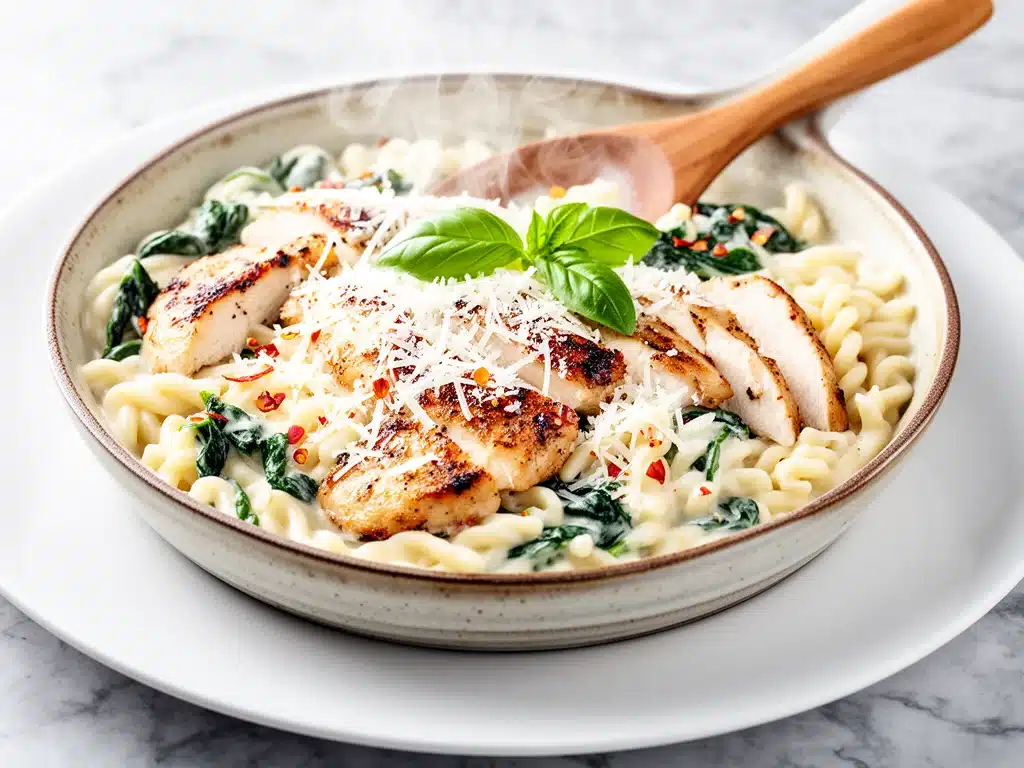
That was the birth of my go-to creamy chicken florentine pasta. I didn’t plan it. I didn’t blog about it. I just ate it. But since that night, I’ve made this pasta recipe at least twenty times. I’ve tweaked it, tested it, and perfected it until it’s reliable, delicious, and fast enough for even the most chaotic weeknights. This isn’t some complicated chef’s dream. It’s real food for real people who are tired, busy, and still want something that tastes amazing. If you’re looking for a weeknight dinner that actually works, this is it.
Why You’ll Love This Creamy Chicken Florentine Pasta
So, why does this specific combination of chicken, spinach, and cream sauce keep pulling me back to the stove? It’s not just because it tastes good (though it really does). It’s because it solves the biggest problem of modern home cooking: the tension between wanting something healthy-ish and wanting something comforting.
Here’s why this creamy chicken florentine pasta has earned a permanent spot in our rotation:
- It’s Stupid Simple — Seriously, if you can boil water and sauté chicken, you can make this. I’ve walked my teenage son through it over FaceTime while I was at work. He didn’t burn a single thing.
- Lightning Fast — 30 minutes from start to finish. And only 15 of those minutes are active cooking. The rest is just waiting for the pasta to boil. I make this on nights when I get home at 7pm and want to be done by 8pm.
- One-Pan Efficiency — Well, technically two pans (one for pasta, one for sauce), but that’s it. No fancy equipment, no complicated techniques. Just heat, stir, combine. Cleanup is a breeze.
- Hidden Veggies — The spinach wilts right into the sauce. It adds color, nutrition, and a nice earthy balance to the rich cream. My picky eaters don’t even notice it’s there until I point it out, and even then, they eat it.
- Crowd-Pleaser — I’ve served this to my vegetarian sister (just swap the chicken for extra mushrooms), my gluten-free neighbor (use GF pasta), and my dad who only eats meat. Everyone loves it. It’s the universal dinner language.
- Makes Amazing Leftovers — Honestly? It tastes even better the next day. The flavors meld together overnight. I deliberately make extra for lunch throughout the week. It reheats beautifully in the microwave.
This is my answer to “what’s for dinner” when I’m tired. No stress, no takeout guilt, just reliable, delicious food that makes everyone happy. It’s the kind of meal that makes you feel like a good parent or partner, even if you’re running on fumes.
Ingredients You’ll Need for Creamy Chicken Florentine Pasta
Here’s the best part: you probably have most of this already in your kitchen. This isn’t a recipe that requires a special trip to three different specialty stores. It’s pantry-friendly and fridge-clearing.
For the Protein and Base
Chicken breasts (2 large, about 1.5 lbs / 680g) — Boneless, skinless. I like to pound them slightly so they cook evenly. If you’re in a rush, use rotisserie chicken. Shred it up and toss it in at the end. Saves 15 minutes of cooking time.
Penne or Rigatoni pasta (1 pound / 450g) — I prefer tube-shaped pastas because they catch the creamy sauce perfectly. Rotini works too. Avoid spaghetti for this recipe; the sauce needs something to cling to. Save some pasta water before draining! This is non-negotiable.
Heavy cream (1.5 cups / 360ml) — Full-fat only. Half-and-half makes it too thin and watery. Trust me on this. If you want a lighter version, you can use half-and-half, but the texture won’t be as luxurious. I use heavy cream because I want this to be a treat.
For the Florentine Flavor
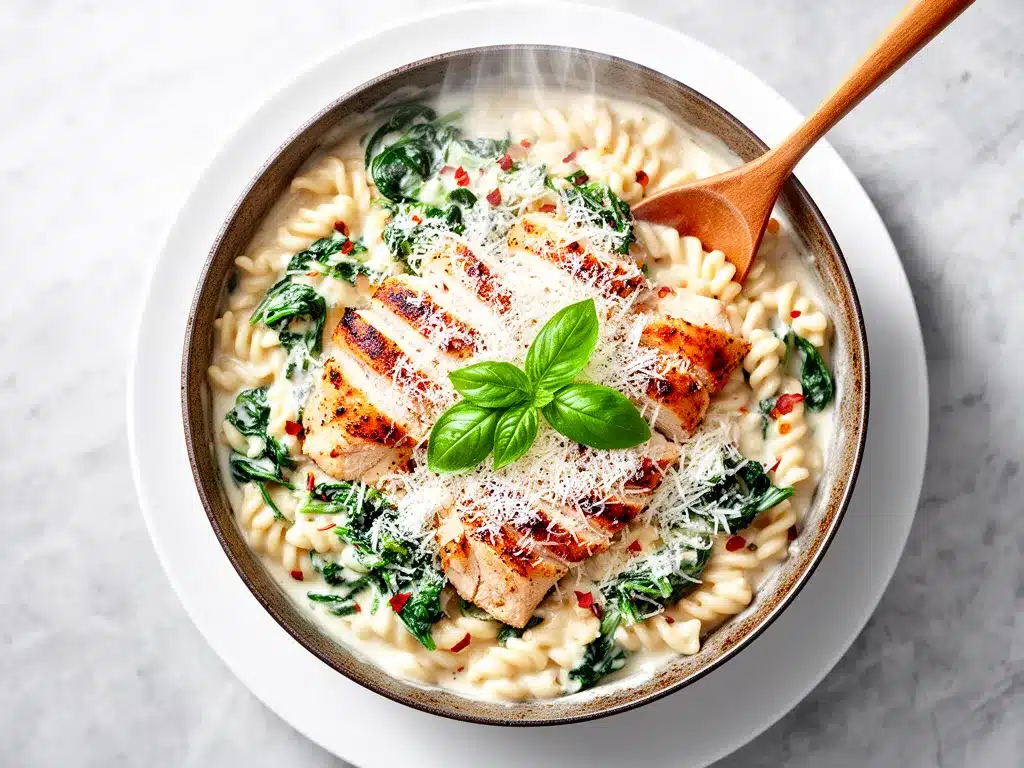
Fresh spinach (4 cups / 120g, packed) — Young, tender spinach works best. It wilts down to almost nothing. Don’t use mature, tough spinach; it gets stringy. I buy the pre-washed bags for convenience.
Garlic (4 cloves, minced / about 2 tablespoons) — Yes, four cloves. Don’t skimp. Fresh only—no jarred garlic in this recipe. Jarred garlic has a metallic taste that ruins the delicate cream sauce. If you’re lazy, buy pre-peeled cloves from the produce section.
Onion (1 medium yellow onion, diced / about 150g) — Sweet onions work too, but yellow gives better depth. White onions are too sharp. I like to sweat the onions until they’re translucent before adding the garlic.
Chicken broth (½ cup / 120ml) — Low-sodium is best so you can control the salt. Vegetable broth works for a vegetarian version. I keep low-sodium broth stocked just so I can make this on a whim.
For the Cheese and Seasoning
Parmesan cheese (1 cup / 100g, freshly grated) — Buy the block and grate it yourself. Pre-grated Parmesan has anti-caking agents that make the sauce grainy and prevent it from melting smoothly. It takes 3 minutes and makes a huge difference. My husband can tell when I’ve been lazy.
Butter (2 tablespoons) — For sautéing. I use unsalted butter so I can control the salt level. Olive oil works too, but butter adds that rich, comforting flavor.
Italian seasoning (1 teaspoon) — Or use equal parts dried basil and oregano. Fresh herbs work but add them at the very end if you use them. I keep a jar of Italian seasoning in my cupboard for emergencies like this.
Red pepper flakes (½ teaspoon) — Optional but adds a nice kick. Start with less if you’re sensitive to spice. It balances the richness of the cream.
Salt and black pepper — To taste. Always taste at the end and adjust. Parmesan is salty, so be careful adding extra salt.
Equipment Needed
You don’t need fancy equipment for this. Here’s what I actually use:
- Large pot — For boiling pasta. A 6-quart pot works well. Needs to fit a pound of pasta comfortably. My ancient pot from college still works fine.
- Large skillet or Dutch oven — 12-inch works best for the sauce. I prefer stainless steel or cast iron, but non-stick works too. This is where the magic happens.
- Sharp knife — For chopping onions and mincing garlic. Dull knives make you cry more—learned this the hard way.
- Cutting board — Any size works. I use plastic for easier cleanup.
- Wooden spoon or silicone spatula — For stirring. Don’t use metal on non-stick.
- Measuring cups and spoons — Pretty standard stuff. Dollar store versions work fine.
- Colander — For draining pasta. Or just use the lid to drain—I do this when I’m lazy.
- Box grater — For the Parmesan. Microplane works too if you want fine shreds.
Optional but nice: A garlic press saves time, but mincing works fine. I’m obsessed with my garlic press from IKEA—it’s like $3 and makes life easier.
How to Make It: Step-by-Step
Alright, let’s make this! I’m walking you through exactly how I do it, including the little tricks I’ve picked up over the years. This process is straightforward, but attention to detail makes all the difference.
Step 1: Prep Your Ingredients (5-8 minutes)
Before you turn on the stove, chop your onion, mince your garlic, and measure everything out. I know it seems fussy, but it makes the actual cooking way less stressful. Grate your Parmesan while you’re at it. Once you start cooking, things move fast. If you’re using raw chicken, pat it dry with paper towels and season both sides with salt and pepper. This helps it brown nicely.
Step 2: Cook the Pasta (8-10 minutes)
Bring a large pot of salted water to a boil—it should taste like the ocean. Add pasta and cook according to package directions until al dente (usually 8-10 minutes). IMPORTANT: Before draining, scoop out 1 cup of pasta water and set it aside. This starchy water is magic for the sauce. Drain the pasta and set aside. Don’t rinse it! Rinsing removes the starch that helps the sauce cling.
Step 3: Cook the Chicken (6-8 minutes)
While the pasta cooks, heat 1 tablespoon of butter in your large skillet over medium-high heat. Add the chicken breasts. Cook for 4-5 minutes per side, until golden brown and cooked through (internal temperature of 165°F / 74°C). Remove chicken from the pan and set aside on a plate. Let it rest for a few minutes before slicing or cubing. This keeps it juicy.
Step 4: Sauté the Aromatics (3-4 minutes)
In the same skillet (don’t clean it! Those brown bits are flavor), reduce heat to medium. Add the remaining 1 tablespoon of butter. Add the diced onion and cook for 2-3 minutes until it starts to soften and smell sweet. Add the minced garlic and red pepper flakes. Cook for 1 minute, stirring constantly. The garlic should smell amazing but not brown—browned garlic tastes bitter. This is where the foundation of the flavor is built.
Step 5: Build the Sauce (5-6 minutes)
Pour in the chicken broth and let it simmer for 2 minutes, scraping up any browned bits from the bottom of the pan. Add the heavy cream and Italian seasoning. Stir well and let it simmer for 3-4 minutes until it thickens slightly. The sauce should coat the back of a spoon. If it’s too thick, add a splash of that pasta water you saved. This is the moment where it starts to smell like a restaurant.
Step 6: Add the Cheese and Spinach (2-3 minutes)
Reduce heat to low. Add the grated Parmesan gradually, stirring constantly. The sauce will thicken as the cheese melts. Stir in the fresh spinach. It will wilt down quickly, in about 1-2 minutes. Once the spinach is wilted and the cheese is melted and smooth, remove the skillet from heat. The sauce should be creamy and glossy, not clumpy.
Step 7: Combine and Finish (2 minutes)
Add the drained pasta to the sauce. Toss everything together until the pasta is well coated. If the sauce is too thick, add more pasta water, a tablespoon at a time. If it’s too thin, let it sit for a minute—it’ll thicken up. Slice or cube the cooked chicken and add it back to the pan. Toss gently to combine. Taste and adjust salt and pepper if needed.
Total Time: About 30 minutes (15 minutes active, 15 minutes mostly hands-off)
Troubleshooting: If the sauce breaks and looks grainy, it’s because the heat was too high when you added the cheese. Remove from heat immediately and whisk in a splash of cold cream or milk to bring it back together. If the garlic burns, lower the heat immediately and add the broth to stop the cooking.
Expert Tips & Tricks for Perfect Florentine Pasta
Here’s everything I’ve learned from making this dozens of times. These tips will save you from my mistakes.
- Save That Pasta Water — This is the #1 tip. That starchy water is what makes the sauce cling to the pasta perfectly. I forgot it once and the sauce was just okay instead of amazing. Now I set out a measuring cup before I even start cooking so I don’t forget.
- Don’t Skimp on Salt — Your pasta water should taste like seawater. Undersalted pasta tastes bland no matter how good your sauce is. I use about 1 tablespoon salt per pound of pasta.
- Fresh Parmesan Only — Pre-grated Parmesan has anti-caking agents that make the sauce grainy. Grate your own from a block—takes 3 minutes and makes a huge difference. My husband can tell when I’ve been lazy.
- Low Heat for Cheese — Always remove from heat before adding cheese. High heat makes cheese grainy and separated. I learned this the hard way with a grainy, broken sauce that looked awful.
- Room Temperature Cream — Cold cream can make the sauce separate. I take mine out of the fridge 15 minutes before cooking. If I forget, I microwave it for 15 seconds.
Pro Trick: For a restaurant-quality finish, add a tablespoon of cold butter at the very end and swirl it in. Makes the sauce glossy and rich. It’s called “monter au beurre” in French cooking, and it works wonders.
Make-Ahead Strategy: Make the sauce ahead and store in the fridge for up to 3 days. Cook pasta fresh, reheat sauce, and combine. Almost as good as fresh. This is great for meal prep. Just reheat gently on low heat.
Variations & Substitutions
Once you’ve nailed the basic version, here’s how you can mix it up. I’ve tried all of these.
- Veggie-Loaded Florentine — Toss in 2 cups fresh spinach and 1 cup halved cherry tomatoes in the last minute. The spinach wilts right in. This is how I get my kids to eat vegetables. You can also add sliced mushrooms or zucchini.
- Lighter Version — Use half-and-half instead of heavy cream, and reduce Parmesan to ½ cup. It’s thinner but still good. I make this when I’m trying to be “healthy.” Pair it with creamy pumpkin alfredo pasta for a seasonal twist.
- Mushroom Lover’s — Sauté 8oz sliced mushrooms with the onions. Cook until golden brown. Adds earthiness and makes it feel fancier.
- Lemon Garlic — Add zest of 1 lemon and 2 tablespoons lemon juice at the end. Brightens everything up. Great for summer.
- Gluten-Free — Use gluten-free pasta. Everything else is naturally gluten-free. I’ve used Barilla gluten-free and it works great.
- Dairy-Free — Replace heavy cream with full-fat coconut cream and Parmesan with nutritional yeast (use ½ cup). It’s different but still tasty. My lactose-intolerant friend requests this version.
- Different Proteins — Shrimp (add 1lb in step 4, cook 3-4 minutes), Italian sausage (cook and crumble first, drain fat), or bacon (cook crispy, crumble on top). I also love this with slow cooker apple cider pulled pork if I have leftovers.
Serving & Storage
How to Serve: I usually serve this straight from the skillet at the dinner table—it looks rustic and stays warm. But here are other ways I’ve enjoyed it:
- Garlic bread (obviously)
- Simple green salad with balsamic vinaigrette
- Roasted broccoli or green beans
- Caesar salad (when I’m feeling fancy)
Toppings Bar: When I have guests, I put out: extra Parmesan, red pepper flakes, fresh basil, lemon wedges, crispy bacon bits. Everyone customizes their bowl.
Storage Instructions:
Refrigerator: Store in an airtight container for up to 4 days. The sauce will thicken in the fridge—totally normal.
Reheating: Best method: Add to a skillet with a splash of milk or cream over low heat. Stir until heated through and creamy again. Microwave method: Heat in 30-second intervals, stirring between. Add a splash of milk if it’s too thick. Never works: Trying to reheat in the pot you cooked it in. It always burns on the bottom. Ask me how I know.
Freezing: Honestly, this doesn’t freeze well because of the dairy. The sauce separates when thawed. Make it fresh or store in the fridge for up to 4 days.
Meal Prep: Make the sauce on Sunday, store in the fridge. Cook pasta fresh each night. Takes 10 minutes and tastes way better than fully reheated pasta.
Nutrition Information
I’m not a nutritionist, but here’s the breakdown if you’re tracking.
Per Serving (based on 6 servings):
- Calories: 480
- Protein: 28g
- Carbs: 52g
- Fiber: 2g
- Sugar: 3g
- Fat: 18g
- Saturated Fat: 10g
- Cholesterol: 65mg
- Sodium: 420mg
- Calcium: 280mg
What’s Good: Decent protein from chicken and Parmesan. Calcium from the cheese. Can add vegetables to boost nutrition. More filling than it looks.
What to Know: Higher in calories from cream and cheese. Contains dairy and gluten. Moderate sodium (use low-sodium broth to reduce).
My Take: Look, this is comfort food with cream and cheese. It’s not a diet recipe. But it’s way better than takeout, costs less, and I know exactly what’s in it. When I want to make it lighter, I use the half-and-half version and load up on vegetables. But usually? I just eat a reasonable portion and enjoy it.
Final Thoughts
So that’s my go-to creamy chicken florentine pasta! I’ve probably talked your ear off at this point, but when you make a recipe this often, you have a lot to say about it.
This has saved weeknight dinners more times than I can count. It’s my answer to “what’s for dinner” when I’m tired, don’t want takeout, and still want something that tastes really good. My kids are happy, my husband’s happy, and I’m happy because I’m not stressed about cooking.
Make it yours! Try different add-ins, swap in your favorite vegetables, adjust the garlic (though more is always better in my opinion). The best recipes are the ones you adapt to your family’s tastes.
If you make this, drop a comment and let me know what you think! I love hearing how recipes turn out in your kitchen. And if something doesn’t work, tell me that too—I’m here to help troubleshoot.
Happy cooking! And I hope your kitchen smells half as good as mine does right now.
Frequently Asked Questions
Q: Can I use milk instead of heavy cream?
A: You can, but the sauce will be much thinner and less rich. If you want to try it, use whole milk (not skim) and add 2 tablespoons of flour to thicken it. Whisk the flour into the milk before adding to the pan. I’ve done this when I ran out of cream—it works okay, just not as good as the real thing. Half-and-half is a better middle ground.
Q: My sauce came out watery—what happened?
A: Usually means you didn’t let it simmer long enough to thicken, or you added too much pasta water at the end. Let the cream mixture simmer for a full 3-4 minutes before adding cheese. If it’s already watery, turn up the heat and let it reduce for another few minutes. The cheese will also thicken it up.
Q: Can I make this ahead for a dinner party?
A: Sort of. Make the sauce up to 2 days ahead and store in the fridge. Cook the pasta fresh right before serving (takes 10 minutes). Reheat the sauce gently and toss with hot pasta. It won’t be quite as good as fresh, but it’s close and saves you stress during the party. I do this all the time.
Q: Why did my sauce get grainy/lumpy?
A: The heat was too high when you added the cheese, which made it seize up. Parmesan needs gentle heat. Always remove the pan from the burner before adding cheese, then stir it in off heat. If it’s already grainy, try whisking in a splash of warm cream—sometimes you can save it.
Q: Can I use jarred garlic?
A: You can, but fresh tastes so much better in this recipe. Jarred garlic has a weird metallic taste that really shows up in cream sauces. If you must use it, use half the amount because it’s stronger. But honestly, mincing 6 cloves takes like 2 minutes. Buy pre-peeled garlic cloves if you want to save time.
Q: How do I reheat leftovers without it getting dry?
A: Add a splash of milk or cream to a skillet, add your leftover pasta, and heat gently over low heat, stirring frequently. The extra liquid brings back the creamy texture. Microwave sort of works but tends to dry it out. If you do microwave, definitely add a splash of milk first and heat in short bursts, stirring between.
Q: Can I double this recipe?
A: Absolutely! Double everything and use your biggest pot. The cooking times stay the same. I do this when I’m meal-prepping or feeding a crowd. Just make sure your skillet is big enough for the sauce—you might need to use two pans or a very large skillet.
Pin This Recipe!
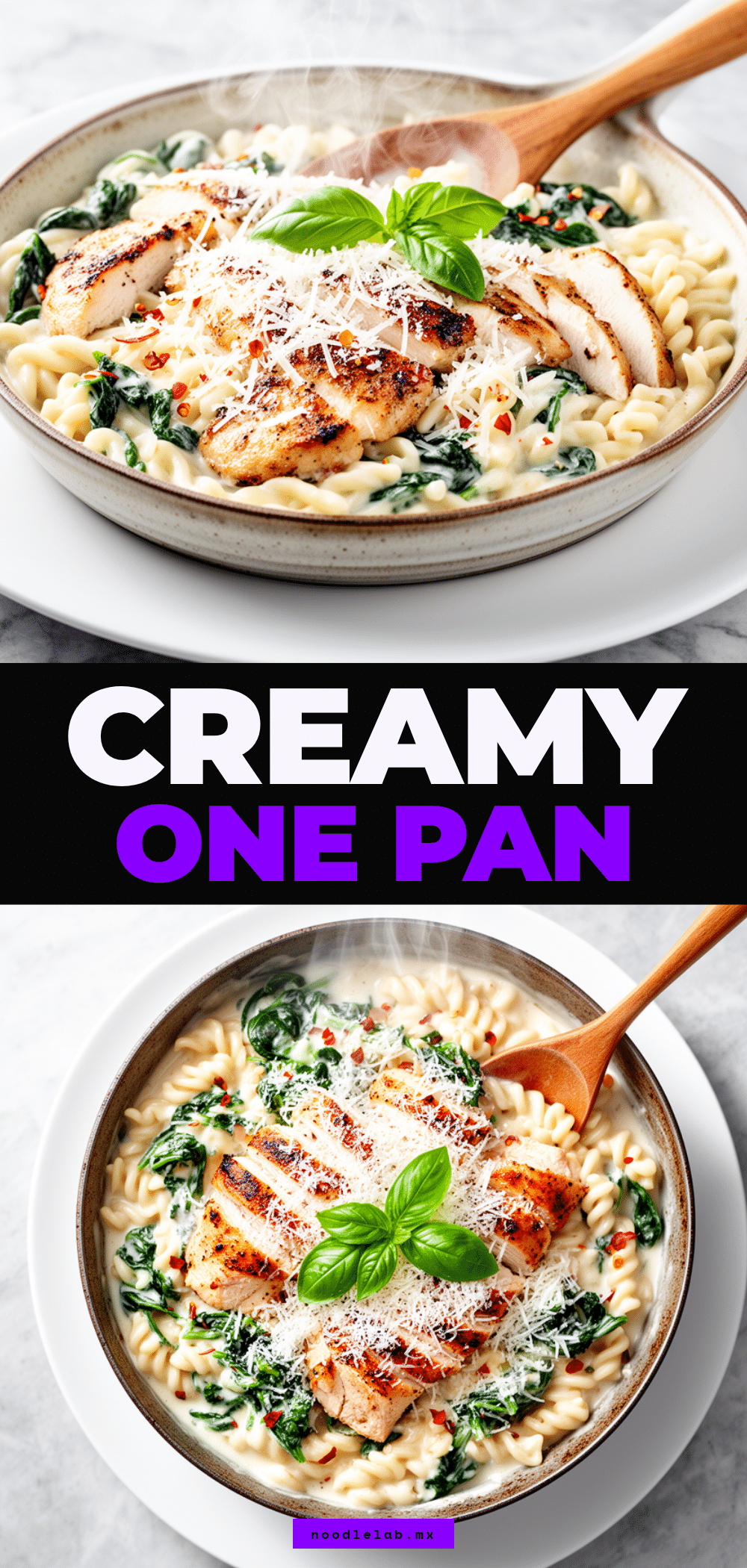
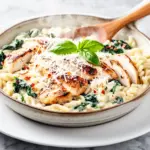
Creamy Chicken Florentine Pasta
- Total Time: 30 minutes
- Yield: 6 servings 1x
Description
A quick, 30-minute weeknight dinner featuring tender chicken breasts, fresh spinach, and a rich, creamy Parmesan sauce tossed with pasta. It’s a reliable, crowd-pleasing meal that is easy to make and perfect for busy evenings.
Ingredients
- 2 large chicken breasts (about 1.5 lbs / 680g), boneless and skinless
- 1 pound (450g) penne or rigatoni pasta
- 1.5 cups (360ml) heavy cream
- 4 cups (120g) fresh spinach, packed
- 4 cloves garlic, minced
- 1 medium yellow onion, diced
- 1 cup (100g) freshly grated Parmesan cheese
- 2 tablespoons unsalted butter, divided
- 1 teaspoon Italian seasoning
- 1/2 teaspoon red pepper flakes (optional)
- 1/2 cup (120ml) low-sodium chicken broth
- Salt and black pepper, to taste
- Pasta water, reserved for sauce adjustment
Instructions
- Prep ingredients: Chop onion, mince garlic, grate Parmesan, and season chicken with salt and pepper.
- Cook pasta: Bring a large pot of salted water to a boil. Cook pasta until al dente. Before draining, reserve 1 cup of pasta water. Drain pasta and set aside.
- Cook chicken: Heat 1 tablespoon butter in a large skillet over medium-high heat. Cook chicken for 4-5 minutes per side until golden and internal temperature reaches 165°F (74°C). Remove chicken and let rest.
- Sauté aromatics: In the same skillet, reduce heat to medium. Add remaining 1 tablespoon butter. Sauté onion for 2-3 minutes until soft. Add garlic and red pepper flakes; cook for 1 minute until fragrant.
- Build sauce: Pour in chicken broth and simmer for 2 minutes, scraping up browned bits. Add heavy cream and Italian seasoning; simmer for 3-4 minutes until slightly thickened.
- Add cheese and spinach: Reduce heat to low. Stir in Parmesan cheese until melted. Add spinach and cook until wilted (1-2 minutes). Remove from heat.
- Combine: Add drained pasta to the sauce and toss to coat. Add sliced chicken back to the pan. Toss gently, adding reserved pasta water if needed to reach desired consistency. Adjust seasoning with salt and pepper.
Notes
Save the starchy pasta water to help the sauce cling to the pasta. Use fresh Parmesan cheese rather than pre-grated to avoid a grainy sauce. Keep heat low when adding cheese to prevent separation. For a lighter version, substitute half-and-half for heavy cream. This dish does not freeze well due to the dairy content; store leftovers in the refrigerator for up to 4 days.
- Prep Time: 15 minutes
- Cook Time: 15 minutes
- Category: Main Course
- Cuisine: Italian
Nutrition
- Serving Size: 1 serving (approx. 1
- Calories: 480
- Sugar: 3
- Sodium: 420
- Fat: 18
- Saturated Fat: 10
- Carbohydrates: 52
- Fiber: 2
- Protein: 28
Keywords: chicken florentine pasta, creamy pasta, weeknight dinner, 30 minute meals, one pan pasta, easy dinner, family friendly