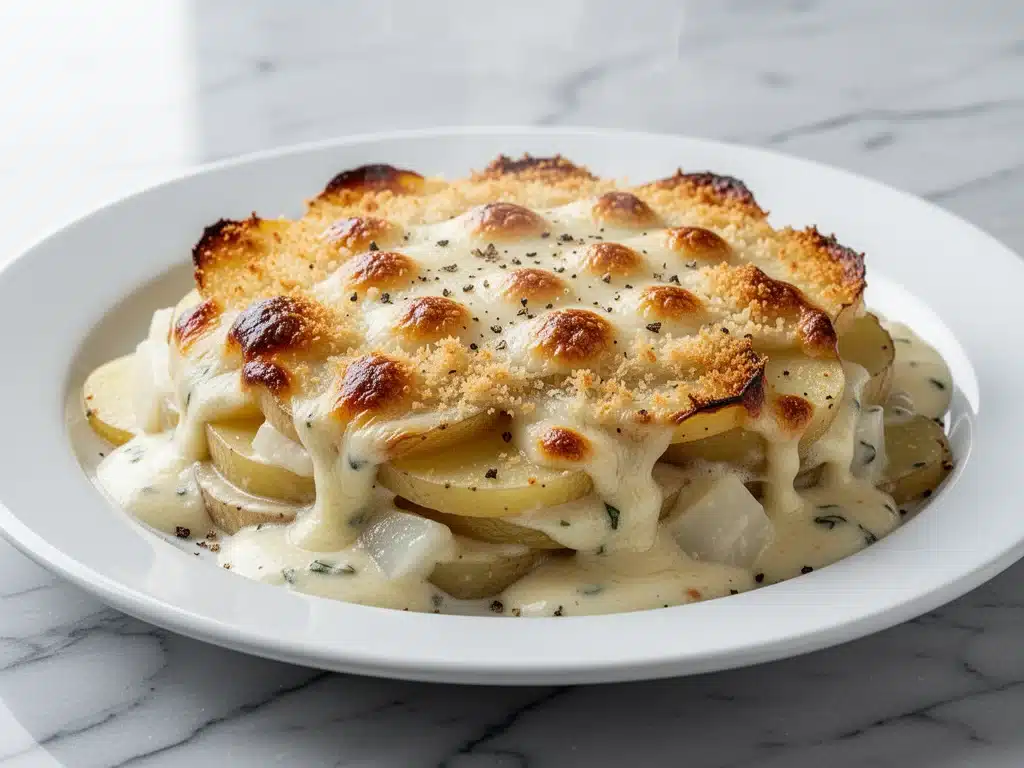
There is a specific kind of panic that sets in around 4 PM on Christmas Eve. You’ve got the turkey brining, the green beans wilting in the fridge, and the pie dough chilling. But the thing that actually keeps me up at night? The potatoes. Specifically, the cheesy scalloped potatoes. They are the anchor of the meal. If they’re dry, the meal is dry. If they’re bland, the meal is bland. I learned this the hard way about ten years ago, back when I tried to make a fancy gratin with a roux that seized up and left me with a pot of clumpy, salty regret.
That was the year I almost ordered pizza. But then I stumbled across a technique that changed everything: using a rich, velvety cream sauce infused with sharp cheddar and a secret weapon—gruyère cheese—and letting the potatoes bake low and slow until they are tender, not mushy. I’ve tested this classic cheesy scalloped potatoes perfect for holiday sides recipe at least two dozen times over the last five holiday seasons. It’s survived family reunions, Thanksgiving disasters, and Christmas morning brunches. And it has never, ever failed me.
This isn’t just a recipe; it’s my peace of mind. It’s the dish that makes my mother-in-law nod approvingly (a rare feat) and the one that my kids fight over, usually scraping the bottom of the dish for the crispy cheese crust. If you’ve been intimidated by “scalloped” versus “au gratin” debates or worried about watery potatoes, this guide is for you. We’re going to make the creamiest, most comforting side dish you’ve ever tasted. It’s rich, it’s indulgent, and it’s surprisingly easy to pull together while you’re stressing about the turkey.
Why You’ll Love This Recipe
I know what you’re thinking. “Another potato recipe?” But hear me out. This classic cheesy scalloped potatoes perfect for holiday sides version is different because it solves the three biggest problems people have with baked potato dishes: sogginess, blandness, and uneven cooking. Here’s why this batch is going to become a permanent fixture on your holiday menu.
- Zero Watery Results — I’ve seen so many recipes fail here. The key is pre-cooking the potatoes slightly and using the right liquid-to-potato ratio. This method ensures every bite is tender and creamy, never soggy. I’ve made this for picky eaters who usually complain about “mushy food,” and they ask for seconds.
- Cheese That Actually Melts — Using pre-shredded cheese is the enemy. It contains potato starch that prevents melting. This recipe calls for shredding your own cheese, which results in a sauce that is silky smooth and stretches when you take a bite. Trust me, the difference is night and day.
- Make-Ahead Friendly — This is a lifesaver for holiday hosting. You can assemble the dish up to 24 hours in advance and keep it in the fridge. When you’re ready, you just pop it in the oven. This frees up your oven space for the turkey or pie, which is a huge deal when you’re juggling multiple dishes.
- Rich Without Being Heavy — Some potato cassoles feel like a brick after two servings. This version is luxurious because of the cream and cheese, but the sharp cheddar cuts through the richness. It’s flavorful enough that you don’t need to drown it in butter.
- Perfect Texture Every Time — We’re aiming for fork-tender potatoes that hold their shape, wrapped in a sauce that clings to every slice. No more hard centers or disintegrated edges. Just perfect, golden-brown crust on top and creamy layers underneath.
Real talk: I’ve made this for crowds of 12 and quiet dinners for 2, and it scales beautifully. It’s the kind of dish that brings people together. You’ll see plates getting refilled before the turkey is even carved. That’s the power of good potatoes.
Ingredients You’ll Need
Before we get to the oven, let’s talk about what’s going into the dish. I’m particular about three things here: the potatoes, the cheese, and the liquid. Get these right, and you’re golden. You don’t need fancy gadgets, just good ingredients.
For the Potatoes
Yukon Gold potatoes (3 pounds / 1.3 kg) — This is non-negotiable. Yukon Golds have the perfect balance of starch and moisture. They hold their shape better than Russets but are creamier than red potatoes. If you can’t find them, Russets work, but you’ll need to be extra careful with cooking time to avoid mush. Avoid red potatoes; they stay too waxy for this texture.
Unsalted butter (3 tablespoons / 45g) — For greasing the dish. We want a good layer of fat to help the top crisp up. Salted butter can work in a pinch, but you’ll need to adjust the salt in the recipe.
For the Sauce
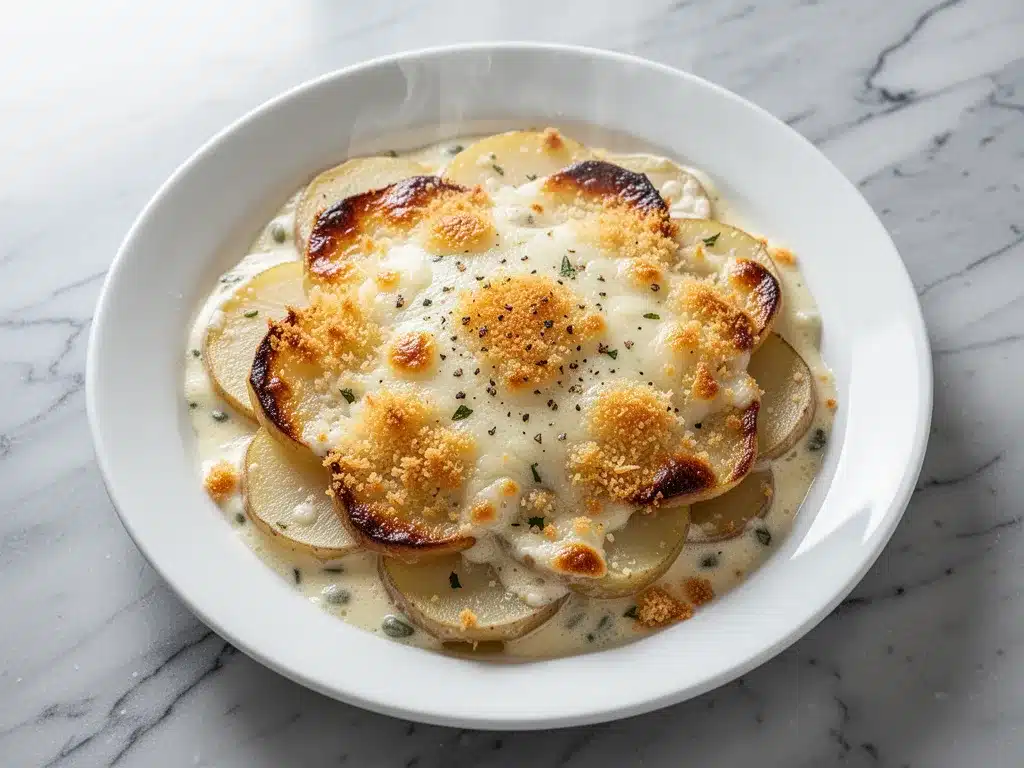
Heavy cream (2 cups / 480ml) — This is the base. Don’t skim it. You need the fat content for that rich, luxurious mouthfeel. Half-and-half will work, but the sauce will be thinner and less decadent. Milk will make it watery. Stick with heavy cream for the best results.
Chicken broth (1 cup / 240ml) — I use low-sodium broth here so I can control the saltiness. It adds depth that cream alone can’t provide. Vegetable broth works for a vegetarian version.
Garlic (4 cloves, minced) — Fresh garlic is essential. Jarred garlic has a metallic taste that clashes with the delicate cream. Mince it fine so it distributes evenly. If you’re not a garlic fan, reduce to 2 cloves, but don’t skip it entirely.
Dijon mustard (1 teaspoon) — This is the secret weapon. You won’t taste the mustard directly, but it adds a tangy depth that cuts through the richness and helps the cheese emulsify. It’s a classic French technique for gratins.
Sharp cheddar cheese (2 cups / 200g, shredded) — Use a block of sharp cheddar and shred it yourself. Pre-shredded cheese has anti-caking agents that make the sauce grainy. Sharp cheddar has a stronger flavor that stands up to the cream. Mild cheddar will taste bland.
Gruyère cheese (1 cup / 100g, shredded) — This is the fancy cheese that makes the dish taste expensive. It melts beautifully and has a nutty, salty flavor. If you can’t find Gruyère, a mix of Swiss and Parmesan works, but Gruyère is the real deal.
For Seasoning
Dry mustard powder (½ teaspoon) — Adds another layer of savory flavor. It’s subtle but important.
Nutmeg (¼ teaspoon, freshly grated) — Nutmeg is traditional in béchamel sauces. It adds a warm, aromatic note that pairs perfectly with potatoes and cream. Grate it fresh if you can; pre-ground nutmeg loses its potency quickly.
Salt and black pepper — To taste. We’ll season the sauce generously, but remember the cheese is salty too.
Fresh thyme (2 sprigs, leaves stripped) — Or 1 teaspoon dried thyme. Fresh thyme adds a floral, earthy note. I like to infuse the cream with it while heating, then remove the stems.
Equipment Needed
You don’t need anything fancy, but having the right tools makes this process smoother. Here’s what I actually use in my kitchen.
9×13 inch baking dish — A standard ceramic or glass dish works best. I use a Pyrex dish because it heats evenly. Avoid metal pans; they can cause the edges to burn before the center is cooked.
Sharp knife and cutting board — For slicing the potatoes. A sharp knife is safer and gives you more uniform slices. Uniform slices are key to even cooking.
Box grater — For shredding the cheese. A box grater gives you control over the shred size. Avoid the food processor unless you’re shredding a huge amount; it can turn the cheese into a paste.
Large saucepan — For heating the cream and broth mixture. A heavy-bottomed saucepan prevents scorching.
Whisk — For blending the mustard and spices into the cream. A silicone whisk is easiest for scraping the sides.
Vegetable peeler (optional) — Some people prefer thin slices with a peeler. I find a knife gives me more control over thickness, but a peeler works if you’re in a hurry.
Foil — To cover the dish while it bakes. Heavy-duty foil is best to keep moisture in.
Cheese grater — I mentioned this, but it’s worth repeating. Shred your own cheese. It’s the single biggest upgrade you can make to this recipe.
How to Make It: Step-by-Step
Alright, let’s get cooking. This process is straightforward, but timing is everything. I’m walking you through exactly how I do it, including the little tricks I’ve picked up over the years.
Step 1: Prep Your Potatoes (10 minutes)
Peel the Yukon Gold potatoes. If you prefer a rustic look, you can leave the skins on, but peeling gives a more classic, creamy texture. Slice the potatoes into uniform rounds, about 1/8 to 1/4 inch thick. I use a mandoline for speed and consistency, but a sharp knife works fine. Uniform slices are crucial; if some are thick and some are thin, the thin ones will turn to mush before the thick ones are tender.
Place the sliced potatoes in a large bowl of cold water. This stops them from oxidizing and turning brown while you prep the sauce. Drain and pat them dry with a clean towel before assembling. Wet potatoes will water down your sauce.
Step 2: Make the Cheese Sauce Base (5 minutes)
In a large saucepan, combine the heavy cream, chicken broth, minced garlic, Dijon mustard, dry mustard powder, nutmeg, salt, and pepper. If you’re using fresh thyme, add the leaves now. Heat this mixture over medium heat, stirring occasionally, until it just starts to simmer. Do not let it boil vigorously; you just want to infuse the flavors and warm the cream. Remove from heat.
Step 3: Assemble the Layers (10 minutes)
Preheat your oven to 350°F (175°C). Grease your 9×13 inch baking dish with the butter. Now, the layering part. Take a handful of potato slices and arrange them in the bottom of the dish, overlapping them like shingles. Pour about 1/3 of the cream mixture over the potatoes. Sprinkle with 1/3 of the cheddar and 1/3 of the Gruyère. Repeat this process twice more, ending with a layer of potatoes on top.
Pour the remaining cream mixture over the top layer. Use a spatula to press down gently on the potatoes to ensure they are submerged in the liquid. This is important; if potatoes stick out, they will dry out in the oven.
Step 4: Bake Covered (60 minutes)
Cover the dish tightly with foil. The foil traps steam, which cooks the potatoes through and makes them tender. Bake for 60 minutes. After 60 minutes, carefully remove the foil. The potatoes should be fork-tender. If they aren’t, cover and bake for another 15 minutes.
Step 5: Brown the Top (15-20 minutes)
Once the potatoes are tender, sprinkle the remaining cheese on top. Return the dish to the oven, uncovered, for 15-20 minutes. You want the cheese to melt and turn golden brown and bubbly. Keep an eye on it; you want it to brown, not burn. If the top is browning too fast, tent it loosely with foil.
Step 6: Rest and Serve (10 minutes)
Remove the dish from the oven and let it rest for 10 minutes before serving. This allows the sauce to thicken slightly and set, making it easier to scoop out clean portions. Serve warm, garnished with fresh thyme if you like.
Total time: About 1 hour 45 minutes (15 minutes prep, 1 hour 30 minutes cook).
Expert Tips & Tricks
Here’s everything I’ve learned from making this dozens of times. These tips will save you from my mistakes.
Shred Your Own Cheese
I cannot stress this enough. Pre-shredded cheese is coated in cellulose to prevent clumping. This cellulose prevents the cheese from melting smoothly, resulting in a gritty, separated sauce. Buy blocks of cheddar and Gruyère and shred them yourself. It takes 5 minutes and makes a massive difference.
Uniform Slices Are Key
If your potato slices are uneven, your dish will be uneven. Use a mandoline if you have one—it’s worth the investment for holiday cooking. If you use a knife, take your time to match the thickness. Aim for 1/8 inch for a classic texture, or 1/4 inch if you like chunkier bites.
Don’t Skip the Resting Time
It’s tempting to dig in as soon as the cheese bubbles. But resist! The sauce is liquid-hot right out of the oven. Letting it rest for 10 minutes allows the starches to set and the sauce to thicken. This means you get clean slices instead of a potato soup on your plate.
Infuse the Cream
If you’re using fresh thyme or rosemary, steep the herbs in the warm cream for 10 minutes before pouring it over the potatoes. Remove the stems before assembling. This gives a more subtle, infused flavor than just tossing the leaves in.
Make-Ahead Strategy
You can assemble the entire dish up to 24 hours in advance. Cover tightly with plastic wrap and refrigerate. When you’re ready to bake, add 15-20 minutes to the covered baking time since the dish is starting from cold. This is a huge time-saver on holiday morning.
Variations & Substitutions
Once you’ve mastered the basic version, here’s how you can mix it up. I’ve tried all of these.
Bacon Lover’s Version
Cook 6 slices of bacon until crispy, crumble it, and layer it in with the potatoes. Add the bacon to the bottom layer and sprinkle it on top before the final bake. It adds a smoky crunch that pairs perfectly with the cheese.
Vegetarian Swap
Use vegetable broth instead of chicken broth. The rest of the recipe stays the same. It’s just as rich and flavorful.
Smoked Gouda Twist
Swap the Gruyère for smoked Gouda. It adds a deep, smoky flavor that’s incredible with the sharp cheddar. This is my favorite variation for fall and winter.
Garlic Explosion
Double the garlic to 8 cloves. If you’re a garlic lover, this is the way to go. The cream mellows the raw bite, leaving a sweet, savory depth.
Gluten-Free
This recipe is naturally gluten-free, provided you check your broth and cheese labels for hidden gluten. Most cheeses and creams are safe, but always double-check.
Serving & Storage
How to Serve:
I usually serve this straight from the baking dish, passing it around the table. It looks rustic and inviting. Pair it with roast turkey, glazed ham, or even a simple roasted chicken. It’s also great alongside our creamy garlic mashed potatoes if you want a double potato spread (don’t judge me).
Side Dishes:
These rich potatoes pair well with lighter sides. Try a crisp green salad with vinaigrette, honey-roasted glazed carrots with thyme, or steamed broccoli. The acidity and freshness cut through the richness of the potatoes.
Refrigerator:
Store leftovers in an airtight container for up to 4 days. The sauce will thicken in the fridge, which is normal.
Reheating:
Best method: Cover with foil and reheat in a 350°F oven for 20-25 minutes. Add a splash of cream or milk if it looks dry. Microwave method: Heat in 30-second intervals, stirring gently. Add a splash of milk. It won’t be as crispy, but it works.
Freezing:
I don’t recommend freezing this dish. The dairy-based sauce can separate and become grainy when thawed. It’s best made fresh. But if you must, freeze the assembled, unbaked dish. Thaw in the fridge overnight, then bake as directed, adding extra time.
Nutrition Information
I’m not a nutritionist, but here’s the breakdown if you’re tracking. Keep in mind this is a rich dish, so portions matter.
Per Serving (based on 12 servings):
- Calories: 380
- Protein: 14g
- Carbs: 32g
- Fiber: 3g
- Sugar: 4g
- Fat: 22g
- Saturated Fat: 13g
- Cholesterol: 65mg
- Sodium: 450mg
What’s good: It’s a decent source of calcium from the cheese and potassium from the potatoes. What to know: It’s higher in calories and saturated fat due to the cream and cheese. But it’s homemade, so you know exactly what’s in it. Unlike takeout, you can control the salt and fat. When I want to make it lighter, I use half-and-half and reduce the cheese by a quarter. But usually? I just enjoy a reasonable portion and savor every bite.
Final Thoughts
So that’s my go-to classic cheesy scalloped potatoes perfect for holiday sides! I’ve probably talked your ear off at this point, but when you make a recipe this often, you have a lot to say about it. This dish has saved my holiday dinners more times than I can count. It’s my answer to “what’s for dinner” when I’m stressed and need something reliable. My family loves it, my guests ask for the recipe, and I love it because it’s the one dish I can make ahead without worrying.
Make it yours! Try different cheeses, add bacon, or spike it with extra garlic. The best recipes are the ones you adapt to your family’s tastes. If you make this, drop a comment and let me know what you think! I love hearing how recipes turn out in your kitchen. And if something doesn’t work, tell me that too—I’m here to help troubleshoot.
Happy cooking! And I hope your kitchen smells half as good as mine does right now.
Frequently Asked Questions
Can I use Russet potatoes instead of Yukon Gold?
You can, but the texture will be different. Russets are higher in starch and lower in moisture, so they can turn mealy or mushy if overcooked. If you use Russets, slice them slightly thicker and check for doneness a bit earlier. Yukon Golds are just more forgiving and creamier.
Why did my scalloped potatoes turn out watery?
This usually happens if the potatoes weren’t submerged in the liquid or if the dish wasn’t covered tightly while baking. The steam needs to cook the potatoes. Also, if you drained the potatoes too thoroughly after slicing, they might have absorbed less liquid. Make sure the cream mixture covers the potatoes completely before baking.
Can I make this ahead of time?
Yes! This is one of its best features. Assemble the dish up to 24 hours in advance. Cover tightly with plastic wrap and refrigerate. When you’re ready to bake, remove the plastic, cover with foil, and bake. You may need to add 15-20 minutes to the covered baking time since the dish is cold.
Why did my sauce separate or look grainy?
This usually happens if you used pre-shredded cheese or if the heat was too high when adding the cheese. The anti-caking agents in pre-shredded cheese prevent smooth melting. Also, never add cheese directly to a boiling liquid. Remove the pan from heat and stir in the cheese off the heat for a smooth sauce.
Can I use milk instead of heavy cream?
You can, but the sauce will be thinner and less rich. If you want to try it, use whole milk and add 2 tablespoons of flour to thicken it. Whisk the flour into the milk before adding to the pan. I’ve done this when I ran out of cream—it works okay, just not as good as the real thing. Half-and-half is a better middle ground.
How do I reheat leftovers without it getting dry?
Add a splash of milk or cream to a skillet, add your leftover potatoes, and heat gently over low heat, stirring frequently. The extra liquid brings back the creamy texture. Microwave sort of works but tends to dry it out. If you do microwave, definitely add a splash of milk first and heat in short bursts, stirring between.
Can I double this recipe?
Absolutely! Double everything and use a 9×13 inch dish or two smaller dishes. The cooking times stay the same. I do this when I’m feeding a crowd. Just make sure your dish is big enough for the layers—don’t overfill it, or the center won’t cook properly.
Pin This Recipe!
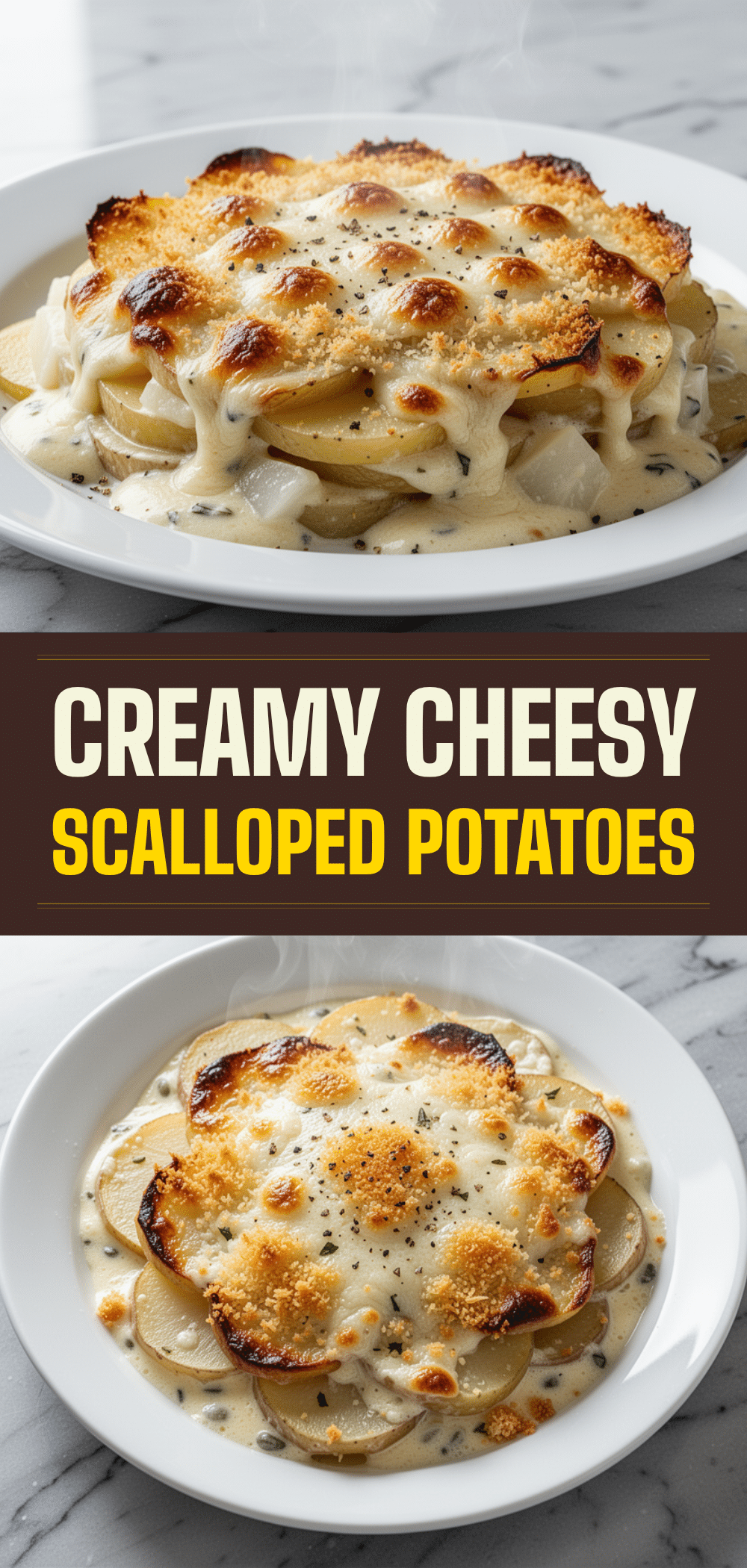
Classic Cheesy Scalloped Potatoes: Easy Holiday Side
- Total Time: 1 hour 45 minutes
- Yield: 12 servings 1x
Description
A rich, creamy, and indulgent side dish featuring Yukon Gold potatoes baked in a velvety cheese sauce with sharp cheddar and Gruyère. This make-ahead friendly recipe ensures tender, non-soggy potatoes with a golden-brown crust, perfect for holiday meals.
Ingredients
- 3 pounds Yukon Gold potatoes, peeled and sliced into 1/8 to 1/4 inch rounds
- 3 tablespoons unsalted butter, for greasing the dish
- 2 cups heavy cream
- 1 cup low-sodium chicken broth (or vegetable broth for vegetarian version)
- 4 cloves garlic, minced
- 1 teaspoon Dijon mustard
- 2 cups sharp cheddar cheese, shredded from a block
- 1 cup Gruyère cheese, shredded from a block
- 1/2 teaspoon dry mustard powder
- 1/4 teaspoon freshly grated nutmeg
- Salt and black pepper, to taste
- 2 sprigs fresh thyme, leaves stripped (or 1 teaspoon dried thyme)
Instructions
- Preheat oven to 350°F (175°C). Grease a 9×13 inch baking dish with butter.
- Slice potatoes into uniform rounds and place in cold water to prevent browning. Drain and pat dry thoroughly.
- In a large saucepan, combine heavy cream, chicken broth, minced garlic, Dijon mustard, dry mustard powder, nutmeg, salt, pepper, and thyme leaves. Heat over medium until just simmering, then remove from heat.
- Layer half the potatoes in the baking dish. Pour one-third of the cream mixture over them, then sprinkle with one-third of the cheddar and one-third of the Gruyère.
- Repeat with remaining potatoes, cream mixture, and cheeses, ending with a layer of potatoes on top.
- Pour remaining cream over the top, pressing down gently to ensure potatoes are submerged.
- Cover tightly with foil and bake for 60 minutes.
- Remove foil, sprinkle remaining cheese on top, and bake uncovered for 15-20 minutes until cheese is melted and golden brown.
- Let rest for 10 minutes before serving to allow sauce to thicken.
Notes
Shred your own cheese to ensure smooth melting; pre-shredded cheese contains anti-caking agents that can make the sauce grainy. Uniform potato slices are crucial for even cooking. This dish can be assembled up to 24 hours in advance and refrigerated before baking. If baking from cold, add 15-20 minutes to the covered baking time.
- Prep Time: 15 minutes
- Cook Time: 1 hour 30 minutes
- Category: Side Dish
- Cuisine: American
Nutrition
- Serving Size: 1 serving
- Calories: 380
- Sugar: 4
- Sodium: 450
- Fat: 22
- Saturated Fat: 13
- Carbohydrates: 32
- Fiber: 3
- Protein: 14
Keywords: scalloped potatoes, cheesy potatoes, holiday side dish, Thanksgiving sides, Christmas dinner, au gratin potatoes, make-ahead side dish, comfort food