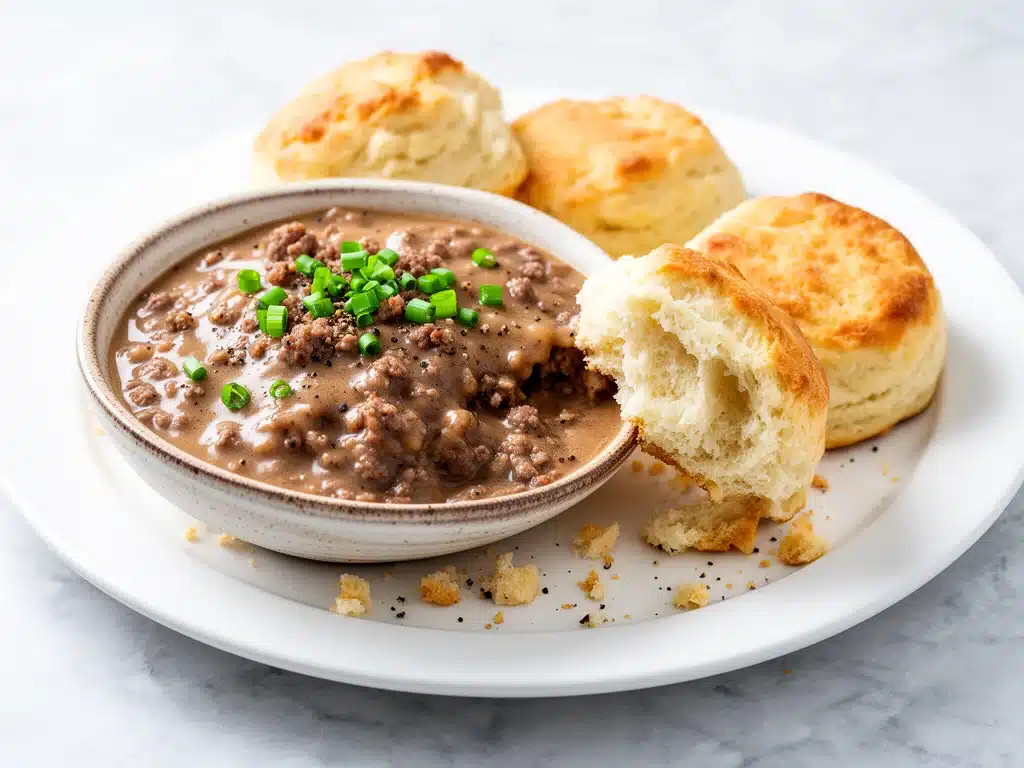
I have a very specific memory of Sunday mornings in my grandmother’s kitchen. It wasn’t the quiet, peaceful breakfast scene you see in movies. It was loud. The radio was playing country music, the cat was begging for scraps, and the air was thick with the smell of browned meat and warm yeast. My grandma would stand at the stove, stirring a cast-iron skillet of sausage gravy with one hand and flipping biscuits with the other, all without looking up once. She called it “morning fuel.” I called it magic.
For years after she passed, I tried to recreate that exact taste. I bought fancy mixes, I tried fancy techniques, and I ended up with a lot of dry, crumbly biscuits and a gravy that tasted more like flour paste than comfort. I was ready to give up. I was ready to just buy the frozen refrigerated biscuits from the grocery store and accept defeat.
Then, last winter, I was feeling particularly under the weather. I didn’t want anything fancy. I didn’t want a salad or a light omelet. I wanted something warm, heavy, and deeply savory. I decided to try one more time, but this time I stopped overthinking it. I used simple ingredients, I focused on the ratio of flour to fat, and I actually let the gravy simmer long enough to lose that raw flour taste. The result? It was creamy, rich, and had that perfect Southern kick that made me close my eyes and just breathe.
That bowl of creamy Southern sausage gravy and biscuits became my new ritual. It’s not just breakfast; it’s a hug on a plate. I’ve made this recipe at least a dozen times since then, tweaking the spice level and the biscuit dough until it was exactly right. And here’s the best part: it comes together in about 15 to 20 minutes. Yes, really. You can have a hot, homemade breakfast that tastes like it took hours, without spending your whole morning in the kitchen.
If you’ve been searching for the ultimate comfort food to warm you up on a cold morning, or if you just need a reliable weekend brunch dish that doesn’t require a culinary degree, you’re in the right place. This creamy Southern sausage gravy and biscuits recipe is the real deal. No fancy gadgets, no obscure ingredients. Just good food, made simply.
Why You’ll Love This Recipe
There are about a million reasons I keep coming back to this breakfast combo, but if I had to narrow it down to the things that actually matter to your daily life, here’s why this recipe is a keeper.
Stupid Simple Technique — Seriously, if you can brown ground meat and whisk a roux, you can make this. I’ve walked my teenage son through making the gravy over FaceTime while I was at work. He didn’t burn it (once). The steps are straightforward, and there’s no complex folding or tempering required.
Lightning Fast — This is the biggest selling point for me. From the moment I turn on the stove to the moment I’m sitting down with a steaming plate, it takes less than 20 minutes. I make this on busy Saturday mornings when I want to sleep in but still eat something substantial. It’s faster than most drive-thrus.
Pantry-Friendly Ingredients — You probably already have everything you need. Sausage (or a substitute), flour, milk, butter, and basic spices. I don’t believe in buying a whole cabinet full of ingredients for a recipe you’ll only make once. This uses staples I always have on hand.
Customizable Heat Level — Not everyone likes their breakfast spicy. This recipe is flexible. I like mine with a good black pepper kick and maybe some cayenne, but if your family prefers mild, you can skip the pepper flakes entirely. It’s your kitchen, your rules.
Makes Amazing Leftovers — Okay, let’s be real: leftovers of this are rare. But if you somehow have some, the gravy thickens up nicely in the fridge. I’ve been known to spoon leftover gravy over scrambled eggs or even toast the next day. It’s that versatile.
This is my go-to when I need breakfast to just work. No complicated techniques, no weird ingredients, just reliable, delicious food that makes everyone happy. It’s the kind of meal that starts the day right.
Ingredients You’ll Need
Here’s the best part: this recipe is incredibly forgiving. You don’t need expensive cuts of meat or artisanal flours. I’m particular about three things here—the type of sausage, the milk, and the black pepper—but everything else is pretty standard.
For the Gravy
Breakfast Sausage (1 pound / 450g) — This is the star. I usually buy the mild pork sausage links or bulk sausage. If you’re in a pinch, you can use Italian sausage, but remove the casings first. The fat from the sausage is what flavors the gravy, so don’t drain it all! I like to leave about a tablespoon or two of fat in the pan. If you use lean turkey sausage, you’ll need to add a bit more butter to make up for the lost fat.
All-Purpose Flour (½ cup / 60g) — This is what thickens the gravy. Don’t try to substitute with almond flour or gluten-free blends unless you have to; the texture will be different. I use regular Gold Medal or King Arthur flour. Measure it lightly—spoon it into the cup and level it off. Don’t scoop directly from the bag, or you’ll pack it in and your gravy will be gluey.
Whole Milk (2 to 2.5 cups / 480-600ml) — Use whole milk. It’s richer and creamier. I’ve tried 2% and it works okay, but the gravy is thinner and less luxurious. If you want to go really indulgent, you can use half-and-half, but you might need to simmer it a bit longer to get the right thickness. Cold milk is fine; I don’t worry about room temperature for this.
Butter (2 tablespoons) — Even if your sausage is fatty, adding a little butter ensures you have enough fat for the roux. It also adds a nice richness. Unsalted is best so you can control the saltiness.
Black Pepper (1 to 2 teaspoons, freshly ground) — This is crucial. Southern gravy is famous for its “white pepper” look, but I prefer black pepper because it has more bite and aroma. Use a pepper grinder. Pre-ground pepper just doesn’t have the same punch. I use about a full teaspoon for a medium kick, but add more if you like it spicy.
Salt (to taste) — Taste the sausage first. If it’s already salty, you might not need much. If it’s mild, you’ll need more. Add it at the end so you can adjust.
Optional Heat (½ teaspoon cayenne or red pepper flakes) — I almost always add a pinch of cayenne. It adds a background warmth that you can’t quite taste but definitely feel. It’s not spicy like chili, just… savory-spicy.
For the Biscuits
All-Purpose Flour (2 cups / 250g) — Again, standard flour. Don’t use self-rising flour unless you adjust the baking powder and salt in the recipe.
Baking Powder (1 tablespoon) — This is what makes them rise. Make sure your baking powder isn’t expired! I keep a fresh tin at all times. Old baking powder = flat biscuits.
Salt (1 teaspoon) — For flavor.
Cold Unsalted Butter (½ cup / 115g) — This is the secret to flaky biscuits. The butter must be cold. If it melts before it hits the oven, you lose those steam pockets that create flakiness. I cube it and throw it back in the fridge while I mix the dry ingredients.
Heavy Cream or Buttermilk (¾ cup / 180ml) — I prefer heavy cream for extra richness, but buttermilk gives that classic tangy Southern taste. If you use buttermilk, it’s a bit thinner, so you might need a splash more. Cold is best.
Extra Flour — For dusting your hands and surface. You don’t want the dough sticking, but you also don’t want to add too much, or the biscuits will be tough.
Equipment Needed
You don’t need fancy equipment for this. Here’s what I actually use in my home kitchen.
12-Inch Cast Iron Skillet or Large Non-Stick Pan — I use a 12-inch skillet because it gives the sausage plenty of room to brown. If the meat is crowded, it steams instead of frying, and you won’t get those delicious brown bits (fond) stuck to the bottom. That fond is flavor gold. My Lodge cast iron is my go-to, but a good non-stick works fine too.
Whisk — A standard balloon whisk is perfect for breaking up the flour and fat and incorporating the milk smoothly. No lumps allowed.
Pastry Blender or Fork — To cut the butter into the flour for the biscuits. I use a fork because I’m lazy, but a pastry blender is faster. You’re looking for pea-sized crumbs.
Rolling Pin — For rolling out the biscuit dough. A standard wooden one works great. Or you can use your hands if you’re feeling rustic.
Biscuit Cutter or Glass — A round biscuit cutter (2-inch) is ideal. If you don’t have one, just use a drinking glass. Press straight down, don’t twist. Twisting seals the edges and stops the biscuits from rising properly.
Baking Sheet — Line it with parchment paper for easy cleanup. I don’t usually grease the pan because the biscuit dough has enough fat in it.
Mixing Bowls — One medium bowl for the dry biscuit ingredients, one smaller one for the wet if needed.
How to Make It: Step-by-Step
Alright, let’s make this! I’m walking you through exactly how I do it, including the little tricks I’ve picked up over the years. We’ll start with the gravy because it takes a bit more attention, and then we’ll whip up the biscuits.
Step 1: Brown the Sausage (5 minutes)
Place your large skillet over medium-high heat. Add the sausage. If it’s in links, squeeze them out of the casing into large chunks. If it’s already bulk, just add it. Cook, breaking it up with a wooden spoon, until it’s deeply browned and crispy in spots. You want color. This takes about 5-7 minutes. Once cooked, if there’s an excessive amount of grease (like more than 2 tablespoons), drain some of it off. Leave the flavorful fat in the pan.
Step 2: Make the Roux (2 minutes)
Reduce the heat to medium. Sprinkle the flour evenly over the sausage and the fat. Stir constantly for about 1-2 minutes. You’re cooking the raw flour taste out of it. The mixture will look like wet sand and start to clump around the sausage bits. Don’t worry about the clumps; they’ll dissolve in a minute. The flour should turn a light golden color.
Step 3: Add the Milk and Simmer (5-7 minutes)
Pour in about half of the cold milk while whisking vigorously. This prevents lumps. Once that’s incorporated, add the rest of the milk. Keep whisking. The gravy will start to thicken almost immediately. Turn the heat down to low-medium and let it simmer gently. Stir frequently to prevent sticking. It needs to bubble gently for about 5-7 minutes. This is crucial—undercooked flour tastes pasty. You want it to taste smooth and creamy. It’s done when it coats the back of a spoon and leaves a trail when you draw your finger through it.
Step 4: Season the Gravy (1 minute)
Stir in the black pepper, cayenne (if using), and taste. Add salt if needed. The gravy should be thick enough to pool on the plate but still pourable. If it’s too thick, add a splash more milk. If it’s too thin, let it simmer for another minute. Remove from heat and keep warm.
Step 5: Prep the Biscuit Dough (5 minutes)
While the gravy simmers, preheat your oven to 425°F (220°C). In a large bowl, whisk together the flour, baking powder, and salt. Take your cold butter and cut it into the flour using a fork or pastry blender. You want the mixture to look like coarse meal with pea-sized butter chunks. Pour in the heavy cream (or buttermilk) and stir gently with a fork until the dough just comes together. It will look shaggy and dry. Do not overmix!
Step 6: Shape and Bake the Biscuits (12-15 minutes)
Turn the dough out onto a lightly floured surface. Gently press it together into a rectangle about ¾-inch thick. Fold it in half, press it down again, and fold it in half one more time. This creates layers. Pat it out to ¾-inch thickness. Use your cutter to press straight down and pull up. Transfer to the baking sheet. Bake for 12-15 minutes until golden brown on top. They should sound hollow when you tap the bottom.
Step 7: Serve
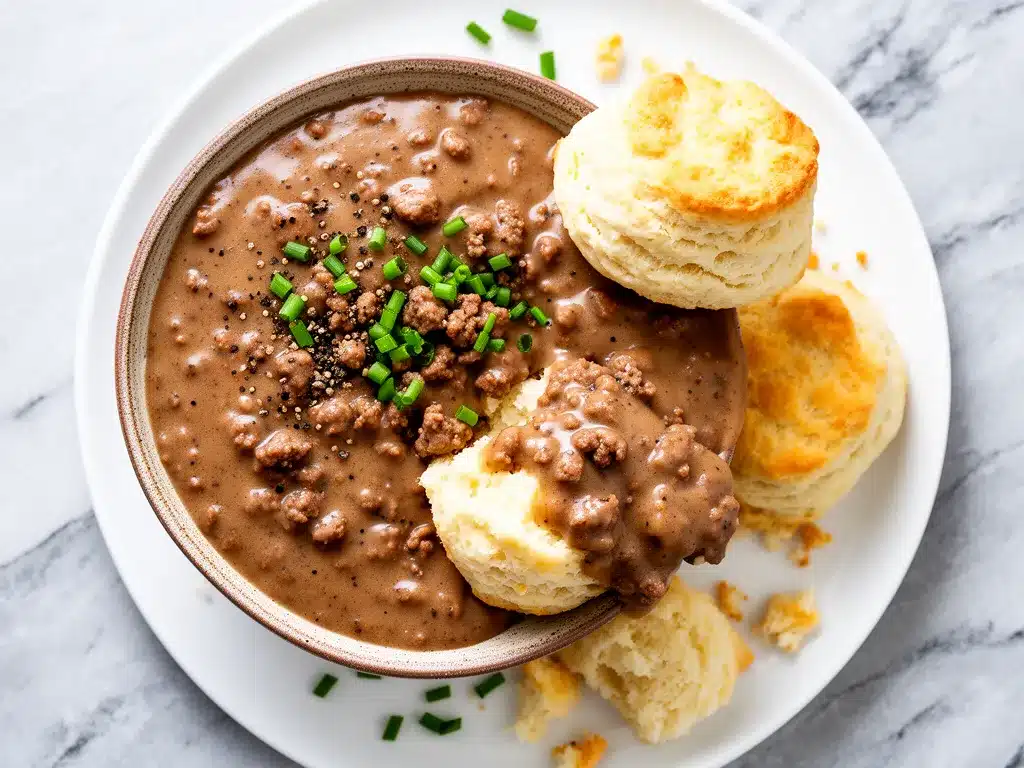
Split the hot biscuits open. Spoon the creamy sausage gravy right over the top. The gravy should soak into the nooks and crannies. Serve immediately while hot. The contrast between the flaky, buttery biscuit and the rich, spicy gravy is what makes this dish unforgettable.
Expert Tips & Tricks
Here’s everything I’ve learned from making this dozens of times. These tips will save you from my mistakes.
Don’t Drain All the Fat — The fat from the sausage is the base of your gravy. If you drain it all, you’ll need to add more butter, and the flavor won’t be as authentic. Leave about 2 tablespoons. If you used lean turkey, add 2 tablespoons of butter to the pan before adding the flour.
Cook the Flour — Many people skip the step of cooking the flour with the fat. Don’t. That 1-2 minute stir after adding flour is essential to remove the raw taste. If your gravy tastes like raw dough, you didn’t cook the roux long enough.
Keep the Milk Cold — Adding cold milk to the hot roux helps create a smoother texture and prevents clumping. It’s a small detail, but it makes a difference.
Handle the Dough Gently — The number one mistake with biscuits is overworking the dough. Every time you touch it, you develop gluten, which makes them tough. Mix until it just comes together, fold it a few times for layers, and stop. If your biscuits are dense, you probably kneaded them too much.
Use a Heavy Cream for Richness — Buttermilk is traditional, but heavy cream makes the biscuits incredibly tender and rich. If you want a tangier taste, use half heavy cream and half buttermilk. Best of both worlds.
Keep Gravy Warm — Gravy thickens as it cools. If you’re making this for a group, keep the gravy in the skillet on very low heat or in a slow warmer. If it gets too thick, whisk in a little warm milk to loosen it up before serving.
Variations & Substitutions
Once you’ve nailed the basic version, here’s how you can mix it up. I’ve tried all of these.
Turkey Sausage Gravy — Use ground turkey breakfast sausage instead of pork. It’s leaner, so add 2-3 tablespoons of butter to the pan. The flavor is milder, so you might want to add a pinch more sage or thyme.
Spicy “Hot” Gravy — Use hot Italian sausage or add an extra teaspoon of cayenne and a dash of hot sauce to the gravy. This is great if you like a real kick with your breakfast.
Vegetarian Version — Use plant-based breakfast sausage crumbles (like Beyond or Impossible). They brown well and have a similar texture. You’ll need to add extra butter or oil since plant-based options don’t render as much fat. The rest of the recipe stays the same.
Gluten-Free Biscuits — Use a 1:1 gluten-free flour blend. Note that GF biscuits don’t rise as much, so make sure your baking powder is fresh. They’ll be more tender and less chewy.
Ham and Cheese Biscuits — Add diced ham and shredded cheddar cheese to the biscuit dough before baking. Turn them into savory hand pies. Delicious with the gravy on the side.
Using Leftover Biscuits — If you have leftover biscuits from the store (like the refrigerated kind), you can still use them! Just warm them up in the oven for 5 minutes and pour the gravy over them. It’s not homemade, but it’s still delicious.
Serving & Storage
How to Serve: I usually serve this straight from the skillet at the dinner table—it looks rustic and stays warm. But here are other ways I’ve enjoyed it:
Side Dishes:
- Fresh fruit salad or sliced strawberries (to cut the richness)
- Crunchy bacon strips on the side
- Fried eggs (sunny side up is best for dipping)
- A simple green salad if you’re trying to balance out the heavy carbs
Wine Pairing: Not a wine expert, but my wine-snob friend says a crisp Pinot Grigio or a light Chardonnay works great with this. Something acidic to cut through the fat.
Storage Instructions:
Refrigerator: Store leftover gravy in an airtight container for up to 3 days. Store biscuits in a ziplock bag or container for up to 2 days. They’ll get soft, but they’re still good.
Reheating:
- Gravy: Reheat gently in a saucepan over low heat, adding a splash of milk to thin it out. It will be thicker out of the fridge.
- Biscuits: Warm in the oven at 350°F for 5-7 minutes. Microwave them for 20 seconds if you’re in a rush, but they’ll get chewy.
Freezing: You can freeze the baked biscuits for up to 2 months. Wrap them tightly in plastic wrap and foil. Reheat from frozen in the oven. I don’t recommend freezing the gravy; the texture can separate and become grainy when thawed.
Nutrition Information
I’m not a nutritionist, but here’s the breakdown if you’re tracking. Keep in mind that this is a rich, hearty meal, so portions matter.
Per Serving (based on 1 biscuit and ½ cup gravy):
- Calories: 450
- Protein: 18g
- Carbs: 35g
- Fiber: 1g
- Sugar: 1g
- Fat: 28g
- Saturated Fat: 12g
- Cholesterol: 55mg
- Sodium: 650mg
What’s Good: Decent protein from the sausage and dairy. It’s filling, so you won’t be hungry an hour later.
What to Know: Higher in calories and sodium. Use low-sodium sausage and milk if you’re watching your salt intake. It’s comfort food, so enjoy it as a treat rather than a daily staple.
Final Thoughts
So that’s my go-to creamy Southern sausage gravy and biscuits! I’ve probably talked your ear off at this point, but when you make a recipe this often, you have a lot to say about it.
This has saved weekend mornings more times than I can count. It’s my answer to “what’s for breakfast” when I want to feel special but don’t want to spend hours cooking. My kids are happy, my husband’s happy, and I’m happy because I’m not stressed about cooking.
Make it yours! Try different sausages, add some cheese to the biscuits, or adjust the spice level. The best recipes are the ones you adapt to your family’s tastes. If you make this, drop a comment and let me know what you think! I love hearing how recipes turn out in your kitchen. And if something doesn’t work, tell me that too—I’m here to help troubleshoot.
Happy cooking! And I hope your kitchen smells half as good as mine does right now.
Frequently Asked Questions
Can I use milk instead of heavy cream for the biscuits?
You can, but the biscuits will be less rich and slightly less tender. Whole milk works okay, but heavy cream or buttermilk gives that signature Southern flakiness. If you use milk, you might need a tablespoon more to get the dough to come together.
My gravy got lumpy—what happened?
This usually happens when you add the milk too quickly or don’t whisk enough. When you add the milk, do it in stages. Add a little, whisk until smooth, then add more. If it’s already lumpy, don’t panic. You can strain it through a fine-mesh sieve, or use an immersion blender to smooth it out.
Can I make this ahead for a brunch party?
Sort of. You can make the gravy up to 2 days ahead and store it in the fridge. Reheat it gently and thin it with milk. For the biscuits, you can make the dough ahead, cut them out, and freeze them on a baking sheet. Then bake them straight from frozen when guests arrive. They’ll still be fresh and hot.
Why did my biscuits turn out flat?
Most likely, your baking powder was old, or you overworked the dough. Check your baking powder expiration date. Also, handle the dough as little as possible. If you knead it like bread, the biscuits will be tough and flat. Fold it gently and cut them out quickly.
Can I use pre-made biscuits?
Absolutely! If you’re short on time, good-quality refrigerated biscuits (like Pillsbury) work fine. Just bake them according to the package directions and spoon the gravy over them. It’s not homemade, but it’s still delicious.
How do I reheat leftovers without it getting dry?
For the gravy, add a splash of milk when reheating. For the biscuits, warm them in the oven at 350°F for 5-7 minutes. The oven restores the crispness better than the microwave, which can make them chewy.
Can I freeze the gravy?
I don’t recommend it. Dairy-based gravies can separate and become grainy when frozen and thawed. It’s better to make it fresh. If you must, you can freeze it, but you’ll need to whisk it vigorously while reheating to bring it back together.
Pin This Recipe!


Creamy Southern Sausage Gravy and Biscuits
- Total Time: 35 minutes
- Yield: 4 servings 1x
Description
A quick and easy 15-minute breakfast featuring rich, creamy sausage gravy made with a classic roux and flaky, homemade biscuits. This comfort food staple is perfect for weekend brunches or busy mornings.
Ingredients
- 1 pound breakfast sausage (pork or turkey)
- ½ cup all-purpose flour (for gravy)
- 2 to 2.5 cups whole milk
- 2 tablespoons unsalted butter
- 1 to 2 teaspoons freshly ground black pepper
- Salt to taste
- ½ teaspoon cayenne or red pepper flakes (optional)
- 2 cups all-purpose flour (for biscuits)
- 1 tablespoon baking powder
- 1 teaspoon salt (for biscuits)
- ½ cup cold unsalted butter, cubed (for biscuits)
- ¾ cup heavy cream or buttermilk
- Extra flour for dusting
Instructions
- Brown the sausage in a 12-inch skillet over medium-high heat for 5-7 minutes, breaking it up with a spoon. Drain excess grease if there is more than 2 tablespoons, leaving about 2 tablespoons of fat in the pan.
- Reduce heat to medium and sprinkle ½ cup flour over the sausage and fat. Stir constantly for 1-2 minutes until the mixture resembles wet sand and turns light golden to cook out the raw flour taste.
- Pour in half of the cold milk while whisking vigorously to prevent lumps. Add the rest of the milk and continue whisking. Simmer on low-medium heat for 5-7 minutes, stirring frequently, until the gravy thickens and coats the back of a spoon.
- Stir in black pepper, cayenne (if using), and salt to taste. Remove from heat and keep warm.
- Preheat oven to 425°F (220°C). In a large bowl, whisk together 2 cups flour, baking powder, and 1 teaspoon salt.
- Cut the cold butter into the flour mixture using a pastry blender or fork until it resembles coarse meal with pea-sized butter chunks.
- Pour in heavy cream or buttermilk and stir gently until the dough just comes together. Do not overmix.
- Turn dough onto a floured surface, gently press into a ¾-inch thick rectangle, fold in half, press down, and fold again. Pat out to ¾-inch thickness.
- Cut biscuits with a 2-inch cutter, pressing straight down without twisting. Place on a parchment-lined baking sheet.
- Bake for 12-15 minutes until golden brown. Serve hot biscuits split open with gravy spooned over the top.
Notes
Do not drain all the sausage fat as it flavors the gravy. Ensure baking powder is fresh for proper rising. Handle biscuit dough gently to avoid tough biscuits. Gravy thickens as it cools; add warm milk to loosen if needed.
- Prep Time: 15 minutes
- Cook Time: 20 minutes
- Category: Breakfast
- Cuisine: Southern
Nutrition
- Serving Size: 1 biscuit and ½ cup
- Calories: 450
- Sugar: 1
- Sodium: 650
- Fat: 28
- Saturated Fat: 12
- Carbohydrates: 35
- Fiber: 1
- Protein: 18
Keywords: Southern breakfast, sausage gravy, biscuits, comfort food, quick breakfast, homemade biscuits, gravy recipe