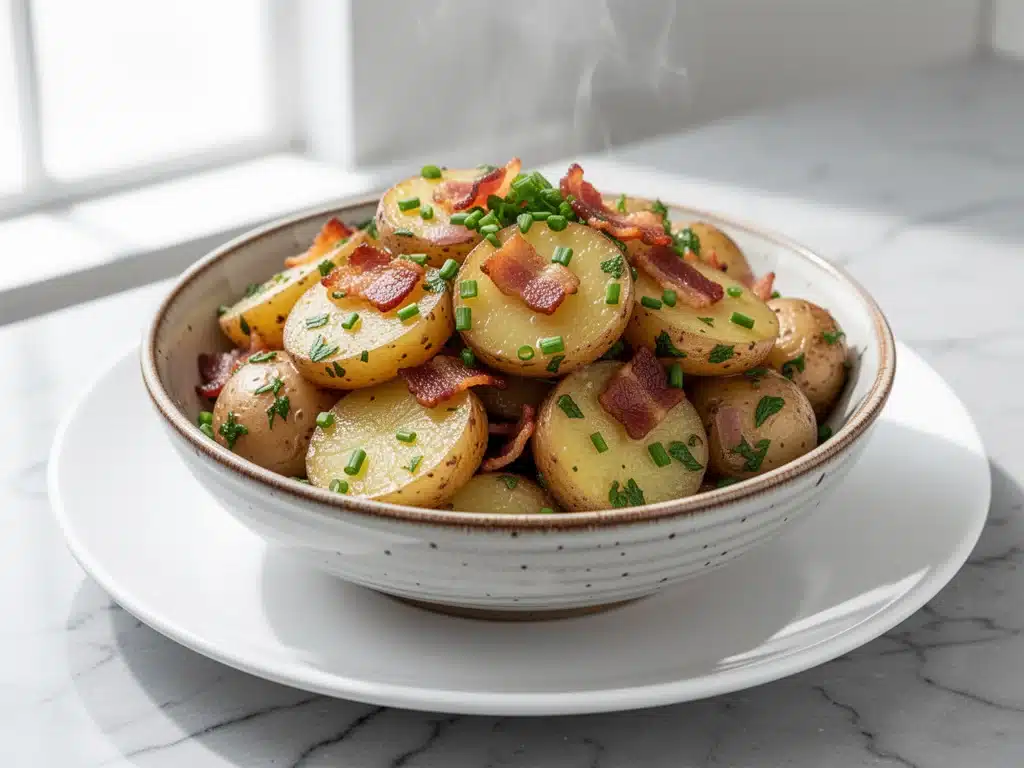
There is a specific kind of panic that sets in when you’re hosting a holiday dinner and realize your side dish lineup is basically just a parade of mashed potatoes. I’ve been there. I’ve stood in my kitchen at 4 PM on Christmas Eve, staring at a pot of buttery mash, thinking, “This is fine. This is totally fine.” But it wasn’t fine. It was boring. My family has eaten mashed potatoes for so long that they might as well be wallpaper. That year, I dug out my grandmother’s old recipe box—yes, the one with the coffee stains and the sticky notes from 1974—and pulled out a yellowed index card for her German potato salad. It was warm, tangy, crisp with bacon, and completely different from anything else on the table. My husband took one bite and asked if I’d been hiding this recipe from him for twenty years.
That was six years ago. Now, this Oktoberfest German potato salad isn’t just a holiday secret; it’s my absolute go-to for every gathering from Thanksgiving to Super Bowl Sunday. It’s the kind of dish that disappears before you can even grab a second plate. And here’s the thing: it’s not complicated. You don’t need fancy techniques or rare ingredients. You just need a few simple pantry staples and a willingness to trust the process. This warm, vinaigrette-based salad is sturdy enough to hold up against heavy mains, flavorful enough to stand on its own, and honestly? It tastes better the next day. I’ve made this for crowds of twelve and dinners for two, and it never fails to impress. If you’re tired of the same old sides, you need to try this. It’s easy, it’s delicious, and it’s about to become your new favorite holiday side.
Why You’ll Love This Oktoberfest German Potato Salad
There are a million reasons to make this salad, but let’s get straight to the point. This isn’t your average mayo-heavy potato salad that sits in the fridge for three days and turns into a solid block of starch. This is a warm, savory, tangy masterpiece that brings a little bit of Bavarian charm to your holiday table. I’ve tested this recipe more times than I care to admit, tweaking the vinegar-to-bacon ratio until it was perfect. Here’s why this recipe has earned a permanent spot in my rotation:
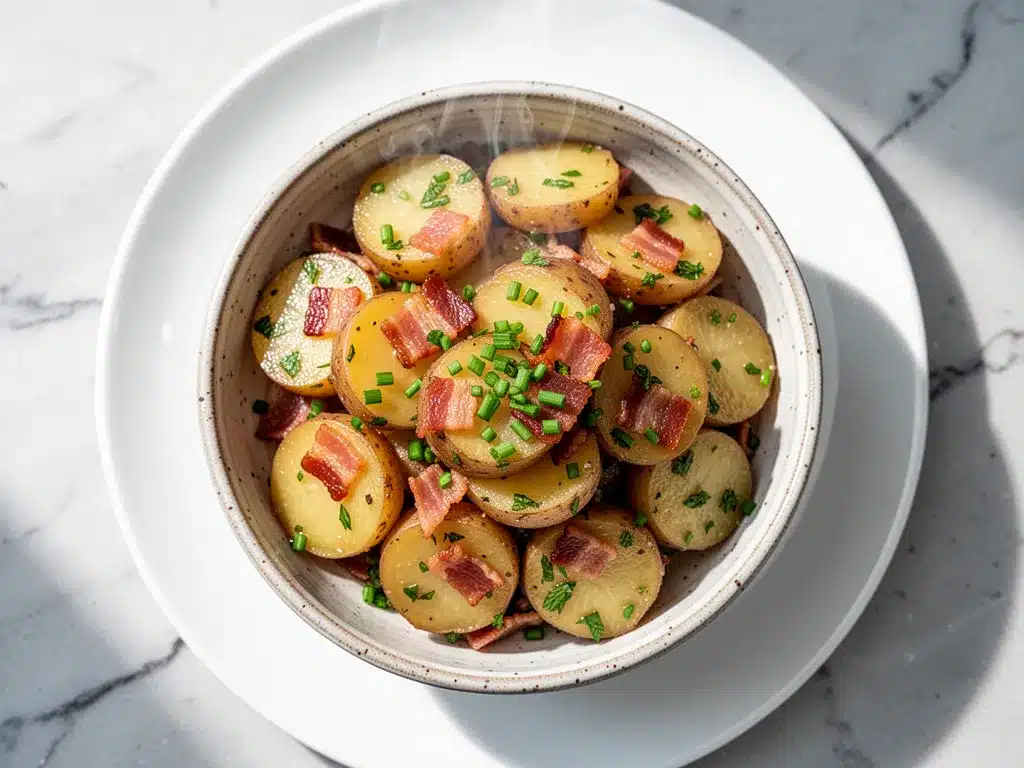
- It’s Warm and Comforting — Unlike cold potato salads that rely on mayo, this version is served warm. The potatoes absorb that hot bacon-vinegar dressing like a sponge, creating a rich, cohesive dish that feels like a hug. I love serving this straight from the skillet because the steam carries that incredible smell of smoky bacon and sharp vinegar into the room.
- Perfect Balance of Tang and Smoke — The secret is in the dressing. It’s a hot vinegar broth with mustard and a touch of sugar. It cuts through the richness of the potatoes and the bacon perfectly. It’s not too sour, not too sweet—it’s just right. I’ve had people tell me they don’t even like potato salad until they try this version. The tang wakes up your palate.
- Sturdy and Make-Ahead Friendly — This is the ultimate stress-buster for holiday hosting. You can make the dressing and cook the bacon ahead of time. The potatoes hold their shape beautifully, so they don’t turn into mush when you toss them in the hot liquid. I actually prefer making it the day before. Letting it sit in the fridge overnight allows the flavors to meld, and I just reheat it gently before serving. It tastes even better the next day.
- Vegetarian-Adjacent (If You Skip the Bacon) — Okay, full disclosure: it’s not vegetarian with the bacon. But if you leave the bacon out and use a little extra olive oil or vegetable broth, it’s still incredibly flavorful. The mustard and vinegar do the heavy lifting. That said, I always include bacon because it adds that essential crunch and smokiness that defines this style of salad.
- Uses Simple Ingredients — You probably have most of this in your kitchen already. Potatoes, bacon, onions, vinegar, sugar, mustard, and spices. No weird imports, no expensive cheeses, no fancy garnishes. Just honest, good food. It’s budget-friendly and reliable.
This is the side dish that saves your dinner party. It’s reliable, it’s delicious, and it’s easy to make while you’re stressing over the main course. Trust me on this one.
Ingredients You’ll Need
Before we get to the cooking, let’s talk about what goes into this. The beauty of German potato salad is that it’s very forgiving, but getting the base ingredients right is crucial. I’m particular about three things here: the type of potato, the quality of the bacon, and the vinegar. Here’s what you need and why it matters.
For the Salad Base
Yukon Gold potatoes (3 pounds / 1.3 kg) — This is non-negotiable. You want waxy or semi-waxy potatoes that hold their shape when cooked. Russets will fall apart and turn into mush, which is great for mashed potatoes but terrible for salad. Yukon Golds are the sweet spot: creamy inside but firm enough to keep their cube shape. Red potatoes work too, but Yukons have a better buttery flavor that pairs with the dressing.
Thick-cut bacon (12 ounces / 340g) — You need bacon that has some fat content. Lean bacon will just dry out and get chewy. Thick-cut bacon renders down slowly, getting crispy and leaving behind that gorgeous, flavorful bacon grease. Save that grease! It’s liquid gold for this recipe. If you can’t find thick-cut, just use regular bacon but cook it a little longer to get it crisp.
Yellow onion (1 medium / about 150g) — Finely diced. This adds sweetness and body to the dressing. Some recipes use white onions, but yellow onions caramelize better and have a deeper flavor. You want it to melt into the sauce, not be crunchy. If you’re sensitive to raw onion flavor, cooking it down in the bacon grease solves that problem.
For the Dressing
Apple cider vinegar (1 cup / 240ml) — This is the heart of German potato salad. It needs to be tangy and sharp. White wine vinegar works in a pinch, but apple cider vinegar has that fruity depth that balances the saltiness of the bacon. Don’t use balsamic; it will turn the salad dark and muddy. You want a bright, golden color.
Chicken broth (1 cup / 240ml) — I use low-sodium broth so I can control the saltiness. This adds body to the dressing so it’s not just pure vinegar. Vegetable broth works for a vegetarian version. Just make sure it’s a good quality broth; it’s a major flavor component.
Granulated sugar (2 tablespoons / 25g) — This balances the acidity of the vinegar. You want a slight sweetness, not a dessert-level sweet. Adjust to taste, but don’t skip it entirely, or it’ll be too sharp for most people.
Dijon mustard (2 teaspoons) — Or yellow mustard if that’s what you have. Dijon adds a nice tang and helps emulsify the dressing. It’s subtle but essential for that savory depth. I always keep a jar of Gulden’s in my fridge.
Worcestershire sauce (1 teaspoon) — This is the secret weapon. It adds umami and complexity. You won’t taste it directly, but it makes the whole dish taste “more.” If you’re avoiding gluten, check your brand, as some contain barley.
Spices (1/2 teaspoon black pepper, 1/4 teaspoon celery seed, 1/4 teaspoon paprika) — Celery seed is traditional in German cooking and adds a subtle, earthy bitterness that cuts through the fat. Paprika adds color and a mild sweetness. Black pepper is just for basic seasoning. If you don’t have celery seed, it’s okay, but it’s a nice touch.
Optional Add-ins
Fresh parsley (2 tablespoons, chopped) — For color and a fresh finish. I sprinkle this on right before serving. It brightens up the rich, dark tones of the salad.
Hard-boiled eggs (2, sliced) — Some families add sliced hard-boiled eggs on top. It’s a nice protein boost and adds a creamy texture contrast. I usually skip it because the bacon is plenty, but my mom loves it.
Equipment Needed
You don’t need any fancy gadgets for this. Here’s what I actually use in my kitchen. It’s all stuff you probably have hanging around.
Large Dutch oven or heavy-bottomed pot — I use a 6-quart pot. This is for boiling the potatoes. It needs to be big enough to hold 3 pounds of potatoes with room for water to circulate. My old Le Creuset works perfectly, but any heavy pot will do.
Large skillet or cast-iron pan — 12-inch is ideal. This is where you cook the bacon and onions and make the dressing. Cast iron is great because it holds heat well, which helps keep the salad warm when you combine everything. Stainless steel works too.
Sharp knife and cutting board — For dicing the potatoes and onions. Uniform cubes are key so they cook evenly. I aim for half-inch cubes.
Wooden spoon — For stirring the dressing and tossing the salad. Silicone works too, but wood feels nicer.
Colander — For draining the potatoes. A simple wire colander is fine.
Measuring cups and spoons — Standard stuff. I use metal measuring spoons because they’re durable.
Large serving bowl — Something wide and shallow is nice for serving, so the salad doesn’t get squished. I usually serve it right from the skillet if it’s a small crowd, or transfer to a big bowl for a party.
How to Make It: Step-by-Step
Alright, let’s make this! It’s simpler than it looks, but there are a few tricks to get it perfect. I’m walking you through exactly how I do it, including the little details that make the difference.
Step 1: Prep the Potatoes (10 minutes)
Wash the potatoes thoroughly. You don’t need to peel them—the skin adds texture and nutrients. Cut them into half-inch cubes. Try to keep them as uniform as possible so they cook at the same rate. If you have some huge chunks and some tiny bits, the tiny bits will turn to mush before the big ones are done. Once cut, rinse them under cold water to remove excess starch. This helps prevent them from sticking together.
Step 2: Boil the Potatoes (15-20 minutes)
Place the potato cubes in your large pot and cover with cold water by about an inch. Add a generous pinch of salt—the water should taste like the ocean. Bring to a boil, then reduce to a simmer. Cook for 15-20 minutes, or until the potatoes are fork-tender but still firm. They should slide off the fork easily but not fall apart. This is the “al dente” stage for potatoes. Overcooked potatoes will disintegrate when you toss them in the hot dressing. Drain them in a colander and set aside. Do not rinse them with cold water; you want them warm.
Step 3: Cook the Bacon (5-8 minutes)
While the potatoes boil, chop the bacon into one-inch pieces. Place them in your large skillet over medium heat. Cook slowly, stirring occasionally, until the bacon is crispy and the fat has rendered. This takes about 8 minutes. If you crank the heat, the bacon will burn before the fat renders. You want golden brown, not black. Once crispy, remove the bacon with a slotted spoon and set it aside on a paper towel. Leave about 2 tablespoons of bacon grease in the pan. If you have more, you can spoon some out, but you want that flavor.
Step 4: Sauté the Onions (3-4 minutes)
Add the diced onion to the hot bacon grease in the skillet. Cook over medium heat for 3-4 minutes, stirring frequently, until the onion is soft and translucent. It should be sweet and fragrant. Don’t let it brown too much; you just want it softened. This builds the flavor base for your dressing.
Step 5: Make the Dressing (5 minutes)
Pour in the chicken broth, apple cider vinegar, sugar, Dijon mustard, Worcestershire sauce, black pepper, celery seed, and paprika. Stir well to dissolve the sugar. Bring the mixture to a boil, then reduce to a simmer for 2-3 minutes. This cooks out the raw vinegar taste and melds the flavors. The sauce will reduce slightly and become a bit syrupy. This is important—it needs to coat the potatoes, not run off them.
Step 6: Combine Everything (5 minutes)
Add the drained, warm potatoes to the skillet with the dressing. Gently toss the potatoes to coat them evenly. Be careful not to break them. Add the crispy bacon back in and toss again. The hot potatoes will absorb the dressing rapidly. Taste and adjust seasoning. Add more salt if needed, or a pinch more sugar if it’s too sharp. Remember, the bacon is salty, so taste before adding extra salt.
Step 7: Serve
Serve immediately while warm. Sprinkle with fresh chopped parsley. This salad is best eaten warm, straight from the pan. It can be made ahead and reheated, but the texture is best when fresh. Enjoy!
Expert Tips & Tricks
Here’s everything I’ve learned from making this dozens of times. These tips will save you from my mistakes.
Don’t Overcook the Potatoes — This is the #1 mistake people make. If the potatoes are too soft, they’ll turn to mush when you toss them in the hot vinegar dressing. They need to be firm enough to hold their shape. Test them with a fork; if it goes in with zero resistance, they’re done. Remove them immediately.
Keep Everything Warm — German potato salad is traditionally served warm. If your potatoes cool down too much before adding the dressing, they won’t absorb it as well. Keep the potatoes covered in a warm spot while you make the dressing. If the dressing is cold, it won’t penetrate the potatoes. Heat the dressing until it’s steaming hot.
Save the Bacon Grease — That liquid gold is essential for flavor. Don’t pour it down the sink. It adds a smoky depth that oil can’t replicate. If you don’t have enough grease left after cooking the bacon, add a tablespoon of butter or olive oil, but the bacon grease is best.
Let It Rest — After tossing everything together, let the salad sit for 10-15 minutes before serving. This allows the potatoes to fully absorb the dressing and the flavors to meld. It sounds counterintuitive to wait, but it makes a huge difference in taste.
Adjust the Vinegar — Every vinegar is different. Some apple cider vinegars are sharper than others. Taste the dressing before adding it to the potatoes. If it’s too sharp, add a little more sugar. If it’s too sweet, add a splash more vinegar. You want a balance that makes your mouth water.
Variations & Substitutions
Once you’ve nailed the basic version, here’s how you can mix it up. I’ve tried all of these, and they all work.
Vegetarian Version — Skip the bacon. Use vegetable broth instead of chicken broth. Add 2 tablespoons of olive oil or vegan butter to the skillet when sautéing the onions. Add 1/2 teaspoon of liquid smoke to mimic the bacon flavor. It’s still delicious, just different.
Spicy Kick — Add 1/2 teaspoon of cayenne pepper or a diced jalapeño (seeds removed) when sautéing the onions. It adds a nice heat that cuts through the richness. My nephew loves it this way.
Add Some Heat — If you want more crunch, add some diced celery to the onions. It adds a fresh, crisp texture that contrasts with the soft potatoes. It’s a common addition in some regional versions.
Different Potatoes — If you can’t find Yukon Golds, use red potatoes. They hold their shape well but have a slightly different flavor. Avoid Russets; they’re too starchy and will fall apart.
Gluten-Free — Most of this recipe is naturally gluten-free. Just check your Worcestershire sauce and mustard to ensure they’re certified gluten-free. Many brands are, but some contain barley or wheat.
Serving & Storage
Here’s how to store and reheat this beauty so it stays delicious.
How to Serve — I usually serve this straight from the skillet at the dinner table. It looks rustic and stays warm. But you can also transfer it to a serving bowl. It pairs beautifully with roast pork, smoked sausages, or roasted chicken. It’s also great alongside the never dry oven baked chicken breast for a complete meal. For a festive touch, serve it with a side of honey roasted glazed carrots with thyme to add some color and sweetness to the plate.
Refrigerator — Store in an airtight container for up to 4 days. The salad will firm up in the fridge as the dressing solidifies. This is normal.
Reheating — The best method is to reheat it in a skillet over low heat with a splash of chicken broth or water. Stir gently until warmed through. This restores the creamy, saucy texture. You can also microwave it in 30-second intervals, stirring in between, but it tends to dry out more. Add a splash of liquid to help.
Freezing — Honestly, this doesn’t freeze well. The potatoes become grainy and the dressing separates. It’s best made fresh or stored in the fridge for a few days. Don’t risk freezing it.
Nutrition Information
I’m not a nutritionist, but here’s the breakdown if you’re tracking. Keep in mind that this is a rich dish with bacon and vinegar, so it’s not exactly diet food, but it’s not empty calories either.
Per Serving (based on 8 servings):
- Calories: 280
- Protein: 8g
- Carbs: 32g
- Fiber: 3g
- Sugar: 5g
- Fat: 12g
- Saturated Fat: 4g
- Cholesterol: 15mg
- Sodium: 450mg
What’s Good: Potatoes provide complex carbs and fiber. Bacon adds protein and fat. The vinegar has no calories.
What to Know: Sodium can be high due to bacon and broth. Use low-sodium broth and lean bacon to reduce sodium. Fat content is moderate.
Final Thoughts
So that’s my Oktoberfest German potato salad! I’ve probably talked your ear off at this point, but when you make a recipe this often, you have a lot to say about it. This has saved my holiday dinners more times than I can count. It’s my answer to “what’s for dinner” when I’m tired, don’t want takeout, and still want something that tastes really good. My family is happy, my guests are impressed, and I’m happy because I’m not stressed about cooking.
Make it yours! Try different add-ins, swap in your favorite vegetables, adjust the vinegar. The best recipes are the ones you adapt to your family’s tastes. If you make this, drop a comment and let me know what you think! I love hearing how recipes turn out in your kitchen. And if something doesn’t work, tell me that too—I’m here to help troubleshoot.
Happy cooking! And I hope your kitchen smells half as good as mine does right now.
Frequently Asked Questions
Can I use russet potatoes?
You can, but they won’t hold their shape as well. Russets are mealy and starchy, so they’ll break down in the hot dressing and turn into a mushy mess. Yukon Golds or red potatoes are much better for this recipe. If you only have russets, be very careful not to overcook them and handle them gently when tossing.
Why is my salad too sour?
This usually means you added too much vinegar or not enough sugar. Taste the dressing before adding it to the potatoes. If it’s too sharp, add a teaspoon of sugar at a time until it balances. Remember, the bacon adds saltiness, which can make the vinegar taste sharper. Adjust accordingly.
Can I make this ahead of time?
Yes! In fact, I prefer making it the day before. Combine the potatoes and dressing, let it cool, and store it in the fridge. Reheat it gently in a skillet with a splash of broth before serving. The flavors will meld even more, making it taste even better. Just don’t freeze it.
Can I use white wine vinegar instead of apple cider vinegar?
You can, but the flavor will be different. Apple cider vinegar has a fruity sweetness that complements the bacon and onions. White wine vinegar is sharper and more neutral. If you use it, you might want to add a little extra sugar to balance the acidity. But apple cider vinegar is the traditional choice for a reason.
How do I reheat leftovers without drying them out?
Always reheat on the stovetop with a little liquid. Add a splash of chicken broth or water to a skillet, add the leftover salad, and heat over low heat, stirring gently. The liquid helps recreate the saucy texture. Microwaving tends to dry out the potatoes and make them rubbery. If you must microwave, add a splash of water and heat in short bursts, stirring in between.
Is this recipe gluten-free?
Mostly. Potatoes, bacon, onions, vinegar, sugar, and spices are naturally gluten-free. However, check your Worcestershire sauce and mustard, as some brands contain gluten. Use certified gluten-free versions if needed. This is a great option for gluten-free guests if you verify your condiments.
Pin This Recipe!
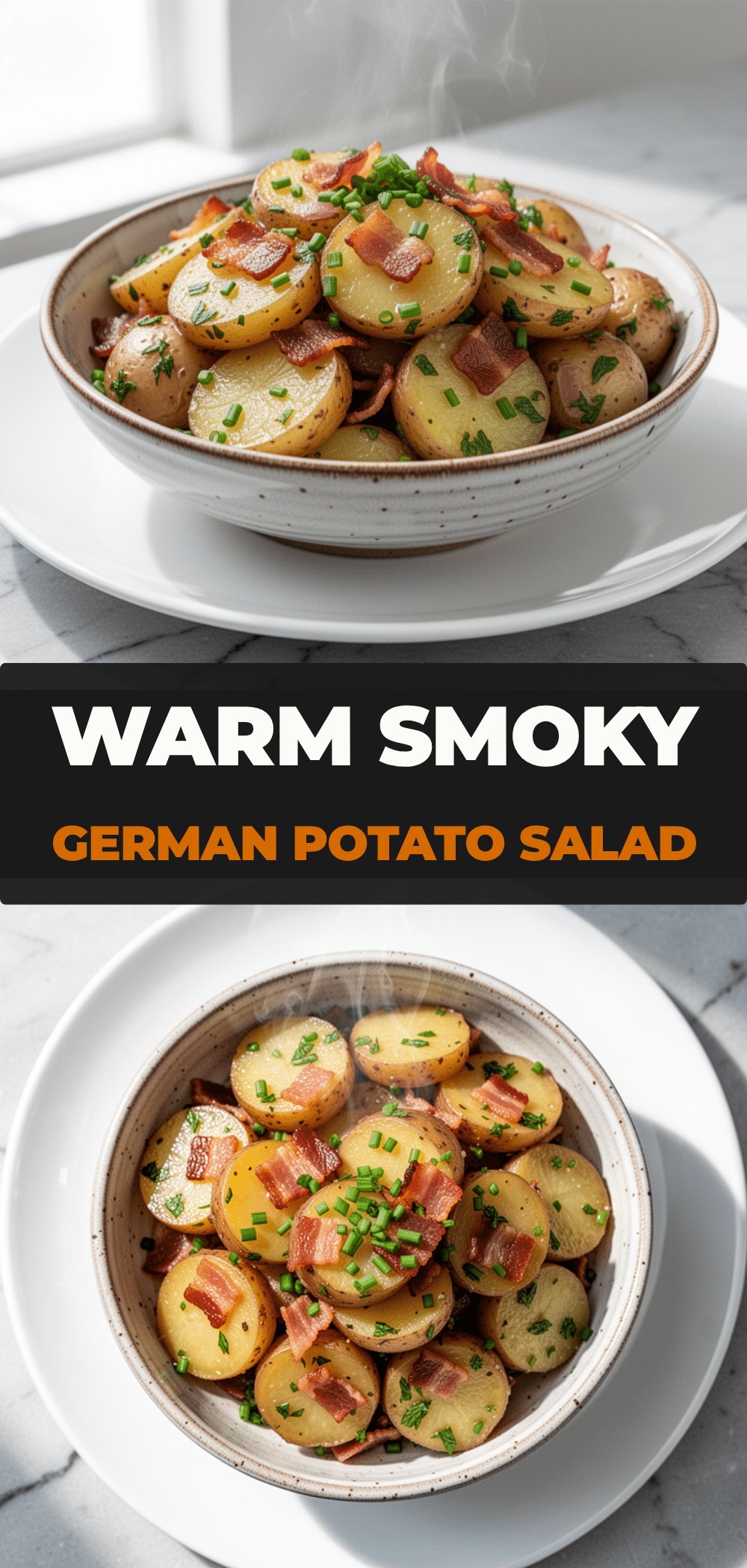
Oktoberfest German Potato Salad: Easy Holiday Side
- Total Time: 40 minutes
- Yield: 8 servings 1x
Description
A warm, tangy, and savory German potato salad featuring crispy bacon, Yukon Gold potatoes, and a rich apple cider vinegar dressing. This sturdy side dish is perfect for holidays and tastes even better the next day.
Ingredients
- 3 pounds Yukon Gold potatoes, cut into half-inch cubes
- 12 ounces thick-cut bacon, chopped into one-inch pieces
- 1 medium yellow onion, finely diced
- 1 cup apple cider vinegar
- 1 cup low-sodium chicken broth
- 2 tablespoons granulated sugar
- 2 teaspoons Dijon mustard
- 1 teaspoon Worcestershire sauce
- 1/2 teaspoon black pepper
- 1/4 teaspoon celery seed
- 1/4 teaspoon paprika
- 2 tablespoons fresh parsley, chopped (optional)
- Salt, to taste
Instructions
- Wash and cube the potatoes into half-inch pieces. Rinse under cold water to remove excess starch.
- Place potatoes in a large pot, cover with cold water by an inch, and add a generous pinch of salt. Bring to a boil, then simmer for 15-20 minutes until fork-tender but firm. Drain and set aside (do not rinse with cold water).
- While potatoes cook, chop bacon and cook in a large skillet over medium heat until crispy and fat is rendered (about 8 minutes). Remove bacon with a slotted spoon, leaving about 2 tablespoons of grease in the pan.
- Add diced onion to the bacon grease and sauté for 3-4 minutes until soft and translucent.
- In the skillet with onions, combine chicken broth, apple cider vinegar, sugar, Dijon mustard, Worcestershire sauce, black pepper, celery seed, and paprika. Stir to dissolve sugar and bring to a boil, then simmer for 2-3 minutes until slightly syrupy.
- Add the warm, drained potatoes to the skillet with the dressing. Gently toss to coat evenly without breaking the potatoes.
- Return the crispy bacon to the skillet and toss again. Taste and adjust seasoning with salt or sugar if needed.
- Let the salad rest for 10-15 minutes to allow flavors to meld. Serve warm, sprinkled with fresh parsley.
Notes
Do not overcook the potatoes; they must remain firm to hold their shape in the hot dressing. Keep everything warm to ensure the potatoes absorb the dressing. Save the bacon grease for flavor. This salad can be made ahead and reheated gently in a skillet with a splash of broth. It does not freeze well.
- Prep Time: 10 minutes
- Cook Time: 30 minutes
- Category: Side Dish
- Cuisine: German
Nutrition
- Serving Size: 1 cup
- Calories: 280
- Sugar: 5
- Sodium: 450
- Fat: 12
- Saturated Fat: 4
- Carbohydrates: 32
- Fiber: 3
- Protein: 8
Keywords: German potato salad, Oktoberfest, holiday side dish, warm potato salad, bacon potato salad, easy side dish, Thanksgiving sides