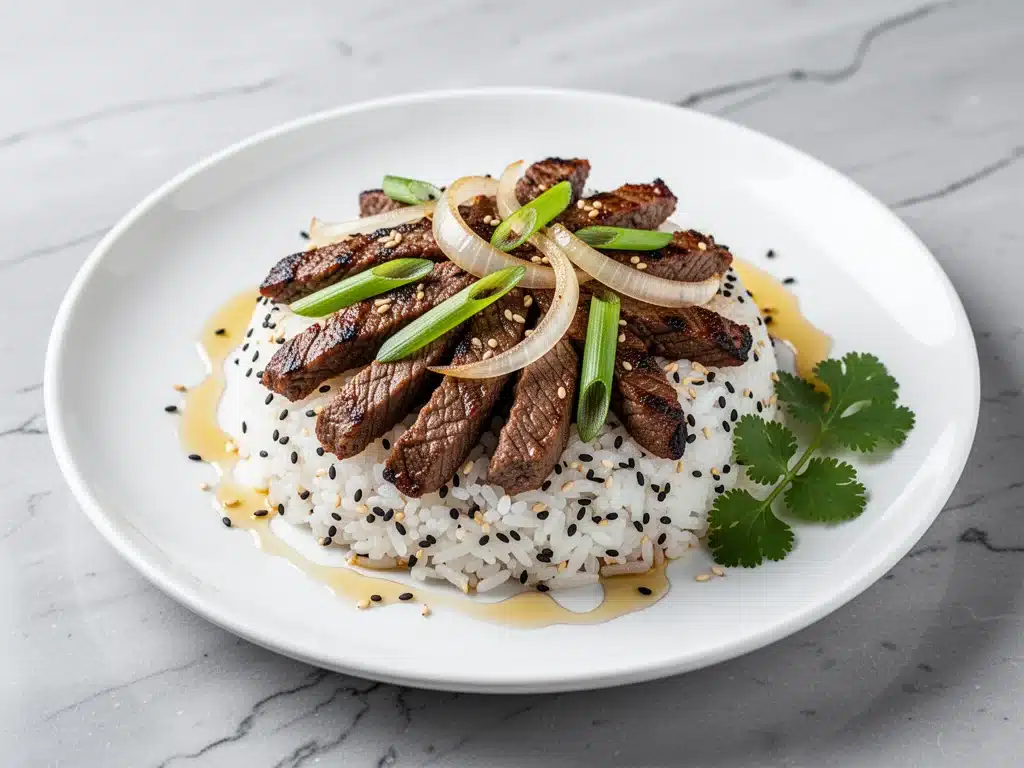
I remember the first time I tried bulgogi. I was standing in a cramped, steamy restaurant in Seoul, watching the waiter flip thin slices of marinated beef on a sizzling grill plate right in front of me. The smell hit me instantly—sweet, savory, garlicky, and just a little bit smoky. I took one bite and realized that everything I thought I knew about “quick dinners” was wrong. Sure, it was fast, but it felt like an event. A celebration.
For years, I assumed making authentic bulgogi at home was complicated. I thought I needed a special grill, obscure ingredients I couldn’t find at my local grocery store, or hours of marinating time. I stuck to takeout. But then, about two years ago, I decided to stop making excuses. I wanted that flavor in my own kitchen on a Tuesday night when I was exhausted and didn’t want to order delivery.
I spent months tweaking recipes. I burned sugar. I overcooked the beef until it tasted like rubber. I tried using ground beef because it was “easier” (spoiler: it was not). But eventually, I cracked the code. I found a method that uses standard grocery store ingredients, takes less than 30 minutes, and delivers that addictive sweet-savory kick that makes my kids beg for seconds.
This Korean beef bulgogi with sesame rice recipe has become the cornerstone of our weeknight rotation. It’s the dish I make when I need dinner to feel special but don’t have the energy to fuss. It’s sweet, it’s tender, it’s packed with flavor, and it pairs perfectly with that nutty, fragrant sesame rice. If you’re tired of the same old chicken and rice routine, trust me on this one. It’s going to change your dinner game.
Why You’ll Love This Recipe
I’ve made this beef bulgogi at least a dozen times since perfecting it, and it never gets old. Here’s why it’s earned a permanent spot in my recipe box (and hopefully, yours too):
- It’s a 20-Minute Miracle — Seriously. From pulling the beef out of the fridge to cleaning up, it takes about 20 minutes. The marinade does the work while you chop veggies. I’ve made this on nights when I walked in the door at 6:30 PM and had dinner on the table by 7:00.
- Sweet, Savory, and Addictive — The balance of soy sauce, brown sugar, and pear is just right. It’s not too sweet, not too salty. It hits that umami sweet spot that makes you keep eating. My husband says it’s better than his favorite Korean restaurant.
- Pantry-Friendly Ingredients — You probably have 80% of this in your kitchen. Soy sauce, sesame oil, garlic, ginger, brown sugar, and a ripe pear. If you don’t have a pear, apple works in a pinch. It’s flexible.
- Kid-Approved Flavor — I know, I know. Some kids are picky about “weird” sauces. But bulgogi tastes like candy to most kids. It’s sweet and tender. I’ve served this to my niece who usually only eats chicken nuggets, and she asked for the recipe.
- Perfect Leftovers — The beef actually gets more flavorful the next day as it soaks up the sauce. I love packing it in a bento box for lunch the next day, or using it in a quick bibimbap bowl with a fried egg.
- Healthy-ish Comfort Food — It’s packed with protein and veggies. You’re not drowning it in heavy cream or cheese. It’s light enough for a weeknight but satisfying enough to feel like a treat.
This is my go-to when I want to feel like a gourmet chef but don’t want to spend my evening in the kitchen. It’s reliable, delicious, and always a crowd-pleaser.
Ingredients You’ll Need
Here’s the best part: you don’t need a trip to a specialty Asian market for most of this. Your local supermarket will have everything. I’m particular about a few things, but overall, this is a very forgiving recipe.
For the Bulgogi Marinade & Beef
Thinly sliced beef (1.5 pounds / 680g) — This is the most important part. You need sirloin or ribeye, sliced paper-thin. If your butcher won’t slice it thin, put the meat in the freezer for 30 minutes to firm it up, then slice it yourself against the grain. Do not use thick steak strips; they won’t cook fast enough and will get chewy.
Soy sauce (½ cup / 120ml) — Use regular soy sauce, not low-sodium if you can help it, because you want that bold flavor. I use Kikkoman. It’s consistent and reliable.
Brown sugar (3 tablespoons / 45g) — This gives it that caramelized sweetness. Light or dark brown sugar both work. I prefer dark for a deeper molasses note.
Sesame oil (2 tablespoons / 30ml) — Use real toasted sesame oil, not the generic cooking oil. The smell alone will make your kitchen feel like a Korean restaurant. If you don’t have it, you can skip it, but you’ll miss out on that authentic nutty flavor.
Fresh garlic (6 cloves, minced / about 2 tablespoons) — Yes, six cloves. Bulgogi is garlicky. Don’t skimp. Fresh only. Jarred garlic has a metallic taste that ruins the marinade.
Fresh ginger (1 tablespoon, grated / about 15g) — Fresh ginger adds a bright, spicy warmth. Grate it on a microplane for the smoothest texture. Powdered ginger is too sharp and dusty for this.
Ripe Asian pear or Bosc pear (1 medium, grated / about 1 cup / 150g) — This is the secret weapon. The enzymes in the pear tenderize the beef, and the natural sugars caramelize beautifully. If you can’t find Asian pear, a regular Bosc or Anjou pear works. Do not use red or green cooking apples; they’re too tart.
Black pepper (1 teaspoon) — Freshly cracked is best.
Sesame seeds (1 tablespoon) — For garnish. Toasted is better, but untoasted works.
For the Sesame Rice
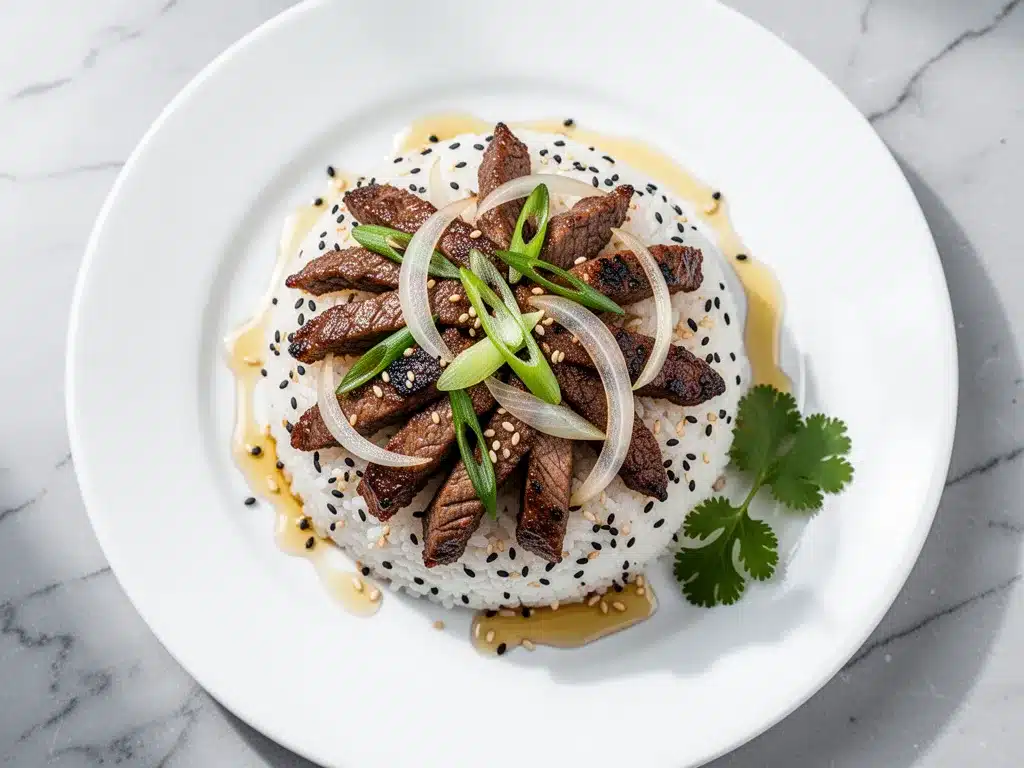
Long-grain white rice (2 cups / 400g) — Jasmine or standard long-grain works. Do not use short-grain sushi rice unless you specifically want sticky rice. Long-grain stays fluffy and nutty.
Water (2 cups / 480ml) — For cooking the rice.
Sesame oil (1 tablespoon) — Added to the rice for flavor.
Salt (½ teaspoon) — Just a pinch to season the rice.
For Serving
Green onions (2-3 stalks, sliced) — For crunch and color.
Sesame seeds (1 tablespoon) — More for garnish.
Sriracha or Gochujang (optional) — If you like heat, have some spicy sauce on the table.
Equipment Needed
You don’t need fancy gear. Here’s what I actually use:
Large skillet or griddle — I use a 12-inch cast-iron skillet. It holds heat well, which is crucial for getting a good sear on the beef. A stainless steel skillet works too. Avoid non-stick if you can, because you want that caramelization, but non-stick is fine if you’re careful.
Sharp knife — For slicing the beef and chopping veggies. A dull knife will tear the meat and make it harder to slice thin.
Microplane or fine grater — For the ginger and pear. This ensures the pear integrates into the marinade rather than leaving chunks.
Rice cooker or medium saucepan — I use a rice cooker for convenience, but a pot on the stove works perfectly. Just make sure it has a tight-fitting lid.
Large mixing bowl — For marinating the beef.
Wooden spoon or spatula — For stirring the beef. You want to flip it often.
How to Make It: Step-by-Step
Alright, let’s get cooking! I’m walking you through exactly how I do it. This process is straightforward, but timing is key to getting tender beef.
Step 1: Prep the Beef (5 minutes)
Take your beef out of the freezer for 20-30 minutes before cooking if it’s fully frozen. You want it firm enough to slice but not rock hard. Slice it against the grain as thin as possible. “Against the grain” means cutting perpendicular to the direction of the muscle fibers. This shortens the fibers and makes the meat tender. If you cut with the grain, it’ll be chewy. Trust me.
Step 2: Make the Marinade (5 minutes)
In a large bowl, whisk together the soy sauce, brown sugar, sesame oil, minced garlic, grated ginger, black pepper, and grated pear. The pear should be almost liquidy. Whisk until the sugar is dissolved. Taste the marinade—it should be sweet and savory. Adjust if needed.
Step 3: Marinate the Beef (15-30 minutes)
Add the sliced beef to the marinade. Toss it well so every slice is coated. Cover and let it sit in the fridge for at least 15 minutes. If you have time, let it marinate for up to 4 hours. The pear enzymes will tenderize the beef, but don’t go over 24 hours or the texture can get mushy. For weeknight dinners, 15 minutes is plenty.
Step 4: Cook the Sesame Rice (25 minutes)
Rinse your rice under cold water until the water runs clear. This removes excess starch and prevents clumping. Add the rice and water to your rice cooker or saucepan. Add a splash of sesame oil and a pinch of salt. Cook according to your appliance’s instructions. If using a pot, bring to a boil, then reduce heat to low, cover tightly, and simmer for 18 minutes. Remove from heat and let it sit covered for 5 minutes. Fluff with a fork.
Step 5: Sear the Bulgogi (5-7 minutes)
Heat your large skillet over medium-high heat. You want it hot. Add a tiny splash of oil (the beef has some fat, so you might not need much). Add half of the beef in a single layer. Do not crowd the pan! If you crowd it, the beef steams instead of sears, and you won’t get that caramelized edge. Cook for 2-3 minutes, flipping occasionally, until browned and cooked through. Transfer to a plate. Repeat with the second batch.
Step 6: Combine and Serve
Return all the beef to the skillet (or serve on a platter). Sprinkle with sliced green onions and toasted sesame seeds. Serve immediately over the sesame rice. Add a side of pickled vegetables or kimchi if you have it.
Expert Tips & Tricks
Here’s everything I’ve learned from making this dozens of times. These tips will save you from my mistakes.
Slice Thinly — I cannot stress this enough. Thin slices cook in seconds and stay tender. Thick slices get tough. If you’re struggling, freeze the meat for 30 minutes first.
Don’t Crowd the Pan — This is the #1 mistake people make. Cook in batches. Overcrowding lowers the pan temperature and steams the meat. You want a sear, not a steam bath.
Use Ripe Pear — The riper the pear, the sweeter and more tenderizing it is. If your pear is hard, let it sit on the counter for a day or two. A hard pear won’t break down as well.
Toast Your Sesame Seeds — Toasting seeds in a dry pan for 2 minutes brings out their nutty flavor. It’s a small step that makes a big difference in aroma.
Save the Marinade? No. — Never reuse the raw marinade as a sauce. It contains raw beef juices. If you want a sauce, set aside a small amount of marinade before adding the beef, or make a fresh batch.
Variations & Substitutions
Once you’ve nailed the basic version, here’s how you can mix it up. I’ve tried all of these.
Pork Bulgogi — Use thinly sliced pork shoulder or belly instead of beef. The fat content is higher, so it’s even juicier. Adjust cooking time slightly.
Chicken Bulgogi — Use chicken thighs, sliced thin. Chicken cooks faster, so watch the pan closely. It’s a lighter option.
Veggie Bulgogi — Use thick slices of portobello mushrooms or king oyster mushrooms. They have a meaty texture. Marinate for 30 minutes. Sear until caramelized.
Gluten-Free — Swap regular soy sauce for tamari. Everything else is naturally gluten-free. Check your sesame oil label to be sure.
Dairy-Free — This recipe is naturally dairy-free. Just ensure your soy sauce and sesame oil are dairy-free (most are).
Serving & Storage
How to Serve — I usually serve this family-style. A big platter of beef in the center, a bowl of sesame rice, and small dishes of kimchi, pickled radish, and lettuce wraps. It’s interactive and fun. You can also serve it in bowls like bibimbap, with a fried egg on top.
Side Dishes — Simple steamed broccoli, a quick cucumber salad with vinegar, or kimchi. Keep it light to balance the rich beef.
Storage — Store leftovers in an airtight container in the fridge for up to 3 days. The beef keeps well, but the rice is best fresh.
Reheating — Reheat beef in a skillet over medium heat with a splash of water to steam it back to tender. Microwave rice in short bursts, covering it to keep it moist.
Nutrition Information
I’m not a nutritionist, but here’s the breakdown if you’re tracking. Per serving (based on 4 servings):
- Calories: 520
- Protein: 35g
- Carbs: 45g
- Fiber: 2g
- Sugar: 12g
- Fat: 18g
- Saturated Fat: 6g
- Sodium: 900mg
This is a high-protein, moderate-carb meal. The sodium is higher due to soy sauce, so use low-sodium soy sauce if you’re watching salt. Overall, it’s a balanced, satisfying dinner.
Final Thoughts
So that’s my Korean beef bulgogi with sesame rice! It’s become my go-to for busy weeknights because it feels fancy but requires zero fuss. My kids love it, my husband requests it, and I love that it’s ready in 20 minutes. It’s proof that you don’t need to spend hours in the kitchen to make something delicious.
Make it yours! Try different veggies, add some heat, or serve it in lettuce wraps. If you make this, drop a comment and let me know how it turned out. I love hearing from you. And if you’re looking for other quick dinners, check out my never dry oven baked chicken breast for another easy protein option.
Happy cooking! I hope your kitchen smells amazing.
Frequently Asked Questions
Can I use ground beef instead of sliced beef?
You can, but it won’t be traditional bulgogi. Ground beef changes the texture completely. If you must use it, mix it with the marinade and cook it like a crumble. It’s good, but it’s more like a Korean beef taco filling than bulgogi. For the real deal, slice the beef thin.
Why is my bulgogi tough?
Two reasons: either the slices were too thick, or you cooked it too long. Bulgogi beef cooks in seconds. As soon as it’s browned, it’s done. Overcooking makes it tough. Also, slicing against the grain is crucial.
Can I make this ahead of time?
Yes! You can marinate the beef for up to 24 hours. Just keep it in the fridge. Cook the rice fresh, or reheat it with a splash of water. The beef will be even more flavorful after a day in the marinade.
What kind of rice is best?
Long-grain white rice like Jasmine or Basmati works best. It stays fluffy and absorbs the sesame oil well. Short-grain rice is stickier and might feel too dense with the beef.
Can I use apple instead of pear?
You can, but pear is better. Pears are sweeter and have more tenderizing enzymes. If you use apple, choose a sweet variety like Fuji or Gala, and grate it finely. It will work, but pear is the classic choice.
Is bulgogi spicy?
Traditional bulgogi is not spicy. It’s sweet and savory. If you like heat, add red pepper flakes to the marinade or serve with sriracha or gochujang on the side.
Pin This Recipe!
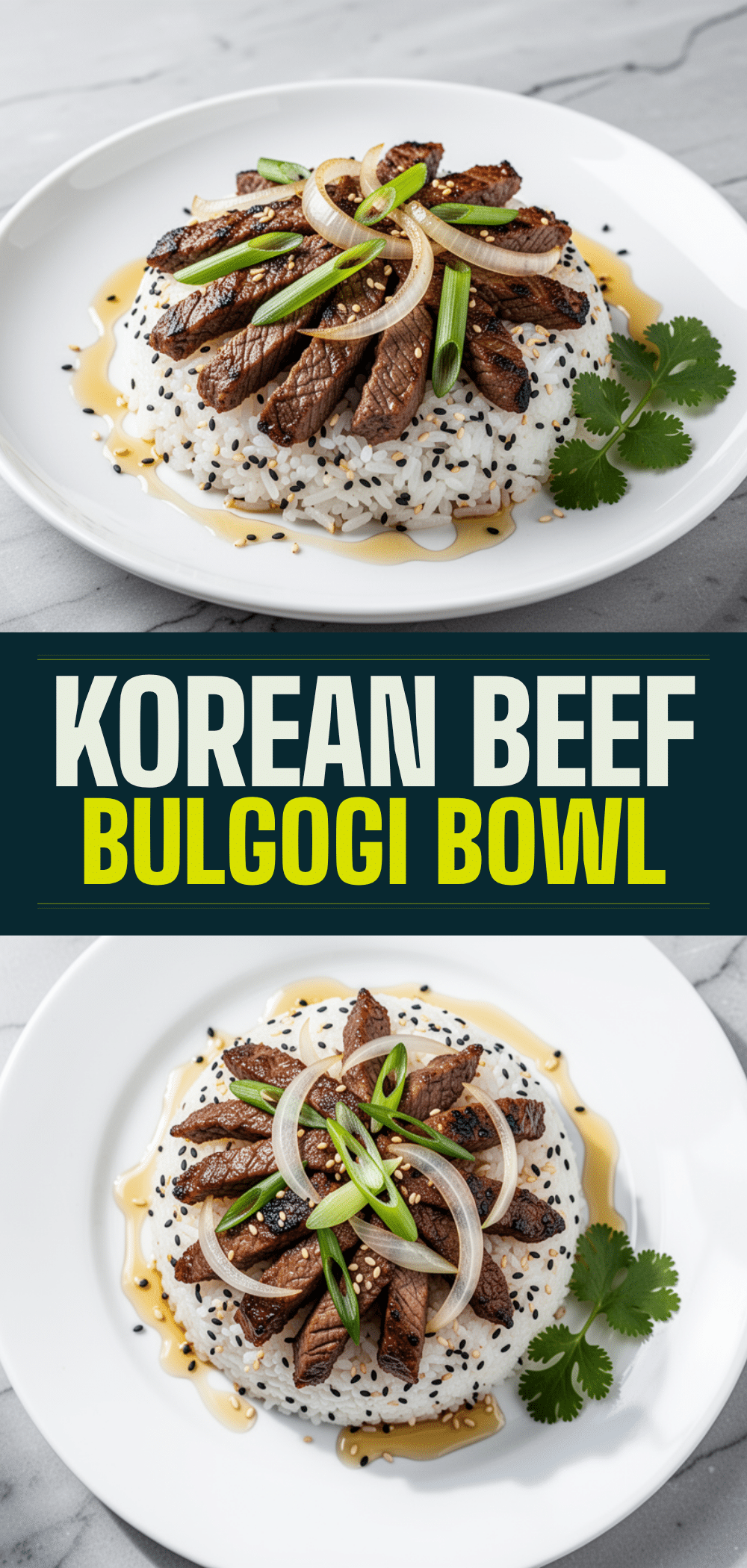
Korean Beef Bulgogi with Sesame Rice: Easy Weeknight Dinner
- Total Time: 30 minutes
- Yield: 4 servings 1x
Description
A quick and flavorful weeknight dinner featuring thinly sliced beef marinated in a sweet and savory sauce with pear, served over nutty sesame rice. Ready in about 20 minutes using standard grocery store ingredients.
Ingredients
- 1.5 pounds thinly sliced beef (sirloin or ribeye)
- ½ cup soy sauce
- 3 tablespoons brown sugar
- 2 tablespoons toasted sesame oil
- 6 cloves fresh garlic, minced
- 1 tablespoon fresh ginger, grated
- 1 medium ripe Asian pear or Bosc pear, grated
- 1 teaspoon black pepper
- 1 tablespoon sesame seeds (for garnish)
- 2 cups long-grain white rice
- 2 cups water
- 1 tablespoon sesame oil (for rice)
- ½ teaspoon salt (for rice)
- 2–3 stalks green onions, sliced
- Sriracha or Gochujang (optional, for serving)
Instructions
- Slice the beef against the grain as thinly as possible. If the meat is too soft to slice, freeze it for 30 minutes first.
- In a large bowl, whisk together soy sauce, brown sugar, 2 tablespoons sesame oil, minced garlic, grated ginger, black pepper, and grated pear until the sugar is dissolved.
- Add the sliced beef to the marinade, tossing to coat evenly. Cover and refrigerate for at least 15 minutes (up to 4 hours).
- Rinse the rice under cold water until the water runs clear. Combine rice, water, 1 tablespoon sesame oil, and salt in a rice cooker or saucepan.
- Cook the rice according to appliance instructions. If using a pot, bring to a boil, reduce heat to low, cover tightly, and simmer for 18 minutes. Let sit covered for 5 minutes, then fluff with a fork.
- Heat a large skillet or griddle over medium-high heat. Add a tiny splash of oil if needed.
- Cook the beef in batches to avoid crowding the pan. Sear for 2-3 minutes per side until browned and cooked through. Transfer cooked beef to a plate.
- Return all beef to the skillet or serve on a platter. Sprinkle with sliced green onions and toasted sesame seeds.
- Serve immediately over the sesame rice.
Notes
Slice beef against the grain for tenderness. Do not crowd the pan when searing to ensure caramelization rather than steaming. The pear enzymes tenderize the beef, so do not marinate for more than 24 hours. Never reuse raw marinade as a sauce. Toast sesame seeds in a dry pan for enhanced flavor.
- Prep Time: 15 minutes
- Cook Time: 15 minutes
- Category: Main Course
- Cuisine: Korean
Nutrition
- Serving Size: 1 plate with beef an
- Calories: 520
- Sugar: 12
- Sodium: 900
- Fat: 18
- Saturated Fat: 6
- Carbohydrates: 45
- Fiber: 2
- Protein: 35
Keywords: Korean beef bulgogi, sesame rice, weeknight dinner, quick meals, Asian recipes, beef recipes, easy dinner, gluten-free option