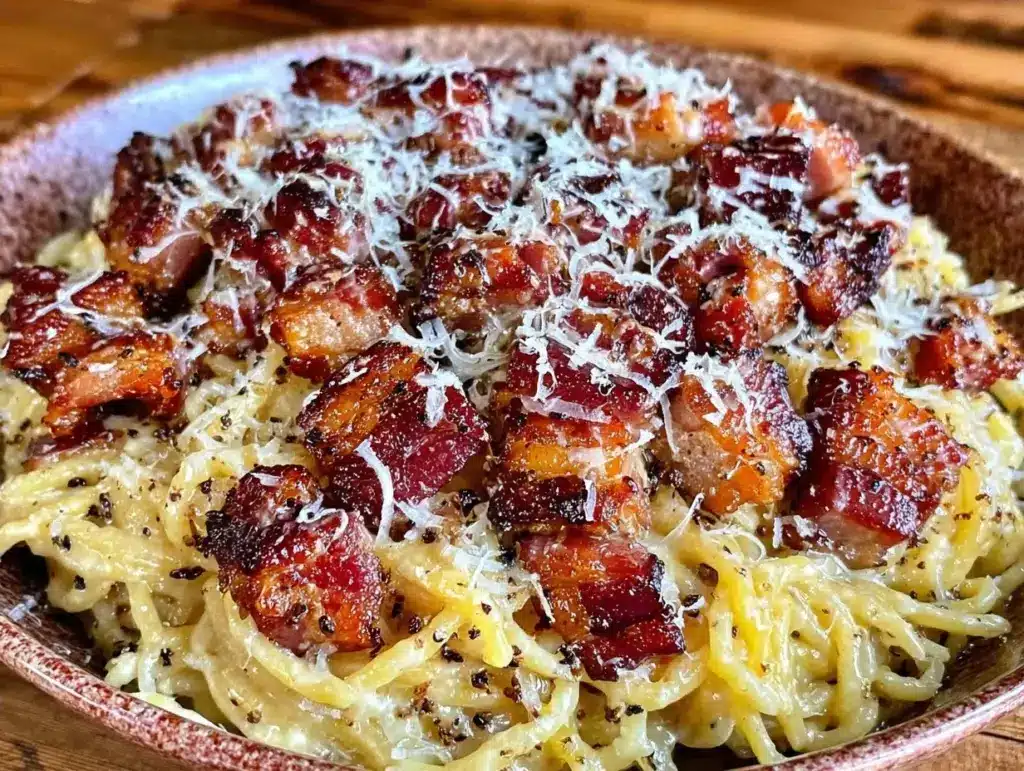
I still remember the first time I tried to make carbonara in a small apartment kitchen in Rome. I was twenty-two, convinced I was a decent cook, and I threw in a splash of cream because, well, it’s carbonara, so it needs to be creamy, right? I also added peas. Don’t judge me too hard; I was young and confused.
My Italian friend Marco looked at my yellow, mushy, pea-filled disaster with genuine pain in his eyes. He didn’t say anything. He just went to the counter, pulled out three eggs, a block of hard cheese, and a piece of cured pork that looked like it had been cured since the Renaissance. He shook his head, walked over to my stove, and showed me how to make it without a single drop of cream.
That was the day I learned that real carbonara isn’t about adding cream to make it creamy. It’s about emulsion. It’s about temperature control. And honestly? It’s about trust.
Today, I make this authentic Italian carbonara with guanciale and pecorino so often that it’s basically my go-to comfort meal. It’s the kind of dish that feels fancy but is actually stupidly simple. If you can boil water and whisk eggs, you can make this. No cream. No peas. Just four ingredients that come together in about 20 minutes to create something silky, savory, and deeply satisfying. This is the one recipe you’ll make on repeat because it works every single time.
Why You’ll Love This Recipe
There are about ten reasons I keep coming back to this carbonara, but here are the big ones that will win you over.
It’s Actually Authentic — No cream. I know, I know. It sounds scary if you’re used to the Americanized version, but the real magic happens when you whisk eggs, cheese, and hot pasta water together. The result is a sauce that’s incredibly rich and creamy without a single drop of dairy cream. It’s lighter, too.
Guanciale Changes Everything — Sure, you can use bacon, and I’ll tell you how later. But guanciale (cured pork jowl) has a higher fat content and a more complex, peppery flavor that bacon just can’t match. When it renders, it creates this golden, savory oil that coats every strand of pasta. It’s a game-changer.
Beginner-Proof — I’ve walked my teenage niece through this recipe over FaceTime. She didn’t have guanciale, so she used bacon. She didn’t have pecorino, so she used parmesan. The sauce didn’t scramble. It was perfect. You really can’t mess this up if you follow the temperature tips.
Minimal Ingredients — You probably have eggs and cheese in your fridge. You just need to pick up one special ingredient: guanciale (or bacon) and some black pepper. That’s it. Four ingredients. No chopping onions, no sautéing garlic, no complicated techniques.
Restaurant Quality at Home — When you serve this, people will ask if you went to a special Italian restaurant. They won’t believe you made it in 20 minutes with ingredients from the grocery store. It’s your secret weapon for impressing guests without spending hours in the kitchen.
This is my “if I can only make one thing” dinner. It’s reliable, delicious, and feels like a hug on a plate.
Ingredients You’ll Need
Here’s the best part: the ingredient list is short. I’m particular about three of them, so pay attention there. The rest is pantry staples.
Guancale (8 oz / 225g) — This is the star. It’s cured pork jowl, available at most butcher shops or specialty Italian stores. It has a higher fat content than bacon and a distinct flavor. If you can’t find it, see the substitutions below. Do not skip this step—get good quality cured pork.
Eggs (3 large egg yolks + 1 whole egg) — We use mostly yolks for that rich, golden color and creamy texture. The one whole egg adds a bit of structure so the sauce isn’t too loose. Room temperature eggs work best, but cold eggs are fine if you’re careful with the heat.
Pecorino Romano Cheese (1 cup / 100g, finely grated) — This is a sheep’s milk cheese. It’s salty, sharp, and tangy. It cuts through the richness of the pork and eggs perfectly. Important: Buy a block and grate it yourself. Pre-grated cheese has anti-caking agents that will make your sauce grainy and prevent it from melting smoothly.
Spaghetti or Rigatoni (1 pound / 450g) — Traditional carbonara uses spaghetti or rigatoni. Spaghetti is classic, but rigatoni holds the sauce in its ridges beautifully. Any long pasta works. I use Barilla because it cooks evenly.
Freshly Cracked Black Pepper (2 teaspoons, coarse grind) — Carbonara means “charcoal” or “coal miner,” and the black pepper is supposed to look like specks of coal. Use a pepper mill and crack it fresh. Pre-ground pepper won’t have the same punch.
Salt (for pasta water) — You’ll need a good amount for boiling the pasta. See the tips below for how much.
Substitutions (Because I Get It):
- Bacon instead of Guanciale: Use thick-cut bacon, cut into lardons. It’s not authentic, but it’s delicious and easier to find. I use it when I’m in a rush.
- Parmesan instead of Pecorino: Parmigiano-Reggiano is milder and less salty. You can use all parmesan, or a 50/50 mix of pecorino and parmesan if you want a balance of sharp and nutty.
- Whole eggs instead of yolks: If you’re worried about richness, use 4 whole eggs. The sauce will be slightly less luxurious but still creamy.
Equipment Needed
You don’t need fancy gadgets. Here’s what I actually use.
Large Skillet or Pan — I use a 12-inch stainless steel skillet. It needs to be big enough to toss the pasta later. Cast iron works too, but make sure it’s well-seasoned.
Large Pot — For boiling the pasta. A 6-quart pot is standard. I use my old heavy-bottomed pot from college; it’s seen better days but still works perfectly.
Bowl for Egg Mixture — A medium mixing bowl to whisk the eggs and cheese. Glass or ceramic works best so you can see the color.
Whisk — For beating the eggs until smooth. A standard balloon whisk is fine.
Tongs — For transferring pasta from the pot to the skillet. I have a pair of long tongs that make this easy. A regular fork works, but tongs are less messy.
Pepper Mill — Not strictly necessary, but fresh cracked pepper makes a huge difference in flavor and presentation.
Microplane or Fine Grater — For grating the pecorino. You want it fine so it melts easily into the eggs. If you use a box grater, grate it until it’s almost powdery.
How to Make It: Step-by-Step
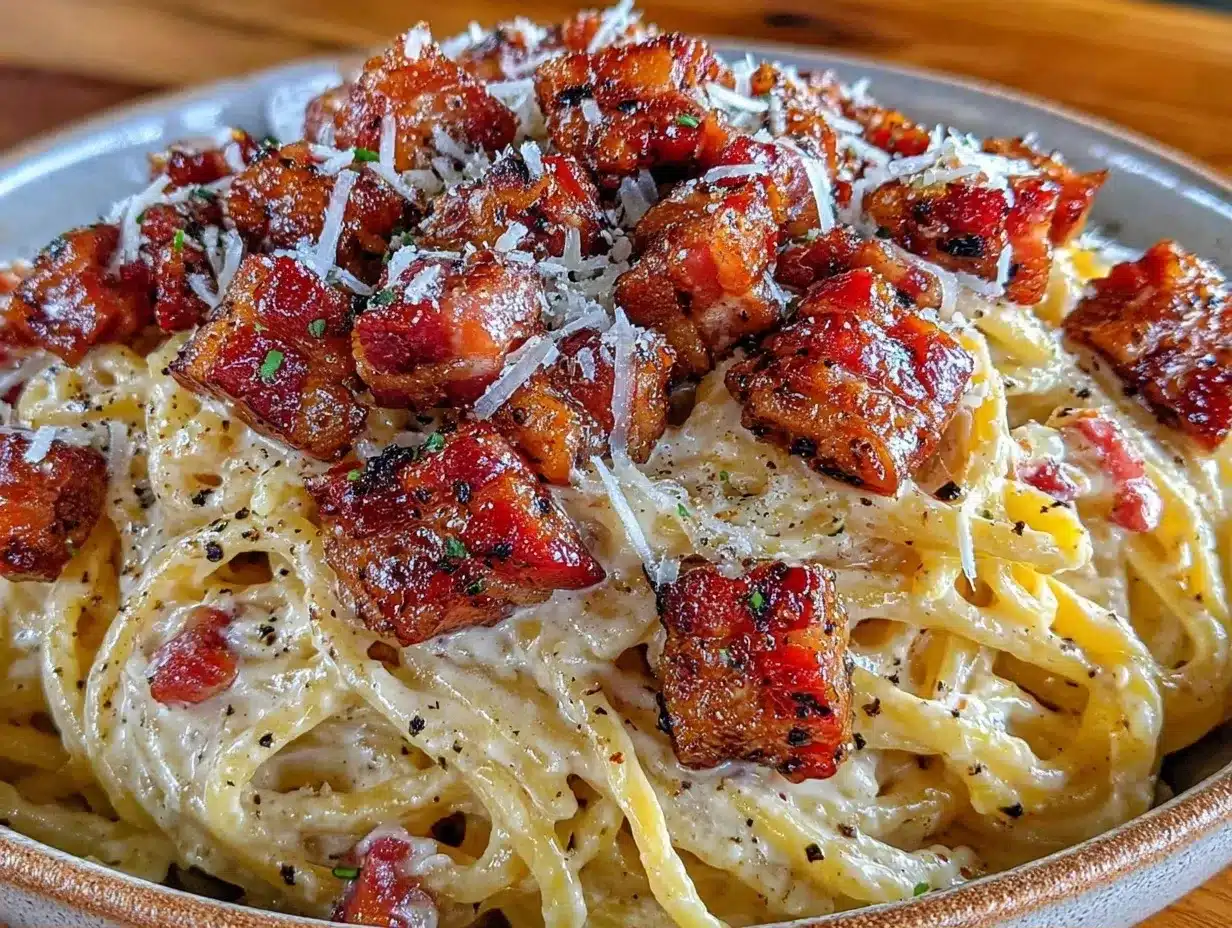
Alright, let’s make this! I’m walking you through exactly how I do it, including the little tricks I’ve picked up over years of making this dish.
Step 1: Prep Your Ingredients (5 minutes)
Before you turn on the stove, get everything ready. This is crucial because things move fast. Cut the guanciale (or bacon) into ½-inch strips or cubes. Put them in a bowl. Grate the pecorino cheese. Crack the eggs into your mixing bowl, add the grated cheese, and whisk them together until smooth. Add a generous amount of black pepper to the egg mixture. Whisk again. Set this bowl aside. You now have your “carbonara sauce” base.
Step 2: Cook the Pasta (8-10 minutes)
Bring a large pot of salted water to a boil. Use more salt than you think you need—the water should taste like the ocean. Add the pasta and cook according to package directions until al dente (usually 8-10 minutes). IMPORTANT: Before you drain the pasta, scoop out 1 cup of the starchy pasta water and set it aside. This is liquid gold. It’s what makes the sauce creamy. Drain the pasta, but don’t rinse it!
Step 3: Render the Guanciale (5-7 minutes)
While the pasta cooks, place your large skillet over medium heat. Add the guanciale (no oil needed—it will release its own fat). Cook for 5-7 minutes, stirring occasionally, until the pork is golden brown and crispy but still chewy in the middle. You want those beautiful fat crystals. If using bacon, cook until crisp. Once done, turn off the heat. Remove the guanciale from the pan with a slotted spoon and set aside on a paper towel. Leave the rendered fat in the pan.
Step 4: Temper the Eggs (The Most Important Step)
This is where people get scared. Don’t worry. We’re going to gently warm the eggs so they don’t scramble. Take your skillet with the hot pork fat off the burner. Let it cool for about 30 seconds (it should still be hot, but not smoking). Pour about 2 tablespoons of the hot fat into the egg and cheese mixture, whisking constantly. This is called tempering. It raises the temperature of the eggs gradually so they accept the heat without cooking into scrambled eggs.
Step 5: Combine Pasta and Sauce
Add the hot, drained pasta directly into the skillet with the remaining pork fat. Toss the pasta in the fat for 30 seconds to coat it. Now, remove the skillet from the heat entirely. Pour the tempered egg and cheese mixture over the hot pasta. Add a splash of the reserved pasta water (start with ¼ cup). Toss vigorously and continuously with your tongs. The residual heat from the pasta and the pan will cook the eggs gently, creating a creamy, glossy sauce. If it looks too thick or sticky, add more pasta water, a tablespoon at a time, until it’s smooth and creamy.
Step 6: Finish and Serve
Stir in the crispy guanciale (save a little for garnish). Taste the pasta. It might need a little more black pepper. It usually doesn’t need salt because the pecorino and guanciale are salty, but taste first. Serve immediately on warm plates. Top with extra grated pecorino and a crack of black pepper. Eat it right away. Carbonara waits for no one.
Total Time: About 20 minutes (5 minutes prep, 15 minutes cooking)
Expert Tips & Tricks
Here’s everything I’ve learned from making this dozens of times. These tips will save you from my mistakes.
Remove the Pan from Heat
I cannot stress this enough. When you add the egg mixture, the pan must be off the burner. If the pan is still on high heat, you will make scrambled eggs with pasta. It happens. I’ve done it. Let the residual heat do the work. The pasta is hot enough to cook the eggs gently.
Save That Pasta Water
That starchy water is the secret to the creamy texture. Without it, the sauce will be dry and clumpy. Keep it warm and close by. You can add more later if needed.
Grate Your Own Cheese
Pre-grated pecorino is a no-go. It won’t melt smoothly. It will create little clumps of cheese in your sauce. Take the extra two minutes to grate a block. Your taste buds will thank you.
Don’t Skimp on Pepper
Black pepper is not just a garnish. It’s a main flavor. Use coarse cracked pepper. You should be able to see the specks in every bite. If you’re sensitive to spice, reduce the amount, but don’t skip it entirely.
Room Temperature Eggs
If your eggs are cold, they can shock the hot pasta fat. Try to take them out of the fridge 15 minutes before cooking. If you forget, just be extra careful with the tempering step.
Common Mistakes (and how to avoid them):
- Mistake: Scrambled eggs. Fix: Your pan was too hot. Next time, remove from heat earlier and temper the eggs more thoroughly.
- Mistake: Sauce is too thick. Fix: Add more pasta water, a tablespoon at a time, while tossing.
- Mistake: Sauce is too runny. Fix: Keep tossing. The sauce will thicken as the proteins set. If it’s still too thin, add a little more grated cheese.
Variations & Substitutions
Once you’ve nailed the basic version, here’s how you can mix it up. I’ve tried all of these.
Bacon Carbonara
Use thick-cut bacon cut into lardons. It’s the most common substitution. It’s delicious, just different. I use this when I can’t find guanciale at my local store.
Parmesan Blend
Use half pecorino and half parmesan. This softens the sharpness of the pecorino and adds a nuttier flavor. My husband prefers this blend.
Chicken Carbonara
Add grilled or roasted chicken pieces on top. It makes it more filling. I like to serve it with crispy chicken milanese on the side for extra crunch.
Veggie-Loaded
Toss in some sautéed spinach or broccoli florets in the last minute of cooking. The greens wilt into the sauce. This is how I get my kids to eat vegetables without complaining.
Gluten-Free
Use gluten-free pasta. Everything else is naturally gluten-free. I’ve used Barilla gluten-free spaghetti, and it works great. Just be careful not to overcook it, as GF pasta can get mushy faster.
Serving & Storage
How to Serve:
I usually serve this straight from the skillet at the dinner table—it looks rustic and stays warm. But here are other ways I’ve enjoyed it:
- Side Dishes: A simple arugula salad with lemon vinaigrette cuts the richness perfectly. Or roasted asparagus.
- Toppings Bar: When I have guests, I put out extra pecorino, red pepper flakes, and crispy guanciale bits. Everyone customizes their bowl.
Storage Instructions:
Refrigerator: Store leftovers in an airtight container for up to 2 days. The sauce will thicken significantly in the fridge—this is normal.
Reheating: Best method: Add the pasta to a skillet with a splash of water or milk over low heat. Stir gently until heated through and creamy again. Microwave method: Heat in 30-second intervals, stirring between. Add a splash of milk if it’s too thick. Never works: Trying to reheat it in the original pan on high heat—it will scramble.
Freezing: Honestly, this doesn’t freeze well. The eggs and cheese separate when thawed, and the texture becomes grainy. Make it fresh or store in the fridge for up to 2 days. I rarely have leftovers, but if I do, I reheat them carefully.
Pro tip: If leftovers are drying out, stir in a tablespoon of butter and a splash of milk when reheating. Brings back that creamy texture.
Nutrition Information
I’m not a nutritionist, but here’s the breakdown if you’re tracking. This is per serving (based on 4 servings).
| Nutrient | Amount |
|---|---|
| Calories | 580 |
| Protein | 22g |
| Carbs | 65g |
| Fiber | 2g |
| Fat | 24g |
| Saturated Fat | 9g |
| Cholesterol | 210mg |
| Sodium | 650mg |
What’s Good: Decent protein from eggs and cheese. The carbs come from pasta, which is fuel.
What to Know: Higher in calories from the guanciale and cheese. Contains dairy and gluten. Moderate sodium (use low-sodium guanciale if you’re watching salt).
My Take: Look, this is comfort food. It’s rich and savory. It’s not a diet recipe. But it’s way better than takeout, costs less, and I know exactly what’s in it. When I want to make it lighter, I use more pasta and less guanciale, or swap in turkey bacon (though I don’t recommend it for authenticity). Usually? I just eat a reasonable portion and enjoy it.
Final Thoughts
So that’s my authentic Italian carbonara! I’ve probably talked your ear off at this point, but when you make a recipe this often, you have a lot to say about it.
This has saved weeknight dinners more times than I can count. It’s my answer to “what’s for dinner” when I’m tired, don’t want takeout, and still want something that tastes really good. My family is happy, my friends are impressed, and I’m happy because I’m not stressed about cooking.
Make it yours! Try different pastas, swap the cheese, adjust the pepper. The best recipes are the ones you adapt to your family’s tastes. And if you’re looking for other easy, no-fuss meals, check out my one-pan greek lemon chicken and potatoes for another simple weeknight winner.
If you make this, drop a comment and let me know what you think! I love hearing how recipes turn out in your kitchen. And if something doesn’t work, tell me that too—I’m here to help troubleshoot.
Happy cooking! And I hope your kitchen smells half as good as mine does right now.
Frequently Asked Questions
Q: Can I use cream in carbonara?
A: Authentic Italian carbonara does not use cream. The creaminess comes from the emulsion of eggs, cheese, and pasta water. Adding cream is a common non-Italian variation, but if you want the real deal, skip it. Trust me, the egg-cheese sauce is richer and more flavorful than you think.
Q: Why did my sauce get scrambled?
A: The pan was too hot. When you add the egg mixture, the pan must be off the burner. The residual heat from the pasta and the pan is enough to cook the eggs gently. If the pan is still on the heat, the eggs will scramble. Next time, remove the pan from the heat and temper the eggs more thoroughly.
Q: Can I use bacon instead of guanciale?
A: Yes, you can. Thick-cut bacon cut into lardons works well. It’s not authentic, but it’s delicious and easier to find. The flavor will be different (smokier, saltier), but it’s still a great carbonara. I use bacon when I’m in a rush or can’t find guanciale.
Q: Can I make this ahead for a dinner party?
A: Sort of. You can prep the ingredients ahead (cut the guanciale, grate the cheese, whisk the eggs). But do not cook the pasta until right before serving. Carbonara is best eaten immediately. If you make it ahead, the sauce will break and the texture will be off. I prep everything, then cook the pasta and sauce fresh when guests arrive.
Q: How do I reheat leftovers without it getting dry?
A: Add a splash of milk or cream to a skillet, add your leftover pasta, and heat gently over low heat, stirring frequently. The extra liquid brings back the creamy texture. Microwave sort of works but tends to dry it out. If you do microwave, definitely add a splash of milk first and heat in short bursts, stirring between.
Q: Can I use parmesan instead of pecorino?
A: You can, but pecorino is sharper and saltier, which balances the richness of the pork. Parmesan is milder and nuttier. If you use all parmesan, you might need to add a bit more salt. I often use a 50/50 mix of pecorino and parmesan for a balanced flavor.
Q: Can I double this recipe?
A: Absolutely! Double everything and use your biggest pot and skillet. The cooking times stay the same. I do this when I’m meal-prepping or feeding a crowd. Just make sure your skillet is big enough for the sauce—you might need to use two pans or a very large skillet.
Pin This Recipe!
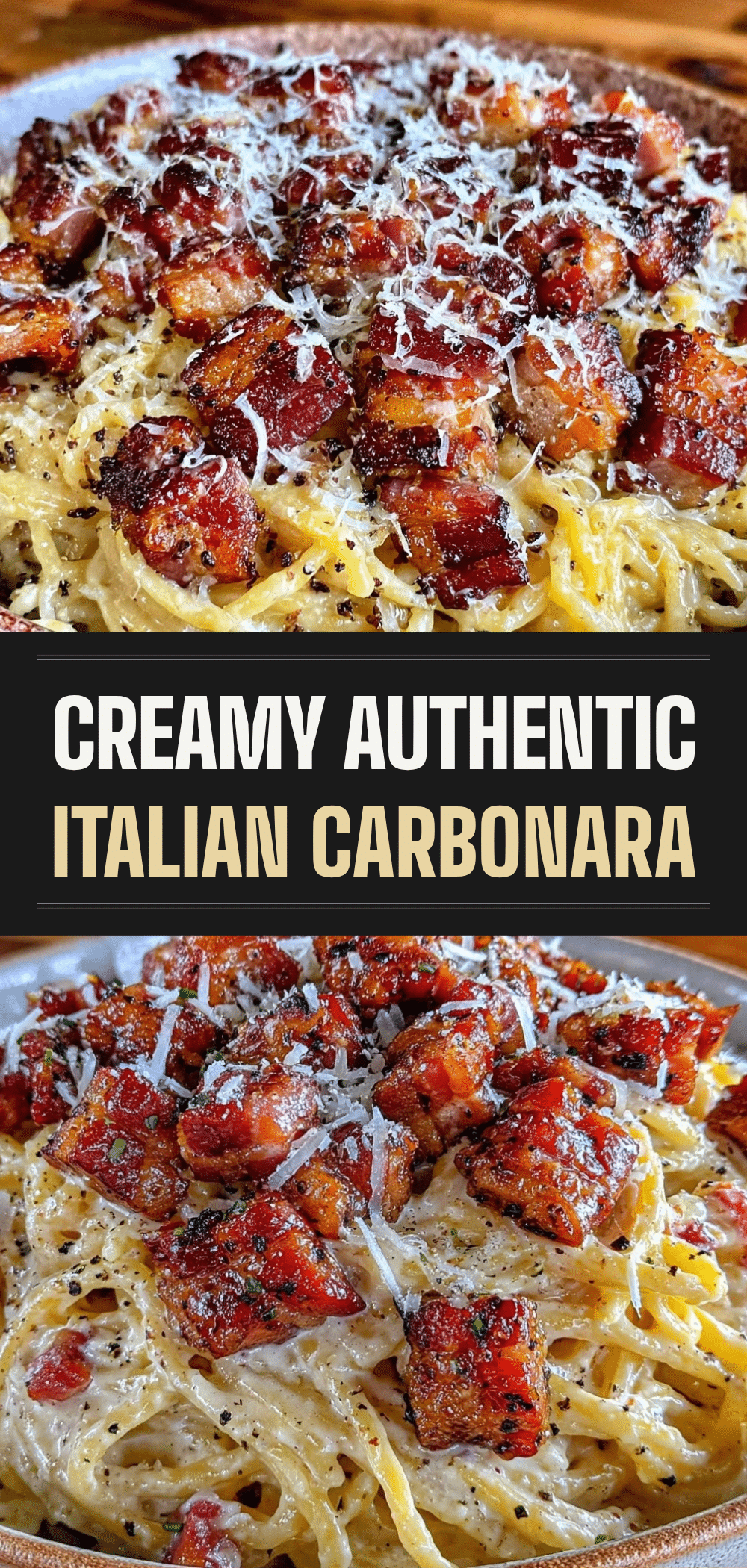
Authentic Italian Carbonara: Easy, Beginner-Proof Recipe
- Total Time: 20 minutes
- Yield: 4 servings 1x
Description
An authentic Italian carbonara recipe that uses only four main ingredients: guanciale, eggs, pecorino romano, and black pepper. No cream is needed; the creamy texture comes from an emulsion of eggs, cheese, and starchy pasta water.
Ingredients
- 8 oz (225g) guanciale, cut into ½-inch strips or cubes (or thick-cut bacon)
- 3 large egg yolks + 1 whole egg
- 1 cup (100g) Pecorino Romano cheese, finely grated
- 1 pound (450g) Spaghetti or Rigatoni
- 2 teaspoons freshly cracked black pepper, coarse grind
- Salt for pasta water
- Reserved starchy pasta water
Instructions
- Prep ingredients: Cut guanciale into strips. Grate pecorino. Whisk egg yolks, whole egg, grated cheese, and black pepper in a bowl until smooth. Set aside.
- Boil pasta: Bring a large pot of heavily salted water to a boil. Cook pasta until al dente. Before draining, reserve 1 cup of pasta water. Drain pasta (do not rinse).
- Render guanciale: While pasta cooks, place guanciale in a large skillet over medium heat. Cook for 5-7 minutes until golden and crispy but chewy. Remove guanciale with a slotted spoon, leaving rendered fat in the pan. Turn off heat.
- Temper eggs: Let the skillet cool for 30 seconds. Pour about 2 tablespoons of hot pork fat into the egg mixture while whisking constantly to temper the eggs.
- Combine: Add hot drained pasta to the skillet with the remaining fat. Toss for 30 seconds. Remove skillet from heat entirely. Pour tempered egg mixture over pasta. Add ¼ cup reserved pasta water. Toss vigorously until a creamy, glossy sauce forms. Add more pasta water if needed.
- Serve: Stir in crispy guanciale (save some for garnish). Taste and adjust with more pepper if needed. Serve immediately on warm plates with extra cheese and pepper.
Notes
Do not use cream for authentic carbonara; the creaminess comes from the egg and cheese emulsion. Ensure the pan is removed from heat before adding the egg mixture to prevent scrambling. Use freshly grated pecorino, as pre-grated cheese contains anti-caking agents that prevent smooth melting. Reserve starchy pasta water as it is essential for the sauce texture. If guanciale is unavailable, thick-cut bacon is a suitable substitute.
- Prep Time: 5 minutes
- Cook Time: 15 minutes
- Category: Main Course
- Cuisine: Italian
Nutrition
- Serving Size: 1/4 of the recipe
- Calories: 580
- Sodium: 650
- Fat: 24
- Saturated Fat: 9
- Carbohydrates: 65
- Fiber: 2
- Protein: 22
Keywords: Italian carbonara, authentic carbonara, guanciale recipe, pasta with eggs, no cream carbonara, beginner pasta recipe, comfort food


