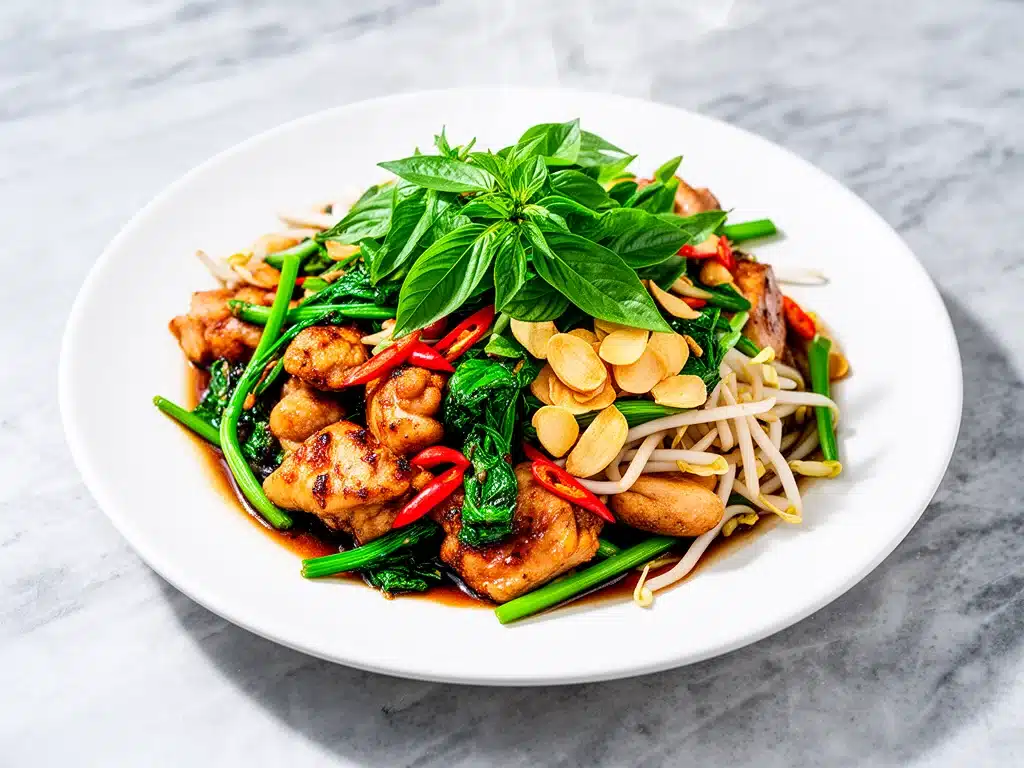
It was 7:30 PM on a Tuesday, and I was staring into the open fridge with that specific kind of desperation that only happens when you’ve had a long day. My kids were already in the car, heading to soccer practice, and my husband was texting me from the office: “What’s for dinner?” I had exactly twenty minutes before they’d walk through the door, and the only things on my counter were a package of ground chicken, a jar of oyster sauce, and a sad-looking bunch of Thai basil I’d bought on a whim three days ago and forgot about.
I didn’t have time to go to the store. I didn’t have time to order takeout (and honestly, I was too hangry to wait for it). So I threw everything I had into a hot wok. I expected a mediocre stir-fry at best. Maybe a little burnt garlic. Maybe dry chicken.
Instead, thirty seconds after I tossed in the basil, the kitchen filled with this incredible, aromatic scent that smelled like a busy street food stall in Bangkok. It was spicy, savory, sweet, and fresh all at once. My husband took one bite, looked at me, and said, “Order takeout? No way. We’re eating this every week.”
That was six months ago. Since then, I’ve made this spicy Thai basil chicken at least a dozen times. It has completely replaced my usual weeknight rotation. It’s faster than cooking rice, cheaper than delivery, and somehow feels way more special than a simple skillet meal has any right to be. The best part? You probably have most of the ingredients already. If you don’t, it’s a quick trip to the Asian grocery store—or even just the international aisle of your regular supermarket.
I’ve tweaked this recipe a few times to get the balance of heat and flavor just right, but the core is simple. It’s not about complicated techniques or expensive ingredients. It’s about high heat, fresh herbs, and that perfect balance of salty, sweet, and spicy that makes you want to scrape the pan clean. If you’ve been looking for an easy dinner that actually tastes exciting, this is it.
Why You’ll Love This Recipe
There are about ten reasons I keep making this, but here are the big ones that keep it on repeat.
- Stupid Simple Ingredients — Seriously, if you can chop a chili and stir a sauce, you can master this. I use just five core ingredients plus the chicken. No fancy pantry items I have to order online. It’s the kind of simplicity I dream about on busy Tuesdays.
- Lightning Fast — This is my answer to “what’s for dinner” when I’m exhausted. From start to finish, it takes 15 minutes. That’s it. I’m not exaggerating. The chicken cooks in 5 minutes. The sauce takes 2. The basil goes in last. It’s over before you can even set the table properly.
- Flavor Bomb — I know, I use that word a lot, but this earns it. The combination of fish sauce, oyster sauce, soy sauce, and sugar creates a depth of flavor that takes hours to build in other dishes. Here, it happens in minutes. It’s umami overload in the best way possible.
- Customizable Heat — Not everyone likes their dinner to make them sweat (though I do). You control the spice level. Want mild? Remove the seeds from the chilies. Want to cry a little? Leave them in and add more. It adapts to your mood.
- Budget-Smart — Ground chicken is cheap. Vegetables are cheap. Thai basil is affordable if you buy it fresh (or freeze it). This feeds a family of four for under $12. That’s less than half the cost of a comparable meal at a Thai restaurant.
This is my go-to when I need dinner to just work. No complicated techniques, no weird ingredients I can’t pronounce, just reliable, delicious food that makes everyone happy. It’s the kind of meal that turns a stressful weeknight into a cozy, satisfying one.
Ingredients You’ll Need
Here’s the best part: you probably have most of this already. This isn’t a recipe that requires a special trip to a specialty shop. I’m particular about three things here, and I’ll tell you exactly why.
For the Protein
Ground chicken (1 pound / 450g) — I use ground chicken because it cooks faster and absorbs the sauce better than chunks. You can use ground pork or turkey if you prefer, but chicken is the classic choice. Look for lean ground chicken (around 93/7 fat ratio) so it doesn’t get too greasy.
Thai basil (2 large handfuls / about 1.5 cups packed) — This is non-negotiable. Regular sweet basil doesn’t have the same anise-like, slightly peppery kick. Thai basil has purple stems and a stronger flavor. If you absolutely can’t find it, you can mix Italian basil with a pinch of anise or fennel seeds, but it won’t be the same. I’ve tried. Don’t skip it.
Fresh chilies (2-4 Thai bird’s eye chilies, sliced) — These are the tiny, fiery red or green chilies. They pack a punch. If you can’t find them, serrano or jalapeño peppers work, but adjust the quantity. Serranos are hotter than jalapeños, so use 2 serranos instead of 4 jalapeños. Remove the seeds if you want less heat.
For the Sauce
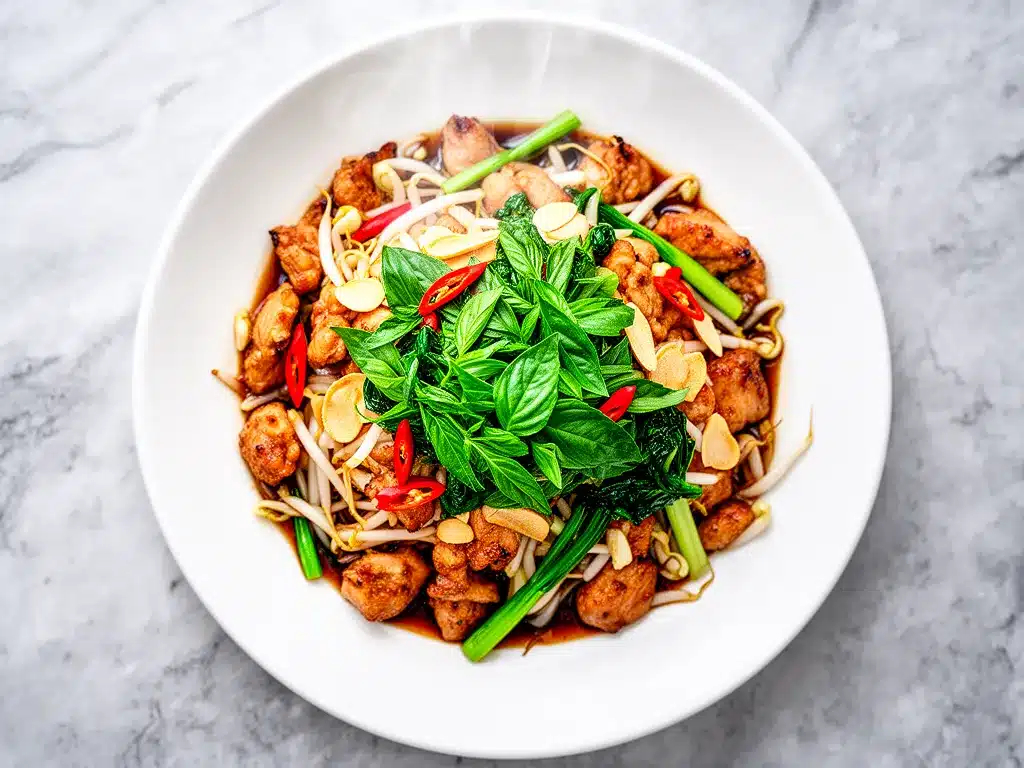
Oyster sauce (2 tablespoons / 30ml) — This is the backbone of the flavor. It’s sweet, savory, and thick. Don’t skip it. If you’re vegetarian, you can use mushroom stir-fry sauce, but the flavor profile changes slightly.
Fish sauce (1 tablespoon / 15ml) — Yes, it smells strong straight from the bottle. But in the dish? It adds saltiness and umami without tasting “fishy.” It’s essential. If you hate fish sauce, you can substitute with more soy sauce, but you’ll lose some depth. I recommend trying it—you might be surprised.
Soy sauce (1 tablespoon / 15ml) — I use regular soy sauce, not low-sodium, because I want that distinct salty kick. Low-sodium can make the dish taste flat. If you must use low-sodium, add a pinch more salt.
Sugar (1 teaspoon / 5g) — Palm sugar is traditional and adds a caramel note, but white sugar works perfectly fine. It balances the saltiness of the fish and oyster sauce. Don’t skip it—this balance is what makes it taste like restaurant food.
For the Aromatics
Garlic (4 cloves, minced / about 2 tablespoons) — Fresh garlic is a must. Jarred garlic just doesn’t have the brightness. Mince it finely so it distributes evenly throughout the dish.
Vegetable oil (1 tablespoon / 15ml) — I use a neutral oil with a high smoke point, like canola or vegetable oil. Sesame oil is too low-heat for this and will burn. You can add a tiny splash of sesame oil at the end for aroma, but not for cooking.
White rice (for serving) — You need something to soak up that amazing sauce. Jasmine rice is the classic pairing. If you don’t have rice, this is also delicious over noodles or even on its own if you’re keeping it low-carb.
Equipment Needed
You don’t need fancy equipment for this. Here’s what I actually use.
Wok or Large Skillet — A wok is ideal because the high sides help toss everything together, and the shape promotes even cooking over high heat. But a large 12-inch skillet works perfectly fine. I use a carbon steel skillet that I’ve seasoned for years. Stainless steel is also great. Avoid non-stick if you can, as you want that high-heat sear, but if all you have is non-stick, just keep the heat medium-high rather than blazing hot.
Sharp Knife — For slicing chilies and mincing garlic. A dull knife makes you cry more—learned this the hard way with chili seeds.
Measuring Spoons — For the sauce. You don’t need to be exact, but having a guide helps you get the balance right the first time.
Wooden Spoon or Spatula — For stirring. Silicone works too. Don’t use metal on non-stick.
Ladle or Small Bowl — To mix the sauce ingredients together before adding to the pan. This ensures you don’t get a mouthful of straight fish sauce or straight sugar.
How to Make It: Step-by-Step
Alright, let’s make this! I’m walking you through exactly how I do it, including the little tricks I’ve picked up.
Step 1: Prep Your Sauce (2 minutes)
Before you even turn on the stove, mix your sauce. In a small bowl, combine the oyster sauce, fish sauce, soy sauce, and sugar. Whisk it until the sugar dissolves. This is crucial because once you start cooking, things move fast. You don’t want to be fumbling with measuring spoons while your garlic is burning. Set this aside.
Step 2: Prep the Chicken and Aromatics (3 minutes)
Mince your garlic and slice your chilies. If you’re using large chilies, slice them into thin rings. Keep the seeds in if you want maximum heat. Break up the ground chicken with your hands or a fork so there are no big clumps. Have your Thai basil washed and dried. If the leaves are wet, they’ll steam instead of wilt, and you want them to get slightly crispy at the edges.
Step 3: Sear the Chicken (5 minutes)
Heat your oil in your wok or skillet over medium-high heat. You want it hot, but not smoking. Add the ground chicken. Spread it out in an even layer. Let it sit for about 30 seconds to get a slight sear, then break it up with your spatula. Cook for 3-4 minutes, stirring occasionally, until the chicken is browned and cooked through. Don’t rush this step—browning the chicken adds flavor. If the pan looks dry, add a tiny splash of water, but usually, the chicken releases enough moisture.
Step 4: Add Aromatics (1 minute)
Push the chicken to the side of the pan (or just make a well in the middle). Add the minced garlic and sliced chilies to the empty space. Let them sizzle for 30-60 seconds. You’ll smell the aroma hit you immediately. Stir them into the chicken so they cook evenly for another 30 seconds. Be careful not to burn the garlic—it turns bitter in seconds.
Step 5: Sauce It Up (2 minutes)
Pour the prepared sauce over the chicken. Stir everything together vigorously. The sauce will bubble and thicken almost instantly. Cook for 1 minute, letting the flavors meld and the sauce coat every piece of chicken. Taste it. Does it need more salt? Add a dash more fish sauce. Too salty? Add a pinch more sugar. This is your chance to adjust.
Step 6: The Basil Finish (1 minute)
Turn off the heat. This is important. Add the Thai basil leaves. Toss them in quickly. The residual heat from the chicken and pan will wilt the basil in about 30 seconds. If you leave it on the heat, the basil will turn black and lose its fresh flavor. You want vibrant green leaves with purple stems, slightly wilted but still bright.
Step 7: Serve Immediately
Plate it up over steaming jasmine rice. Garnish with extra sliced chilies if you’re feeling brave. Eat it while it’s hot. The sauce should be glossy and clinging to the chicken, and the rice should be fluffy and warm.
Total Time: About 15 minutes (5 minutes prep, 10 minutes cooking)
Expert Tips & Tricks
Here’s everything I’ve learned from making this dozens of times. These tips will save you from my mistakes.
High Heat is Key
This is a stir-fry. It needs high heat. If your pan isn’t hot enough, the chicken will steam in its own juices and become gray and bland. Preheat your pan for 2-3 minutes before adding oil. You want to hear a loud sizzle when the chicken hits the pan. If it’s quiet, your pan isn’t ready.
Don’t Overcrowd the Pan
If you’re making a large batch, use a bigger pan. Crowding the pan lowers the temperature and steams the food. I usually cook this in a single layer. If you have a small skillet, cook in two batches. It’s worth the extra minute.
Fresh Basil vs. Dried
Never use dried basil for this. It has no place in a stir-fry. Fresh Thai basil is the star. If you can’t find fresh, you can buy Thai basil plants and keep them on your windowsill. They’re easy to grow and last for weeks. I’ve also frozen fresh basil leaves in ice cube trays with a little water—it works okay in a pinch, but fresh is always best.
Balance the Flavors
The beauty of Thai cooking is the balance of four flavors: salty (fish/soy sauce), sweet (sugar), sour (lime, though not in this recipe), and spicy (chilies). If your dish tastes “flat,” it’s usually missing salt or sweet. Taste as you go. Adjust with fish sauce for salt, sugar for sweet, or chilies for heat.
Common Mistakes (and how to avoid them)
Mistake: Sauce is too runny
Fix: You didn’t cook it long enough after adding the sauce. Let it bubble and reduce for a full minute. Also, make sure you’re using oyster sauce, not a thin soy-based sauce.
Mistake: Chicken is dry
Fix: You overcooked it. Ground chicken cooks very quickly. As soon as it’s browned, add the sauce. Don’t let it sit in the pan alone for more than 4-5 minutes.
Mistake: Basil is black and slimy
Fix: You cooked it too long. Add it off the heat. It wilts instantly. If you see it turning black, you’ve waited too long.
Variations & Substitutions
Once you’ve nailed the basic version, here’s how you can mix it up. I’ve tried all of these.
Protein Swaps
Ground Pork — The classic version uses ground pork. It’s fattier and richer. If you use pork, you might want to add a tiny bit more sugar to balance the richness. I love the texture of pork in this dish.
Chicken Thighs, Diced — Instead of ground chicken, use diced chicken thighs. Sear them hard to get a crust, then push to the side and cook the aromatics. This gives you a different texture—chewier and more substantial. It takes a few minutes longer, so plan accordingly.
Tofu — For a vegetarian version, use extra-firm tofu, pressed and crumbled. It absorbs the sauce beautifully. I recommend frying the tofu first until crispy, then adding the aromatics and sauce.
Vegetable Add-ins
Green Beans — Add 1 cup of trimmed, sliced green beans with the chicken. They add crunch and freshness. Cook them until tender-crisp.
Bell Peppers — Add 1 diced bell pepper with the chicken. It adds sweetness and color. Red or yellow peppers look beautiful against the dark sauce.
Broccoli — Add 1 cup of broccoli florets. You might need to add a splash of water and cover the pan for 2 minutes to steam the broccoli before adding the sauce.
Dietary Modifications
Gluten-Free — Use tamari instead of soy sauce, and make sure your oyster sauce is gluten-free (some brands contain wheat). Fish sauce is naturally gluten-free. Serve over rice noodles instead of rice for a gluten-free meal.
Dairy-Free — This recipe is naturally dairy-free. Just double-check your oyster sauce and fish sauce labels, as some brands may have additives. Most are pure, though.
Lower-Sodium — Use low-sodium soy sauce and reduce the fish sauce to 1/2 tablespoon. You’ll lose some umami, but it’s still tasty. Add a pinch of sea salt at the end if needed.
Serving & Storage
How to Serve
I usually serve this straight from the skillet at the dinner table—it looks rustic and stays warm. But here are other ways I’ve enjoyed it:
- Jasmine Rice — The classic choice. Fluffy, fragrant, and perfect for soaking up sauce.
- Rice Noodles — Pad Thai style. Use rice sticks or vermicelli. Toss the cooked noodles with the chicken and basil.
- Bibimbap Style — Serve over rice with a fried egg on top. The runny yolk mixes with the spicy sauce for an amazing combo.
- Stuffed Peppers — Use this mixture as a filling for bell peppers or lettuce wraps for a low-carb option.
Side Dishes: I usually keep it simple. A quick cucumber salad with rice vinegar and sugar cuts through the richness of the dish. Or just a simple green salad with lime dressing.
Storage Instructions
Refrigerator: Store in an airtight container for up to 3 days. The flavors actually get better the next day as they meld together.
Reheating: Best method: Add to a skillet with a splash of water or broth over medium heat. Stir until heated through. The sauce will thin out, which is good—it helps coat the chicken again. Microwave method: Heat in 30-second intervals, stirring between. Add a splash of water to prevent drying out. It won’t be as good as fresh, but it’s still tasty.
Freezing: I don’t recommend freezing this. The basil will turn black and slimy, and the texture of the ground chicken can change slightly. It’s best eaten fresh.
Meal Prep: This is great for meal prep. Cook the chicken and sauce ahead, store in the fridge, and reheat when ready to eat. Just add fresh basil when reheating if you can—toss it in at the very end.
Nutrition Information
I’m not a nutritionist, but here’s the breakdown if you’re tracking.
Per Serving (based on 4 servings):
| Nutrient | Amount |
|---|---|
| Calories | 280 |
| Protein | 22g |
| Carbs | 12g |
| Fiber | 1g |
| Sugar | 6g |
| Fat | 14g |
| Saturated Fat | 3g |
| Cholesterol | 65mg |
| Sodium | 680mg |
What’s Good: High protein from the chicken. Low carb if you skip the rice. The chilies may boost metabolism slightly (tiny bit, but hey).
What to Know: Higher in sodium from the fish and oyster sauce. Use low-sodium versions if you’re watching salt. Contains no dairy, but check your sauces for gluten.
My Take: Look, this is a flavorful, savory dish. It’s not a diet recipe, but it’s not unhealthy either. It’s packed with protein and flavor. When I want to make it lighter, I double the vegetables and use less chicken. But usually? I just eat a reasonable portion and enjoy the taste.
Final Thoughts
So that’s my go-to spicy Thai basil chicken! I’ve probably talked your ear off at this point, but when you make a recipe this often, you have a lot to say about it.
This has saved weeknight dinners more times than I can count. It’s my answer to “what’s for dinner” when I’m tired, don’t want takeout, and still want something that tastes really good. My kids are happy, my husband’s happy, and I’m happy because I’m not stressed about cooking. It’s fast, it’s cheap, and it tastes incredible.
Make it yours! Try different chilies, swap in your favorite vegetables, adjust the garlic (though more is always better in my opinion). The best recipes are the ones you adapt to your family’s tastes. If you’re looking for other quick weeknight ideas, you might also enjoy my creamy pumpkin alfredo pasta for when you want something cozy and rich, or my no-bake chocolate peanut butter bars for a quick dessert.
If you make this, drop a comment and let me know what you think! I love hearing how recipes turn out in your kitchen. And if something doesn’t work, tell me that too—I’m here to help troubleshoot.
Happy cooking! And I hope your kitchen smells half as good as mine does right now.
Frequently Asked Questions
Can I use regular basil instead of Thai basil?
You can, but it won’t taste the same. Thai basil has a distinct anise (licorice) flavor that regular sweet basil lacks. Regular basil will turn black and slimy much faster when cooked. If you must use regular basil, add it at the very last second, off the heat, and use it in larger quantities. But I strongly recommend finding Thai basil—it’s worth the effort.
How spicy is this dish?
It depends on your chilies. Thai bird’s eye chilies are very hot. If you use 2-3 of them, it will be moderately spicy. If you want it mild, remove the seeds and membranes from the chilies before slicing. You can also use milder peppers like serrano or jalapeño. Start with less heat—you can always add more chili flakes at the table, but you can’t take it away.
Can I make this ahead for a dinner party?
Sort of. You can prep the chicken, chop the chilies, and mix the sauce ahead of time. But cook the dish fresh right before serving. The basil needs to be added at the last second, and the chicken tastes best hot and fresh. I usually cook this in batches if I’m feeding a crowd. It’s fast enough that you can cook it while guests are chatting.
Why did my sauce turn out watery?
Usually, this means you didn’t cook it long enough after adding the sauce, or your pan wasn’t hot enough. Let the sauce bubble and reduce for a full minute. Also, make sure you’re using oyster sauce, which is thick, not a thin soy sauce. If it’s still watery, you can simmer it uncovered for another minute to evaporate the excess liquid.
Can I use ground beef instead of chicken?
Yes! Ground beef works great, especially if you use lean beef. It will have a richer, heavier flavor. You might want to add a pinch more sugar to balance the beef’s richness. This is essentially a Thai version of a beef stir-fry, and it’s delicious. Just make sure to brown the beef well before adding the aromatics.
What if I don’t have fish sauce?
Fish sauce adds saltiness and umami. If you don’t have it, you can substitute with more soy sauce plus a dash of Worcestershire sauce (which has a similar fermented flavor). Or just use extra soy sauce and a pinch of salt. It won’t be authentic, but it will still be tasty. I don’t recommend omitting it entirely, as you’ll lose depth.
How do I store leftovers?
Store in an airtight container in the fridge for up to 3 days. Reheat in a skillet with a splash of water or broth to loosen the sauce. It’s also great cold over salad, though the texture of the chicken changes slightly. Don’t freeze it—the basil will suffer.
Pin This Recipe!
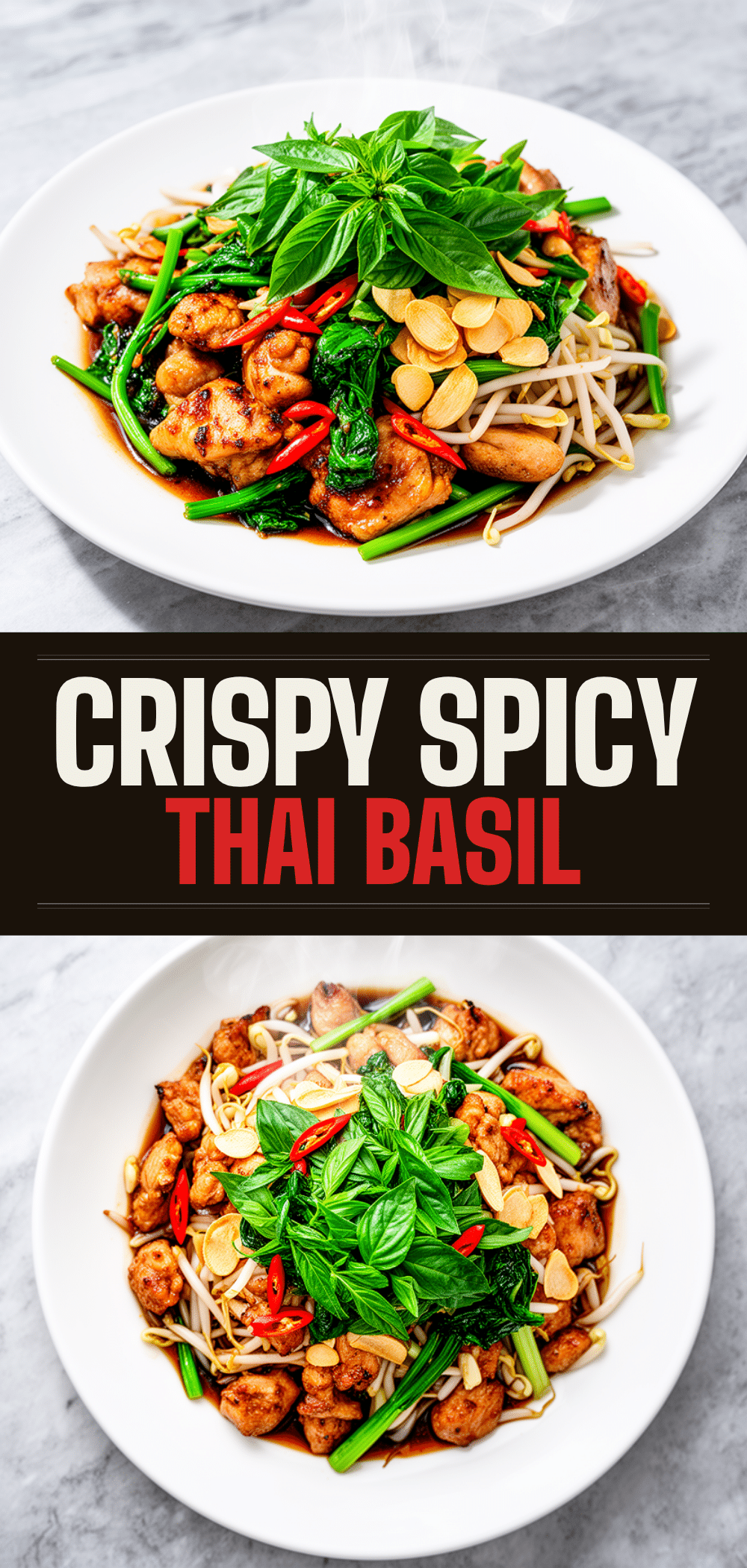
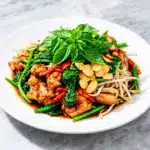
Spicy Thai Basil Chicken: 5-Ingredient Easy Dinner
- Total Time: 15 minutes
- Yield: 4 servings 1x
Description
A lightning-fast, flavorful weeknight stir-fry featuring ground chicken, Thai basil, and a savory-sweet-spicy sauce. Ready in just 15 minutes with simple ingredients.
Ingredients
- 1 pound ground chicken (lean, 93/7 fat ratio)
- 2 large handfuls Thai basil (about 1.5 cups packed)
- 2–4 Thai bird’s eye chilies, sliced (or serrano/jalapeño)
- 2 tablespoons oyster sauce
- 1 tablespoon fish sauce
- 1 tablespoon soy sauce
- 1 teaspoon sugar
- 4 cloves garlic, minced
- 1 tablespoon vegetable oil
- White rice (for serving)
Instructions
- In a small bowl, whisk together oyster sauce, fish sauce, soy sauce, and sugar until the sugar dissolves. Set aside.
- Mince garlic and slice chilies. Break up ground chicken into small pieces. Wash and dry Thai basil leaves.
- Heat vegetable oil in a wok or large skillet over medium-high heat until hot but not smoking.
- Add ground chicken, spreading it in an even layer. Let sear for 30 seconds, then break up and cook for 3-4 minutes until browned and cooked through.
- Push chicken to the side or make a well in the center. Add garlic and chilies to the empty space. Sizzle for 30-60 seconds, then stir into the chicken for another 30 seconds.
- Pour the prepared sauce over the chicken. Stir vigorously and cook for 1 minute until the sauce bubbles and thickens. Taste and adjust seasoning if needed.
- Turn off the heat. Add Thai basil leaves and toss quickly until wilted by residual heat (about 30 seconds).
- Serve immediately over steaming jasmine rice.
Notes
High heat is essential for proper searing and flavor. Do not overcook the basil; add it off the heat to prevent it from turning black. For less heat, remove seeds from chilies. This dish is best eaten fresh and does not freeze well due to the basil.
- Prep Time: 5 minutes
- Cook Time: 10 minutes
- Category: Main Course
- Cuisine: Thai
Nutrition
- Serving Size: 1 plate with rice
- Calories: 280
- Sugar: 6
- Sodium: 680
- Fat: 14
- Saturated Fat: 3
- Carbohydrates: 12
- Fiber: 1
- Protein: 22
Keywords: Thai basil chicken, stir fry, quick dinner, weeknight meals, spicy chicken, ground chicken recipe, Asian cooking, 15 minute meals