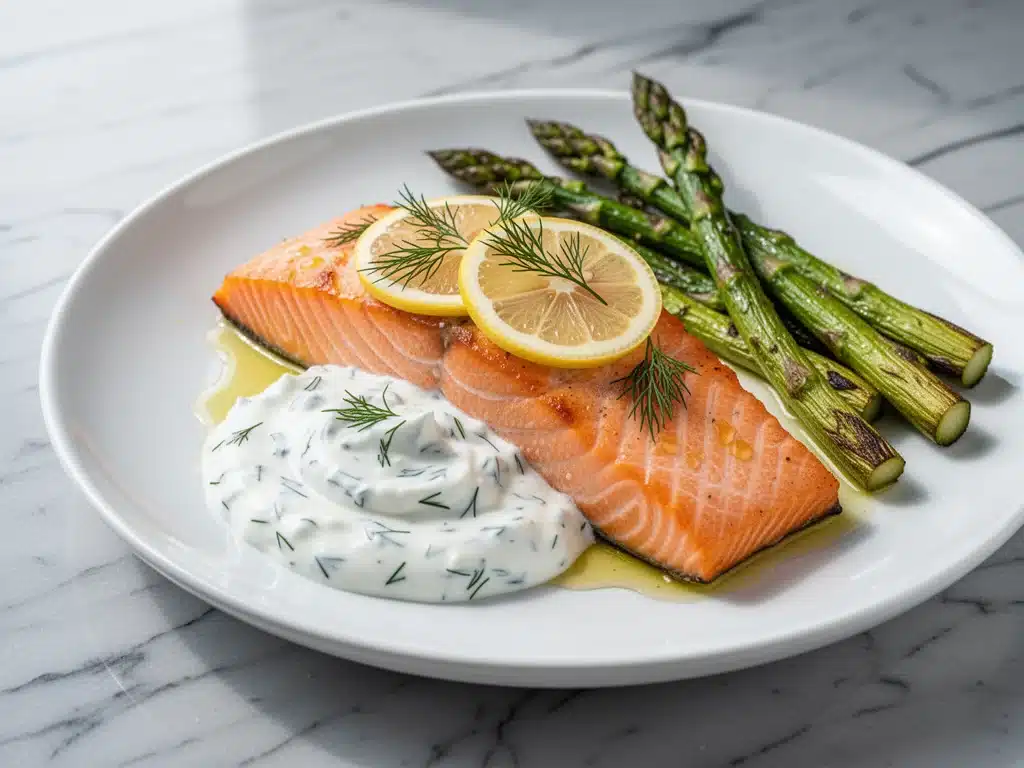
There was a Tuesday evening last month when I was absolutely exhausted. You know the kind. The kind where you come home, kick off your shoes, and stare at the fridge like it holds the secrets to the universe. I wanted something healthy—my husband had been talking about getting back into his routine—but I also wanted it to taste like I actually cared. Not that sad, boiled-chicken-and-broccoli “I’m trying to be good” dinner. Something with flavor. Something that felt like a vacation but took less time than ordering takeout.
That’s when I threw together this Mediterranean baked salmon. I had a fillet in the freezer, some Greek yogurt in the fridge, and a lemon that was begging to be used. I threw it in the oven with a few herbs, baked it until it was flaky and golden, and then whipped up a quick lemon-dill yogurt sauce to drizzle over the top. The smell that filled our kitchen? Incredible. Like a beach in Greece, if that beach also smelled like garlic and warm bread.
My husband took one bite, looked at me, and said, “Okay, this is it. This is the dinner we’re making every week.” And honestly? He wasn’t wrong. This Mediterranean baked salmon with lemon dill yogurt sauce has become my secret weapon for busy weeknights. It’s elegant enough for guests but stupidly simple for a night when you’re running on fumes. I’ve made it at least a dozen times since that Tuesday, tweaking the herb ratios and testing different sides, and it just keeps getting better.
If you’re tired of dry, overcooked fish or complicated recipes that require seven different pans, this is your answer. It’s healthy, it’s flavorful, and it comes together while you’re doing literally anything else. Let me show you how to make it perfectly, every single time.
Why You’ll Love This Recipe
Look, I’m not going to sit here and tell you this recipe will change your life. But it will definitely change your Tuesday night. There are about ten reasons I keep coming back to this salmon, but here are the big ones that matter most.
Stupidly Simple — Seriously, if you can put fish on a baking sheet and mix yogurt with lemon juice, you can make this. I’ve walked my teenage daughter through it over the phone while she was at a friend’s house. She nailed it. No fancy techniques, no intimidating ingredients. Just simple, honest food.
Lightning Fast — We’re talking 20 minutes from start to finish. That’s it. Ten minutes of prep, ten minutes in the oven. I make this on weeknights when I get home at 6:30 pm and everyone is hangry. It’s faster than waiting for a delivery driver, and it tastes a thousand times better.
Healthy Without Being Sad — This isn’t diet food. It’s real food. You’ve got omega-3s from the salmon, protein from the yogurt, and healthy fats from the olive oil. It makes you feel good, not deprived. I serve this with roasted veggies or quinoa, and it’s a complete, balanced meal that fuels my family.
Crowd-Pleaser — I’ve served this to my pescatarian sister, my meat-loving dad, and my picky nephew (yes, he ate it). The lemon-dill yogurt sauce is the magic ingredient. It’s creamy, tangy, and fresh. Even people who usually hate “fishy” flavors love this because the lemon cuts through everything.
Makes Amazing Leftovers — Okay, full confession: leftovers don’t last long in my house. But if they do, the flavors actually meld together nicely the next day. The salmon stays moist, and the sauce thickens slightly. I’ll even eat cold salmon on toast with extra yogurt sauce for lunch the next day. It’s that good.
Budget-Smart — Salmon can be pricey, but you don’t need the most expensive fillet for this. A standard wild-caught or sustainable farmed fillet works perfectly. Plus, the sauce uses pantry staples you probably already have. It’s a high-impact meal that doesn’t break the bank.
This is my go-to when I need dinner to just work. No stress, no mess, just reliable, delicious food that makes everyone happy. And honestly? The cleanup is just one baking sheet. My favorite kind of cooking.
Ingredients You’ll Need
Here’s the best part: you probably have most of this already. This recipe relies on fresh, simple ingredients that come together to create something way more complex than the sum of its parts. I’m particular about a few things here, and I’ll tell you exactly why.
Salmon Fillets (4 fillets, about 6 ounces each / 170g each) — Look for fillets that are roughly the same thickness so they cook evenly. Wild-caught has a firmer texture and deeper flavor, but sustainably farmed is totally fine and often more affordable. Avoid anything that smells overly “fishy” at the store—it should smell clean and oceanic.
Extra Virgin Olive Oil (2 tablespoons / 30ml) — Use good quality here. It’s one of the main flavors. I keep a bottle of mild extra virgin for cooking and save the fancy stuff for drizzling, but for this, any decent EVOO works. It adds richness and helps the herbs stick.
Garlic (3 cloves, minced / about 1 tablespoon) — Fresh garlic is non-negotiable. Jarred garlic just doesn’t have that punch. If you’re in a rush, you can use a garlic press, but mincing it finely ensures you get bits of flavor in every bite. Don’t skimp.
Red Pepper Flakes (½ teaspoon) — Optional, but I recommend it. It adds a tiny kick that balances the cool yogurt sauce. If you’re serving kids, leave it out or use just a pinch.
Asparagus (1 bunch, woody ends trimmed / about 300g) — I roast the asparagus on the same sheet as the salmon. It’s efficient and delicious. The tips get crispy while the stems stay tender. You can swap this for broccoli or green beans if you prefer, but asparagus is classic Mediterranean.
Lemon (2 lemons) — One for juicing into the sauce and one for slicing to garnish. Fresh lemon juice is bright and acidic—it cuts through the richness of the salmon. Bottled lemon juice tastes flat and bitter. Please, for the love of all that is holy, use fresh.
Greek Yogurt (1 cup / 240g) — Full-fat Greek yogurt is best. It’s thick, creamy, and tangy. Low-fat versions can be runny and lack that rich mouthfeel. I use Fage or Chobani, but any plain, thick Greek yogurt works.
Fresh Dill (2 tablespoons, chopped / about 10g) — Fresh dill is the star of the sauce. Dried dill works in a pinch, but fresh has that bright, grassy flavor that screams “Mediterranean.” If you can’t find fresh, try a mix of parsley and a pinch of dried dill, but fresh is ideal.
Garlic Powder (½ teaspoon) — Just a little bit to boost the garlic flavor in the sauce without adding texture.
Honey (1 teaspoon) — A tiny bit of sweetness to balance the acidity of the lemon and yogurt. It’s subtle, but it rounds out the flavors.
Sea Salt and Black Pepper — To taste. I use flaky sea salt for finishing because it adds a nice crunch and visual appeal.
Parsley (1 tablespoon, chopped) — For garnish. Adds color and a fresh finish.
Personal tip: I always buy pre-trimmed asparagus when I’m in a hurry. It saves those 5 minutes of chopping woody ends. And for the salmon, if your fillets are huge, ask the fishmonger to split them in half. Uniform size means uniform cooking.
Equipment Needed
You don’t need fancy equipment for this. Here’s what I actually use.
Baking Sheet — I use a standard half-sheet pan (13×18 inches). It’s big enough to fit four fillets and a bunch of asparagus without overcrowding. Overcrowding steams the fish instead of baking it, so give it some space. My old sheet pan from Target still works fine after five years.
Parchment Paper or Foil — I line my baking sheet with parchment paper for easy cleanup. The salmon skin sticks to foil, and cleaning baked-on fish residue is the worst. Parchment goes in the trash, and you’re done. Game changer.
Small Mixing Bowl — For the yogurt sauce. Any size works, as long as you can whisk it easily.
Whisk — To emulsify the yogurt sauce. A fork works too, but a whisk makes it smoother.
Sharp Knife — For chopping the dill and parsley. Dull knives make chopping herbs a struggle.
Cutting Board — Any size. I use a plastic one for veggies and keep it separate from raw meat (though salmon is fish, I’m just cautious).
Measuring Spoons — For the honey and garlic powder. Precision matters a little here for the sauce balance.
Optional but nice: A fish spatula. Those thin, flexible ones that slide under the fillet easily. They make flipping or removing the salmon much less likely to break the delicate flesh. But a regular spatula works if you’re gentle.
How to Make It: Step-by-Step
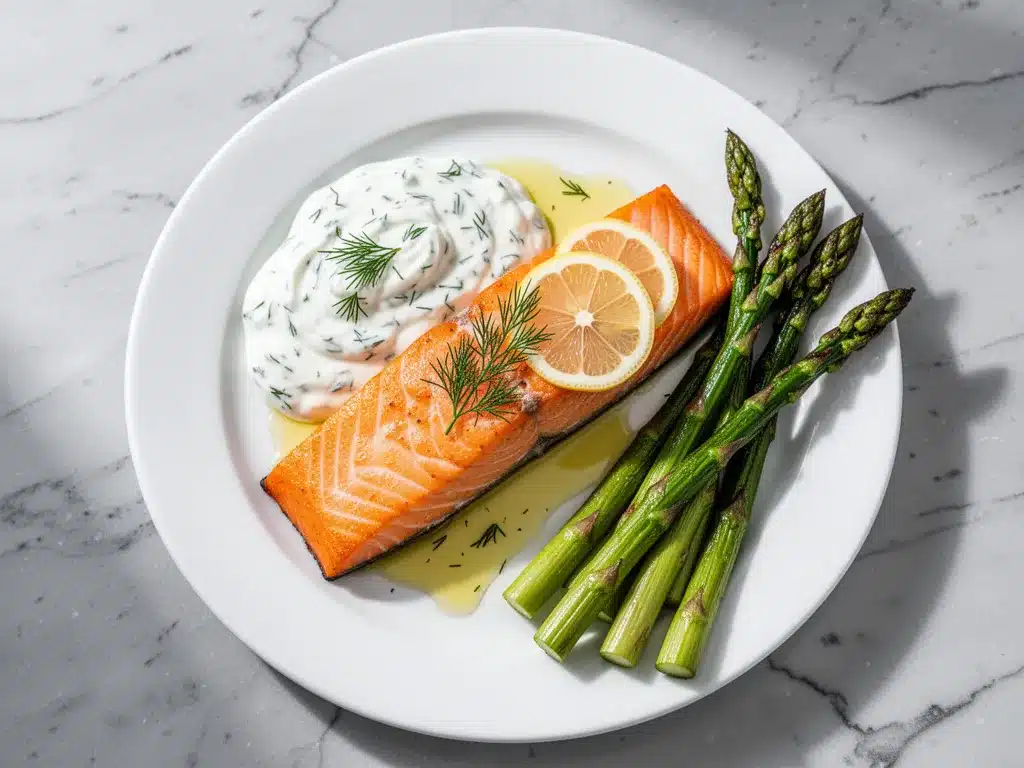
Alright, let’s make this! I’m walking you through exactly how I do it, including the little tricks I’ve picked up over the years.
Step 1: Prep Your Oven and Pan (5 minutes)
Preheat your oven to 400°F (200°C). Line a large baking sheet with parchment paper. This step is crucial because it means zero cleanup later. While the oven heats, pat your salmon fillets dry with paper towels. This seems minor, but dry fish browns better. If you leave it wet, it steams. Pat them dry, then season both sides generously with salt and pepper. Set them aside.
Step 2: Prep the Asparagus
Trim the woody ends off the asparagus. You can do this by bending each spear—the stem will snap naturally where the tough part ends. Toss the asparagus on the same baking sheet with a drizzle of olive oil, salt, and pepper. Spread them out in a single layer. You want them to roast, not steam. If they’re piled on top of each other, they’ll get soggy. Push them to the sides of the pan to make room for the salmon.
Step 3: Arrange the Salmon
Place the salmon fillets in the center of the baking sheet, leaving space between them. Drizzle the tops with olive oil. Sprinkle with minced garlic and red pepper flakes. The garlic will roast slightly, getting sweet and nutty. This is where the aroma starts to hit. You’ll smell it from the other room.
Step 4: Bake
Slide the baking sheet into the preheated oven. Bake for 12-15 minutes. The exact time depends on the thickness of your fillets. Thinner fillets (under 1 inch) might take 12 minutes. Thicker ones might need 15. Don’t peek too much—opening the door drops the temperature. The salmon is done when it flakes easily with a fork and is opaque throughout. It should still be slightly translucent in the very center if you like it moist, but fully opaque is safe for most people.
Step 5: Make the Lemon Dill Yogurt Sauce
While the salmon bakes, whip up the sauce. In a small bowl, combine the Greek yogurt, juice of one lemon, chopped fresh dill, garlic powder, honey, and a pinch of salt. Whisk until smooth. Taste it. Does it need more lemon? More salt? Adjust to your preference. This sauce is versatile, so tweak it until it tastes perfect to you. It should be creamy, tangy, and herbaceous.
Step 6: Combine and Serve
Remove the baking sheet from the oven. Let the salmon rest for 2 minutes. This allows the juices to redistribute. Drizzle the lemon dill yogurt sauce generously over the salmon and asparagus. Garnish with fresh parsley and lemon slices. Serve immediately. The contrast of the hot, flaky salmon and the cool, creamy sauce is everything.
Total Time: About 20 minutes (5 minutes active, 15 minutes baking)
Troubleshooting: If your salmon is cooking faster than the asparagus, remove the asparagus after 10 minutes and let the salmon finish. If the asparagus is done but the salmon needs 2 more minutes, just leave them together—the asparagus might get a bit soft, but it’s still edible. Better than undercooked fish!
Expert Tips & Tricks
Here’s everything I’ve learned from making this dozens of times. These tips will save you from my mistakes.
Don’t Overcook the Salmon
This is the #1 mistake people make. Salmon continues to cook for a minute after you take it out of the oven. If it looks fully opaque when you pull it out, it will be dry by the time you sit down. Aim for just-flaky. It should resist the fork slightly but still separate easily. I’ve ruined perfect fillets by waiting for that “perfect” look that doesn’t exist. Trust the timer, not your eyes.
Pat the Fish Dry
I know it’s annoying, but moisture is the enemy of browning. If your salmon is wet, it steams. Dry it with paper towels before seasoning. It sounds like a small step, but it makes a huge difference in texture.
Use Full-Fat Yogurt
I tried making this with non-fat yogurt once because I was trying to be “healthy.” The sauce was runny and lacked richness. Full-fat Greek yogurt is thick and creamy. It holds up to the heat and adds the luxurious texture you want. Don’t skip it.
Room Temperature Lemon Juice
Cold lemon juice can shock the yogurt and cause it to curdle slightly (not dangerous, just ugly). If you’ve squeezed the lemon and it’s cold, let it sit for a few minutes before mixing. Or just mix it quickly—the yogurt absorbs it fine, but room temp is smoother.
Toast the Asparagus Properly
Make sure your asparagus is in a single layer. If they’re touching, they’ll steam. Give them space. You want those tips to get a little charred and crispy. It adds texture that contrasts with the soft salmon.
Common Mistakes (and how to avoid them):
Mistake: Sauce is too thin
Fix: You used low-fat yogurt or added too much lemon juice. Strain the yogurt through a cheesecloth or paper towel for 15 minutes before using to thicken it. Or just use less lemon juice.
Mistake: Garlic burns in the oven
Fix: Minced garlic burns fast at 400°F. If you’re worried, mix the garlic with the olive oil and salmon before baking, or add it to the yogurt sauce instead. But honestly, a little browned garlic is fine. It tastes nutty.
Pro Tricks I’ve Learned:
For Extra Flavor
Add a squeeze of lemon zest to the yogurt sauce. The oils in the zest add a brightness that juice alone can’t match. I use a microplane for this.
For Better Texture
Sprinkle the asparagus with a little parmesan cheese before baking. It gets crispy and salty. It’s optional, but my kids love it.
Make-Ahead Strategy
You can chop the herbs and mix the yogurt sauce up to 24 hours ahead. Store in the fridge. The flavors meld and get better. Just bring it to room temp before serving.
Variations & Substitutions
Once you’ve nailed the basic version, here’s how you can mix it up. I’ve tried all of these.
Shrimp Version
Swap the salmon for large shrimp. Toss them with olive oil, garlic, and red pepper flakes. Bake at 400°F for 6-8 minutes. They cook much faster. The yogurt sauce is perfect with shrimp too.
Cod or Halibut
White fish works great. Use cod or halibut fillets. They’re milder, so the lemon-dill sauce really shines. Adjust cooking time to 10-12 minutes.
Veggie-Loaded
Add cherry tomatoes to the baking sheet. They burst and create a sweet, savory sauce that mixes with the olive oil. Toss them in with the asparagus. It’s a classic Mediterranean combo.
Spicy Kick
Add a pinch of cayenne or chili flakes to the yogurt sauce. It turns into a spicy lemon-dill dip. Great if you like heat.
Herb Swap
No dill? Use fresh parsley and a little mint. Or use tarragon for an anise flavor. Dill is classic, but herbs are flexible.
Dietary Modifications:
Gluten-Free
This recipe is naturally gluten-free. Just check your yogurt label to ensure no additives.
Dairy-Free
Replace Greek yogurt with coconut yogurt or cashew cream. Coconut yogurt adds a slight coconut flavor, but it works. Cashew cream is more neutral. Add lemon juice and dill to match the original.
Lower-Carb
Skip the sides or serve over cauliflower rice. The salmon and veggies are already low-carb.
Vegan
This recipe is fish-based, so not vegan. But you can make a tofu version. Press firm tofu, bake it with the same seasonings, and serve with the yogurt sauce (using dairy-free yogurt).
Serving & Storage
How to Serve:
I usually serve this straight from the baking sheet at the dinner table—it looks rustic and stays warm. But here are other ways I’ve enjoyed it:
Side Dishes:
– Quinoa or couscous (to soak up the sauce)
– Roasted potatoes (crispy on the outside, fluffy inside)
– A simple green salad with lemon vinaigrette
– Warm pita bread (for scooping)
Toppings Bar:
When I have guests, I put out: extra lemon wedges, red pepper flakes, fresh dill, and capers. Everyone customizes their bowl. Capers add a salty punch that’s amazing.
Wine Pairing:
Not a wine expert, but my wine-snob friend says Pinot Grigio or Sauvignon Blanc works great. Something crisp and acidic to match the lemon.
Storage Instructions:
Refrigerator:
Store in an airtight container for up to 3 days. The salmon will firm up slightly in the fridge. The sauce will thicken. It’s still good cold or reheated.
Reheating:
Best method: Reheat gently in a 300°F oven for 10 minutes. Cover with foil to keep it moist.
Microwave method: Heat in 30-second intervals. Add a splash of water or lemon juice to keep it from drying out.
Never works: Trying to reheat in the toaster oven without covering. It dries out instantly. Ask me how I know.
Freezing:
Honestly, this doesn’t freeze well. The yogurt sauce separates when thawed, and the salmon texture changes. Make it fresh or store in the fridge for up to 3 days.
Pro tip: If leftovers are drying out, stir in a tablespoon of olive oil or a splash of cream when reheating. Brings back that moist texture.
Nutrition Information
I’m not a nutritionist, but here’s the breakdown if you’re tracking.
Per Serving (based on 4 servings):
– Calories: 320
– Protein: 34g
– Carbs: 12g
– Fiber: 3g
– Sugar: 6g
– Fat: 16g
– Saturated Fat: 4g
– Cholesterol: 85mg
– Sodium: 350mg
– Calcium: 150mg
What’s Good:
– High protein from salmon and yogurt
– Healthy omega-3 fats
– Low carb
– Good source of calcium and vitamin D
What to Know:
– Higher in calories from olive oil and yogurt
– Contains dairy
– Moderate sodium (use low-sodium broth if adding sides)
My Take:
Look, this is healthy, nutrient-dense food. It’s not a diet recipe, but it’s way better than takeout, costs less, and I know exactly what’s in it. When I want to make it lighter, I use less oil and non-fat yogurt. But usually? I just eat a reasonable portion and enjoy it.
Dietary Notes:
– Contains: fish, dairy
– Can be made: gluten-free, vegetarian (with tofu swap), dairy-free (with coconut yogurt)
– Not suitable for: vegan (without modifications), pescatarian (yes, it is!)
Final Thoughts
So that’s my go-to Mediterranean baked salmon with lemon dill yogurt sauce! I’ve probably talked your ear off at this point, but when you make a recipe this often, you have a lot to say about it.
This has saved weeknight dinners more times than I can count. It’s my answer to “what’s for dinner” when I’m tired, don’t want takeout, and still want something that tastes really good. My kids are happy, my husband’s happy, and I’m happy because I’m not stressed about cooking.
Make it yours! Try different add-ins, swap in your favorite vegetables, adjust the garlic (though more is always better in my opinion). The best recipes are the ones you adapt to your family’s tastes. If you’re looking for other easy, healthy dinners, check out our mediterranean falafel bowl for a great vegetarian option, or try our mediterranean lemon herb grilled chicken skewers if you want to switch up the protein.
If you make this, drop a comment and let me know what you think! I love hearing how recipes turn out in your kitchen. And if something doesn’t work, tell me that too—I’m here to help troubleshoot.
Happy cooking! And I hope your kitchen smells half as good as mine does right now.
Frequently Asked Questions
Q: Can I use frozen salmon?
A: You can, but it needs to be thawed completely first. Pat it dry thoroughly. Frozen salmon releases more water, so you might need to bake it 2-3 minutes longer. Fresh is always best, but frozen works in a pinch.
Q: My yogurt sauce separated—what happened?
A: The heat was too high when you added it to the hot salmon, or the yogurt was too cold. Yogurt can curdle if shocked. To fix, whisk in a splash of cold water or cream to bring it back together. Next time, let the salmon rest for 5 minutes before adding the sauce.
Q: Can I make this in an air fryer?
A: Absolutely! Cook at 400°F for 8-10 minutes. Check at 8 minutes. The air fryer circulates heat faster, so keep an eye on it. The asparagus might need 2 extra minutes.
Q: Why did my salmon stick to the pan?
A: You probably didn’t use parchment paper or foil, or the pan wasn’t hot enough before adding the fish. Always line your pan, and make sure the salmon is dry before placing it down.
Q: Can I add vegetables to the baking sheet?
A: Yes! Cherry tomatoes, zucchini, and bell peppers work great. Just chop them to similar sizes so they cook evenly. Tomatoes are my favorite addition.
Q: How do I know when the salmon is done?
A: Use a fork to gently press the thickest part. It should flake easily. Internal temperature should be 145°F (63°C), but I pull it at 140°F (60°C) because it continues to cook. It should be opaque, not translucent.
Q: Can I double this recipe?
A: Yes, but you’ll need two baking sheets. Don’t overcrowd the pan. Cook in batches if necessary. The cooking time stays the same.
Pin This Recipe!
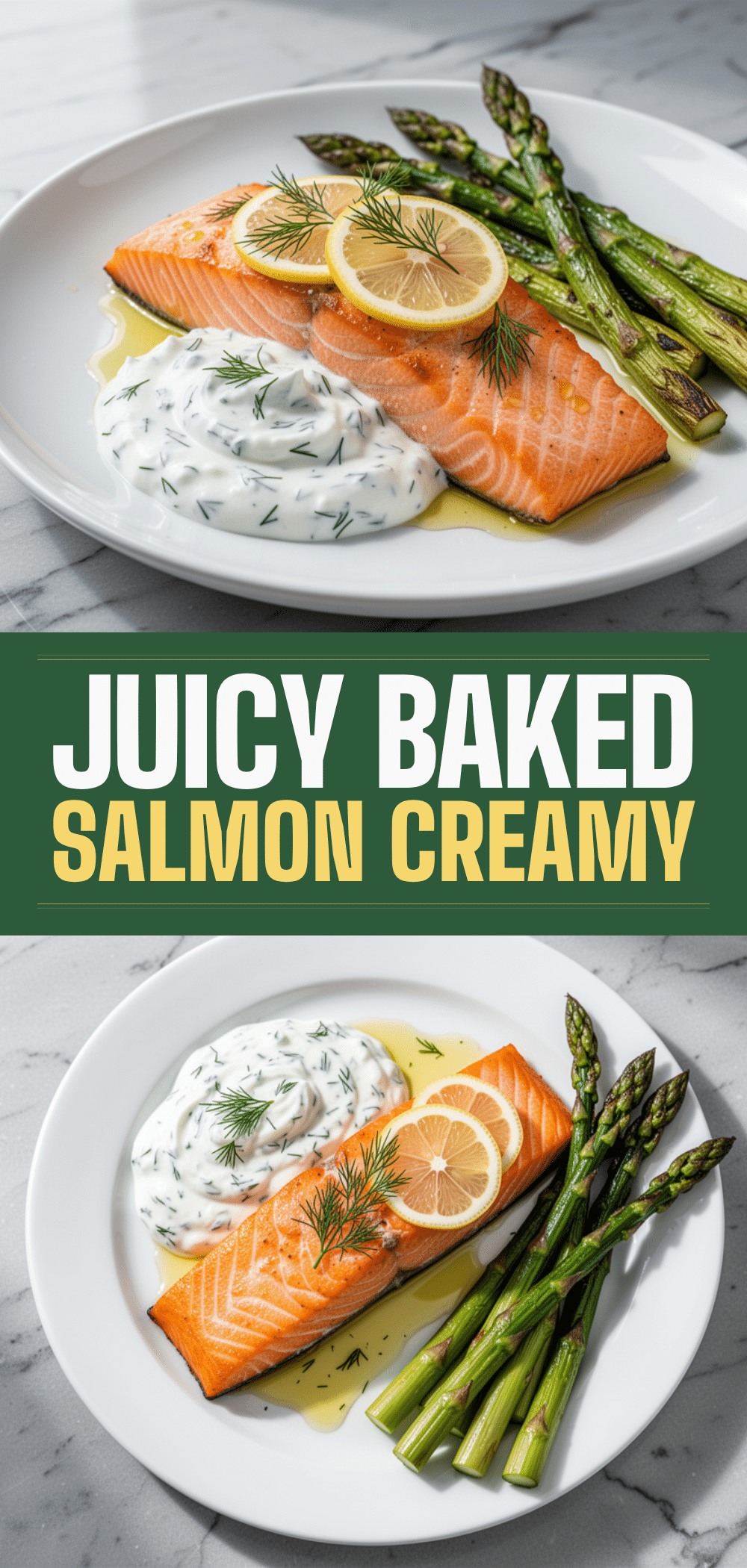
Mediterranean Baked Salmon: 5-Step Dinner
- Total Time: 25 minutes
- Yield: 4 servings 1x
Description
A quick and elegant weeknight dinner featuring baked salmon fillets with garlic and herbs, served alongside roasted asparagus and a creamy lemon-dill yogurt sauce.
Ingredients
- 4 salmon fillets (about 6 ounces / 170g each)
- 2 tablespoons extra virgin olive oil
- 3 cloves garlic, minced
- 1/2 teaspoon red pepper flakes
- 1 bunch asparagus, woody ends trimmed
- 2 lemons (1 for juicing, 1 for slicing)
- 1 cup full-fat Greek yogurt
- 2 tablespoons fresh dill, chopped
- 1/2 teaspoon garlic powder
- 1 teaspoon honey
- Sea salt and black pepper, to taste
- 1 tablespoon fresh parsley, chopped
Instructions
- Preheat oven to 400°F (200°C). Line a large baking sheet with parchment paper.
- Pat salmon fillets dry with paper towels and season both sides generously with salt and pepper.
- Trim asparagus ends and toss with a drizzle of olive oil, salt, and pepper. Spread in a single layer on the baking sheet.
- Place salmon fillets in the center of the sheet. Drizzle with olive oil and sprinkle with minced garlic and red pepper flakes.
- Bake for 12-15 minutes until salmon flakes easily with a fork and is opaque throughout.
- While salmon bakes, whisk together Greek yogurt, juice of one lemon, chopped dill, garlic powder, honey, and a pinch of salt in a small bowl.
- Remove salmon from oven and let rest for 2 minutes.
- Drizzle lemon dill yogurt sauce over salmon and asparagus. Garnish with fresh parsley and lemon slices. Serve immediately.
Notes
Pat the fish dry before seasoning to ensure proper browning. Use full-fat Greek yogurt for a creamy sauce that won’t separate. If using frozen salmon, ensure it is completely thawed and patted dry. The salmon continues to cook after removal from the oven, so aim for just-flaky texture.
- Prep Time: 10 minutes
- Cook Time: 15 minutes
- Category: Main Course
- Cuisine: Mediterranean
Nutrition
- Serving Size: 1 fillet with aspara
- Calories: 320
- Sugar: 6
- Sodium: 350
- Fat: 16
- Saturated Fat: 4
- Carbohydrates: 12
- Fiber: 3
- Protein: 34
Keywords: Mediterranean salmon, baked salmon, lemon dill yogurt sauce, healthy dinner, weeknight meals, gluten-free, high protein