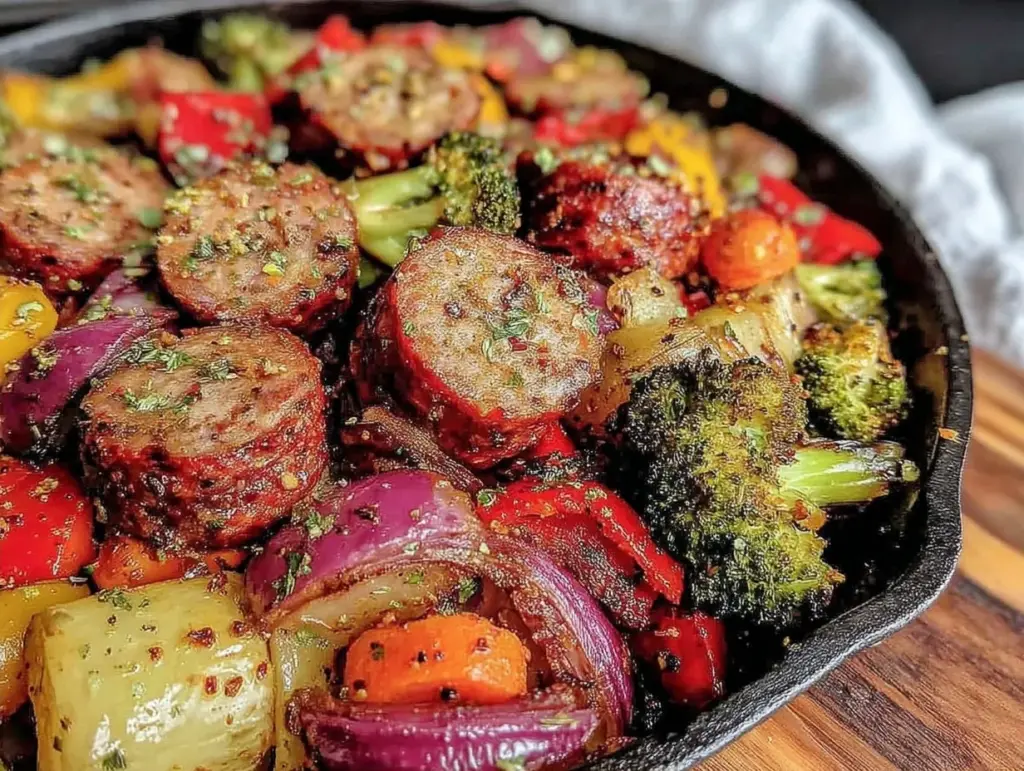
I have a confession to make. I used to think Whole30 meant eating sad, bland salads while my family enjoyed actual food in the other room. For the first week, I was miserable. I was boiling chicken breasts until they were dry as cardboard and steaming broccoli until it turned into green mush. It wasn’t sustainable. It wasn’t delicious. It was just… maintenance.
Then I discovered the sheet pan method. Seriously. It changed everything.
Last month, I was feeling sluggish and wanted to reset without spending hours in the kitchen. I threw a pound of sausage, a mountain of root vegetables, and some fresh herbs onto a single baking sheet. I didn’t have a plan. I just knew I wanted warm, savory food. Thirty-five minutes later, my kitchen smelled like a high-end gastropub, and my whole family (even the picky eaters) devoured it. No complaints. No side dishes needed. Just one pan.
This Whole30 Sheet Pan Sausage and Roasted Vegetables recipe is the antidote to mealtime stress. It’s foolproof, it’s forgiving, and it tastes like you spent hours slow-roasting it (even though you didn’t). If you can only make one thing this week, make this. You really can’t mess it up.
Why This Recipe Is Your New Best Friend
There are about ten reasons I keep coming back to this sheet pan dinner, but here are the big ones that will convert you:
Stupid Simple — Seriously, if you can chop a potato and slice a sausage, you can make this. I’ve walked my teenage son through it over FaceTime while he was at college. He didn’t burn it. You won’t either.
One Pan Wonders — The cleanup is the best part. Literally one baking sheet. One pair of tongs. Maybe a knife for chopping. That’s it. No washing bowls, no scrubbing pots, no simmering sauces. Just toss, bake, wipe.
Flavor That Actually Develops — Roasting brings out sugars in vegetables that boiling never will. The edges of the carrots get crispy, the sausage gets a little charred, and the onions turn sweet and jammy. It’s not just “healthy” food; it’s *good* food.
Beginner-Proof — You don’t need to watch the oven like a hawk. You don’t need to flip things constantly. You put it in, you set a timer, you take it out. The oven does the heavy lifting. If you can set a timer, you can master this.
Meal Prep Friendly — This keeps well in the fridge for four days. I actually prefer it the next day—the vegetables have absorbed more of the sausage fat and seasoning. It’s my go-to lunch when I want something hearty but clean.
Customizable — Hate sweet potatoes? Use butternut squash. Don’t like bratwurst? Try kielbasa or chicken sausage. This recipe is a framework, not a rigid rulebook. Make it with what you love.
This is my go-to when I need dinner to just work. No complicated techniques, no weird ingredients, just reliable, delicious food that makes everyone happy.
Ingredients You’ll Need
Here’s the best part: you probably have most of this already. This is pantry-friendly, Whole30-approved goodness. I’m particular about three ingredients here, and I’ll tell you exactly why.
For the Sausage
Sausage (1.5 pounds / 680g) — This is your protein anchor. I love chicken bratwurst or turkey kielbasa for Whole30 because they’re leaner but still juicy. Avoid pre-seasoned packs with hidden sugar. Look for “Whole30 approved” labels or check the ingredient list. It should just be meat, spices, and casing. I buy the links from my local butcher when I can, but frozen brands work fine too.
For the Vegetables
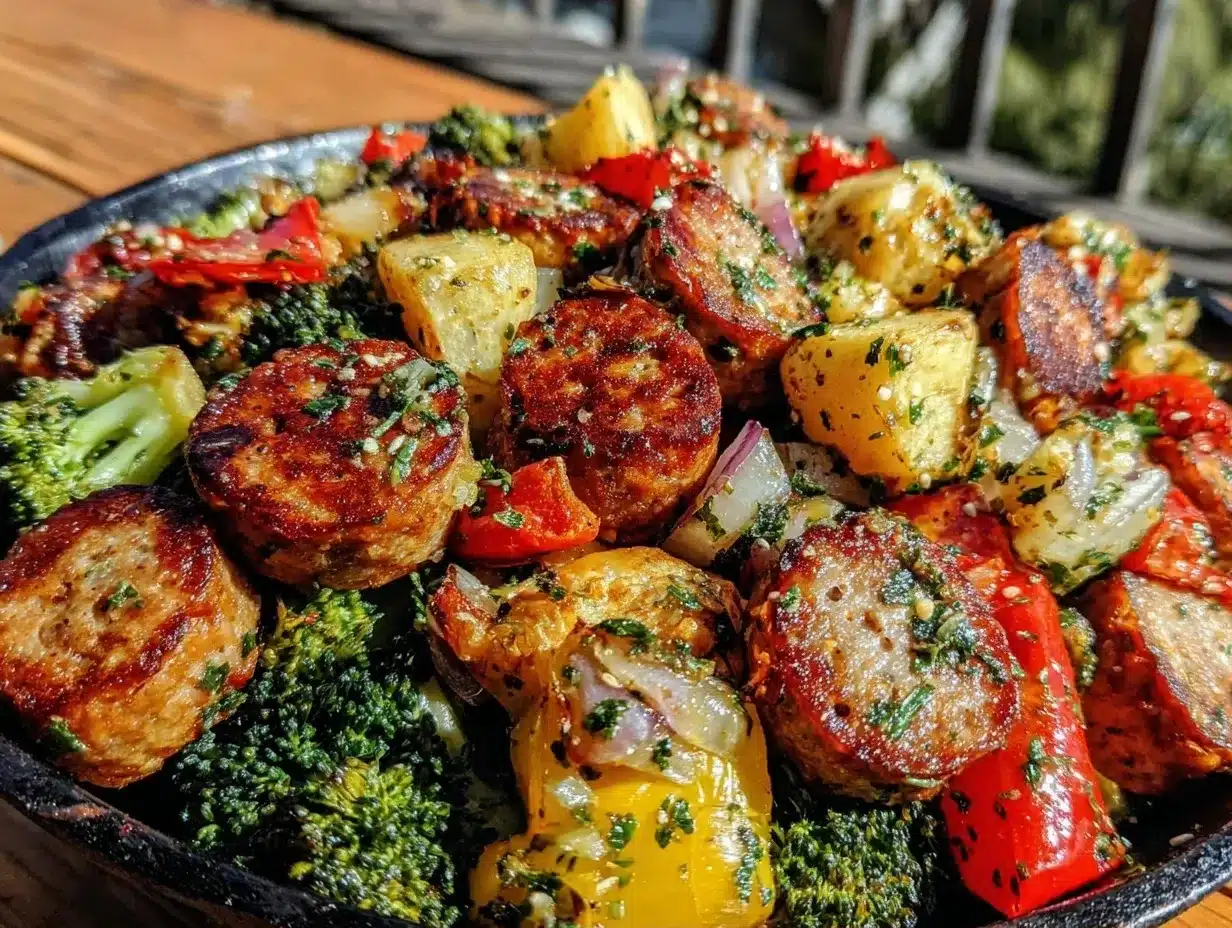
Red Potatoes (1.5 pounds / 680g) — Cut into 1-inch cubes. Red potatoes hold their shape better than russets, so you don’t end up with mush. Yukon Golds work too if you prefer a creamier texture. Just keep them uniform so they cook evenly.
Broccoli Florets (1 large head / about 4 cups) — Cut into bite-sized pieces. Broccoli gets crispy edges in the oven, which is amazing. If you hate broccoli, swap it for cauliflower or asparagus. Asparagus goes in later, though (I’ll explain why).
Red Onion (1 medium, sliced into wedges) — Adds sweetness and depth. Red onion looks pretty and roasts nicely. Yellow onion works too, but red holds up better to the heat without turning to slime.
Bell Peppers (2 medium, any color, chopped) — I use a mix of red and green for color, but honestly, whatever is on sale goes in. They add crunch and sweetness. Chop them into similar-sized chunks as the potatoes.
Sweet Potatoes (2 medium, peeled and cubed) — Optional but recommended. They add a nice contrast to the savory sausage. If you’re avoiding nightshades, swap these for parsnips or turnips.
For the Flavor
Extra Virgin Olive Oil (3 tablespoons) — Use good quality here. It’s the main fat source. Don’t skimp, or the veggies will stick and burn. I use a decent bottle I keep on the counter.
Garlic (4 cloves, minced) — Fresh only. No jarred garlic in this recipe. It tastes too metallic. Mince it yourself—it takes 30 seconds.
Italian Seasoning (2 teaspoons) — Or use equal parts dried basil, oregano, and thyme. This is the classic flavor profile that ties the sausage and veggies together.
Smoked Paprika (1 teaspoon) — This is my secret weapon. It adds a smoky depth that mimics grilling, even though you’re roasting in the oven. It makes the sausage taste way more complex.
Salt and Black Pepper — To taste. I usually add a good pinch of sea salt and plenty of cracked pepper.
Fresh Parsley (2 tablespoons, chopped) — For garnish. Adds freshness and color. Don’t skip it—it brightens up the whole dish.
Common Questions
Can I use pre-cut veggies? Yes! Bagged broccoli florets and pre-cubed potatoes save time. Just make sure they’re dry before tossing them in oil.
What if I’m not on Whole30? This works for anyone. Add a little honey or maple syrup to the oil mix if you want a glaze. Or use regular pork sausage.
Equipment Needed
You don’t need fancy equipment for this. Here’s what I actually use.
Large Rimmed Baking Sheet — I use a half-sheet pan (18×13 inches). It needs to be big enough so the veggies aren’t crowded. If they’re piled on top of each other, they steam instead of roast. I have two of these and I rotate them.
Large Bowl — For tossing the vegetables in oil and seasoning. Any big mixing bowl works.
Sharp Knife — For chopping the sausage and veggies. Dull knives make you cry more—learned this the hard way.
Cutting Board — Any size works. I use a large plastic one for easier cleanup.
Tongs — For flipping the veggies halfway through. Long kitchen tongs are best so you don’t burn your fingers.
Measuring Spoons — Pretty standard stuff. Dollar store versions work fine.
Optional but nice:
– Parchment Paper — I don’t always use it, but if you want zero cleanup, line your pan. It works great here.
How to Make It: Step-by-Step
Alright, let’s make this! I’m walking you through exactly how I do it, including the little tricks I’ve picked up.
Step 1: Prep Your Oven and Pan (5 minutes)
Preheat your oven to 400°F (200°C). This is hot enough to roast veggies quickly without drying them out. Line your baking sheet with parchment paper if you like easy cleanup, or just grease it lightly with olive oil. I usually skip the paper because I like the veggies to get a little crispy on the bottom, but it’s up to you.
Step 2: Chop the Veggies (10 minutes)
Cut your potatoes, sweet potatoes, and onions into uniform 1-inch pieces. Uniformity is key—big chunks cook slower than small ones, so you’ll end up with burnt edges and raw centers. Toss them in a large bowl. Add the bell peppers and broccoli. Keep the broccoli separate for a moment (see next step).
Step 3: Season the Vegetables
Drizzle 2 tablespoons of olive oil over the veggies. Sprinkle with half the Italian seasoning, the smoked paprika, salt, and pepper. Toss until everything is coated. Spread them out on the baking sheet in a single layer. Do not crowd the pan! If they’re touching, they’ll steam. Give them space.
Step 4: Slice the Sausage
While the veggies are prepping, slice your sausage links into 1/2-inch thick rounds or diagonal coins. Toss them in a small bowl with the remaining 1 tablespoon of olive oil and the rest of the Italian seasoning. Spread them out on the baking sheet, tucking them in between the veggies. They don’t need to be in a single layer—just spread out so they roast, not steam.
Step 5: The First Roast (20 minutes)
Put the pan in the oven. Roast for 20 minutes. This gets the potatoes tender and the sausage browned. The kitchen should start smelling amazing. If you’re worried about burning, check on them at 15 minutes.
Step 6: Add Garlic and Flip (5 minutes)
Take the pan out. Sprinkle the minced garlic over everything. Toss the veggies and sausage gently with tongs to redistribute the oil and seasoning. The garlic will burn if it’s in the oven for the full 35 minutes, so we add it halfway through. This is crucial.
Step 7: The Final Roast (10-15 minutes)
Return the pan to the oven. Roast for another 10-15 minutes, or until the potatoes are fork-tender and the sausage edges are crispy. The broccoli should be tender-crisp, not mushy. If you’re using asparagus instead of broccoli, add it in this last 10-minute window.
Step 8: Finish and Serve
Take the pan out. Sprinkle with fresh chopped parsley. Taste a piece of potato—it should be seasoned all the way through. If it needs more salt, add a pinch. Serve immediately while hot.
Total Time: About 35 minutes (10 minutes active, 25 minutes hands-off)
Expert Tips & Tricks
Here’s everything I’ve learned from making this dozens of times. These tips will save you from my mistakes.
Don’t Crowd the Pan
This is the #1 mistake people make. If the veggies are piled on top of each other, they steam. Steamed veggies are soggy. Roasted veggies are crispy. Space them out. If your pan is too small, use two pans. Trust me.
Uniform Cuts
Cut your potatoes and sweet potatoes to the same size. I use a rough estimate, but try to keep them all around 1 inch. If you have tiny pieces and huge chunks, the tiny ones will burn before the big ones are cooked.
Garlic Timing
Garlic burns fast. At 400°F, it can go from fragrant to bitter in 5 minutes. Always add it halfway through the cooking time. I learned this the hard way with a batch of bitter, blackened garlic that ruined the whole dish.
Check the Sausage
Some sausages are very fatty. If you see a lot of grease pooling on the pan, tilt the pan and spoon some off before the final 10 minutes. You want the sausage to roast, not fry in its own fat.
Use a Meat Thermometer
For poultry sausage, make sure it hits 165°F. For pork or beef, 160°F is good. But honestly, if it’s browned and has a little char, it’s done. Visual cues work fine here.
Variations & Substitutions
Once you’ve nailed the basic version, here’s how you can mix it up. I’ve tried all of these.
Spicy Kick
Add 1 teaspoon of cayenne pepper or red pepper flakes to the oil mixture. Or use spicy chorizo (Whole30 compliant) instead of mild sausage. It adds a nice heat that pairs well with the sweet potatoes.
Asian-Inspired
Swap Italian seasoning for ginger, garlic, and a splash of coconut aminos (instead of soy sauce). Use chicken sausage and broccoli. It’s a completely different vibe but uses the same method.
Mediterranean
Use chicken kebab sausage. Swap potatoes for zucchini and cherry tomatoes. Add olive oil, lemon zest, and dried oregano. Top with fresh parsley and a squeeze of lemon.
Potato-Free
If you’re avoiding nightshades, swap potatoes for parsnips, turnips, or rutabaga. They roast beautifully and have a similar texture.
Vegetarian Boost
Add chickpeas (rinsed and dried) to the pan with the veggies. They get crispy and add protein. Or add sliced mushrooms for an earthy flavor.
Serving & Storage
How to Serve:
I usually serve this straight from the baking sheet at the dinner table—it looks rustic and stays warm. But here are other ways I’ve enjoyed it:
Side Dishes:
– A simple green salad with lemon vinaigrette (the acid cuts through the richness)
– Steamed green beans
– Sliced avocado on top for extra healthy fats
Storage Instructions:
Refrigerator:
Store in an airtight container for up to 4 days. The flavors actually get better on day two as everything melds together.
Reheating:
Best method: Reheat in a skillet over medium heat with a splash of water or broth. This brings back the moisture.
Microwave method: Heat in 30-second intervals. It can get a bit dry, so cover it with a damp paper towel.
Freezing:
Honestly, this doesn’t freeze well. The potatoes can get mealy, and the broccoli turns mushy. Make it fresh or store in the fridge. I don’t recommend freezing sheet pan meals with delicate veggies.
Nutrition Information
I’m not a nutritionist, but here’s the breakdown if you’re tracking.
Per Serving (based on 4 servings):
– Calories: 450
– Protein: 22g
– Carbs: 35g
– Fiber: 6g
– Sugar: 8g (natural from veggies)
– Fat: 24g
– Saturated Fat: 6g
– Cholesterol: 65mg
– Sodium: 680mg
What’s Good:
– High in fiber from the vegetables
– Good protein from the sausage
– Healthy fats from olive oil
– No added sugars
What to Know:
– Sodium can vary based on sausage brand. Check labels if you’re salt-sensitive.
– Carb count is moderate. Adjust veggies if you’re low-carb.
My Take:
Look, this is hearty, savory food. It’s not a diet recipe. But it’s way better than takeout, costs less, and I know exactly what’s in it. When I want to make it lighter, I use more veggies and less sausage. But usually? I just eat a reasonable portion and enjoy it.
Final Thoughts
So that’s my go-to Whole30 Sheet Pan Sausage and Roasted Vegetables! I’ve probably talked your ear off at this point, but when you make a recipe this often, you have a lot to say about it.
This has saved weeknight dinners more times than I can count. It’s my answer to “what’s for dinner” when I’m tired, don’t want takeout, and still want something that tastes really good. My kids are happy, my husband’s happy, and I’m happy because I’m not stressed about cooking.
Make it yours! Try different add-ins, swap in your favorite vegetables, adjust the spices. The best recipes are the ones you adapt to your family’s tastes.
If you make this, drop a comment and let me know what you think! I love hearing how recipes turn out in your kitchen. And if something doesn’t work, tell me that too—I’m here to help troubleshoot.
Happy cooking! And I hope your kitchen smells half as good as mine does right now.
Frequently Asked Questions
Can I use pre-cut frozen vegetables?
You can, but fresh or thawed frozen veggies work better. Frozen veggies often have excess water, which leads to steaming instead of roasting. If you must use frozen, thaw them first and pat them very dry with paper towels. I prefer fresh for the best texture.
Why did my veggies turn out soggy?
Usually means the pan was too crowded. Veggies need space to breathe. If they’re touching, they release moisture and steam each other. Use a larger pan or cook in two batches. Also, make sure your oven is actually at 400°F. An underheated oven leads to soggy results.
Can I make this ahead for a dinner party?
Sort of. You can prep the veggies and sausage the night before and store them in containers in the fridge. When you’re ready, just toss them on the pan and bake. It saves you active time, but the veggies might release more water, so you may need an extra 5 minutes in the oven.
Can I use different types of sausage?
Absolutely! Chicken, turkey, pork, beef—whatever fits your diet. Just check the ingredient list for added sugars or fillers if you’re on Whole30. Bratwurst, kielbasa, Italian sausage, and chorizo all work well. Just slice them similarly.
How do I reheat leftovers without it getting dry?
Add a splash of water or broth to a skillet, add your leftover veggies and sausage, and heat gently over medium-low heat, stirring occasionally. The extra liquid brings back the moisture. Microwave sort of works but tends to dry it out. If you do microwave, definitely cover it with a damp paper towel.
Can I double this recipe?
Yes, but use two baking sheets. Don’t try to fit double the ingredients on one pan. They’ll steam. Rotate the pans in the oven halfway through cooking for even browning.
Is this recipe kid-friendly?
Most kids love this! The sausage is the hook, and the roasted veggies are naturally sweet. If your kids are picky, you can leave out the broccoli and add more potatoes or carrots. It’s a great way to sneak in vegetables without making a fuss.
Pin This Recipe!
Whole30 Sheet Pan Sausage and Roasted Vegetables
- Total Time: 45 minutes
- Yield: 4 servings 1x
Description
A foolproof, beginner-friendly sheet pan dinner featuring roasted sausage and root vegetables. This Whole30-approved meal is flavorful, easy to clean up, and perfect for meal prep.
Ingredients
- 1.5 pounds sausage (chicken bratwurst, turkey kielbasa, or pork/beef)
- 1.5 pounds red potatoes, cut into 1-inch cubes
- 2 medium sweet potatoes, peeled and cubed
- 1 large head broccoli, cut into bite-sized florets
- 1 medium red onion, sliced into wedges
- 2 medium bell peppers, chopped
- 3 tablespoons extra virgin olive oil
- 4 cloves garlic, minced
- 2 teaspoons Italian seasoning
- 1 teaspoon smoked paprika
- Salt and black pepper to taste
- 2 tablespoons fresh parsley, chopped
Instructions
- Preheat oven to 400°F (200°C). Line a large rimmed baking sheet with parchment paper or grease lightly with olive oil.
- Cut potatoes, sweet potatoes, and onions into uniform 1-inch pieces. Place in a large bowl.
- Add bell peppers and broccoli to the bowl (keep broccoli separate if using asparagus instead).
- Drizzle 2 tablespoons of olive oil over the vegetables. Sprinkle with half the Italian seasoning, smoked paprika, salt, and pepper. Toss to coat.
- Spread vegetables in a single layer on the baking sheet, ensuring they are not crowded.
- Slice sausage links into 1/2-inch thick rounds. Toss with remaining 1 tablespoon olive oil and remaining Italian seasoning.
- Spread sausage on the baking sheet, tucking pieces between the vegetables.
- Roast for 20 minutes until potatoes are tender and sausage is browned.
- Remove pan from oven. Sprinkle minced garlic over everything. Toss gently to redistribute oil and seasoning.
- Return pan to oven and roast for another 10-15 minutes until potatoes are fork-tender and sausage edges are crispy.
- Remove from oven, sprinkle with fresh parsley, and serve immediately.
Notes
Do not crowd the pan, or vegetables will steam instead of roast. Add garlic halfway through cooking to prevent burning. For best texture, ensure all vegetable cuts are uniform in size. This recipe does not freeze well due to texture changes in potatoes and broccoli.
- Prep Time: 10 minutes
- Cook Time: 35 minutes
- Category: Main Course
- Cuisine: American
Nutrition
- Serving Size: Approximately 1/4 of
- Calories: 450
- Sugar: 8
- Sodium: 680
- Fat: 24
- Saturated Fat: 6
- Carbohydrates: 35
- Fiber: 6
- Protein: 22
Keywords: Whole30, sheet pan dinner, sausage, roasted vegetables, easy dinner, meal prep, gluten-free, dairy-free, beginner recipe